
Plywood blog · 31 guides
Plywood manufacturing
Plywood manufacturing connects veneer layers with the finished panel. Minh Thanh Plywood explains layup and calibration. Follow the checks that support the accepted thickness and construction.
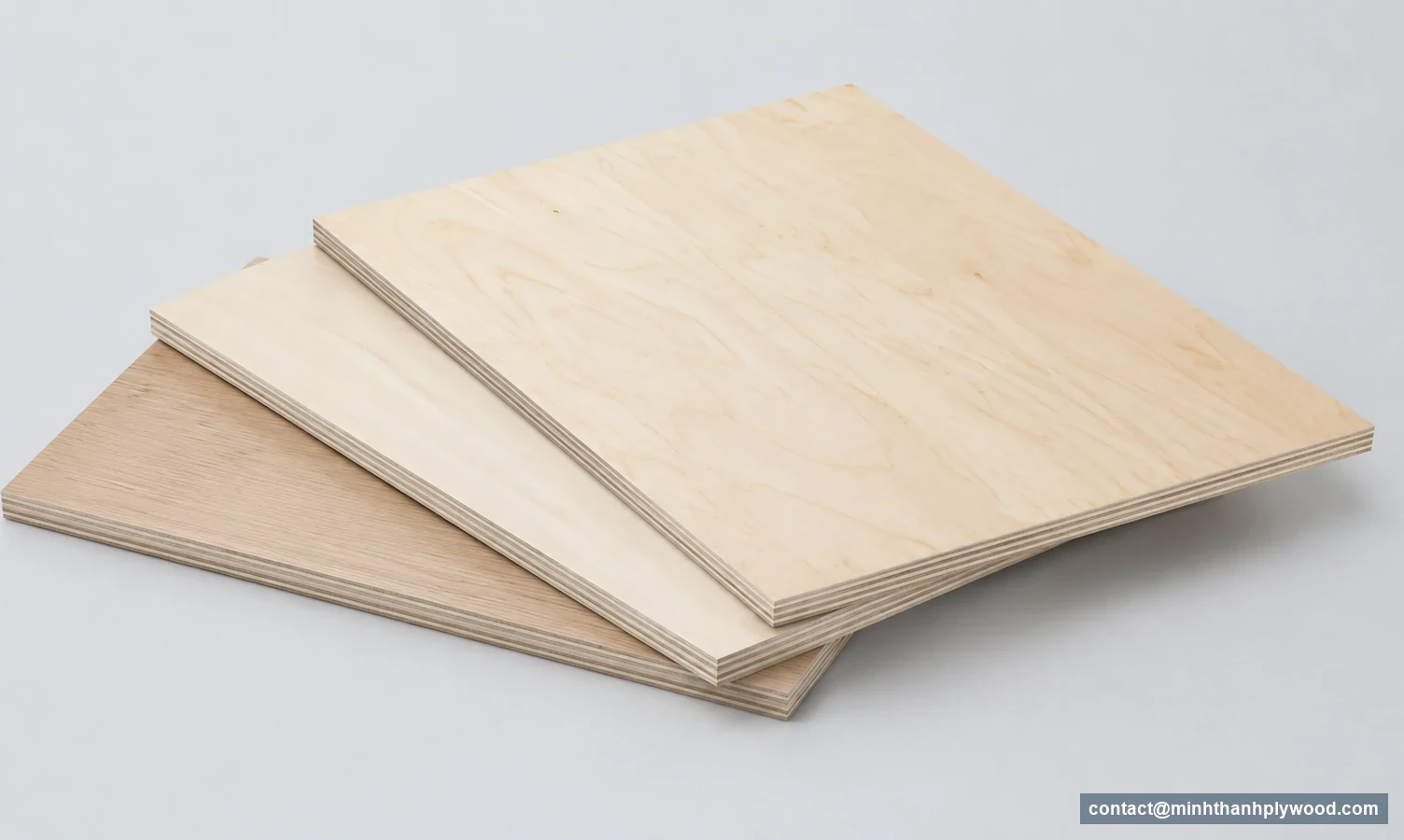
Plywood manufacturing: calibration and veneer layers
 Black Spots on Plywood: Mould or Blue Stain?Black spots on plywood explained: mould vs blue stain vs glue spots, whether blue stained plywood is weaker, container rain, prevention at packing and claims.
 Calibrated Plywood: Meaning, Process, PriceCalibrated plywood meaning: a panel sanded to an even thickness, often ±0.2 mm. How core calibration works, uses, price from Vietnam and how to order it.
 CNC Cut Plywood: Best Sheets, Bits and TolerancesCNC cut plywood that routes cleanly: the sheet spec (±0.2 mm, closed core, 8–12 % moisture), the right bits and feeds, nesting, and what to write on the order.
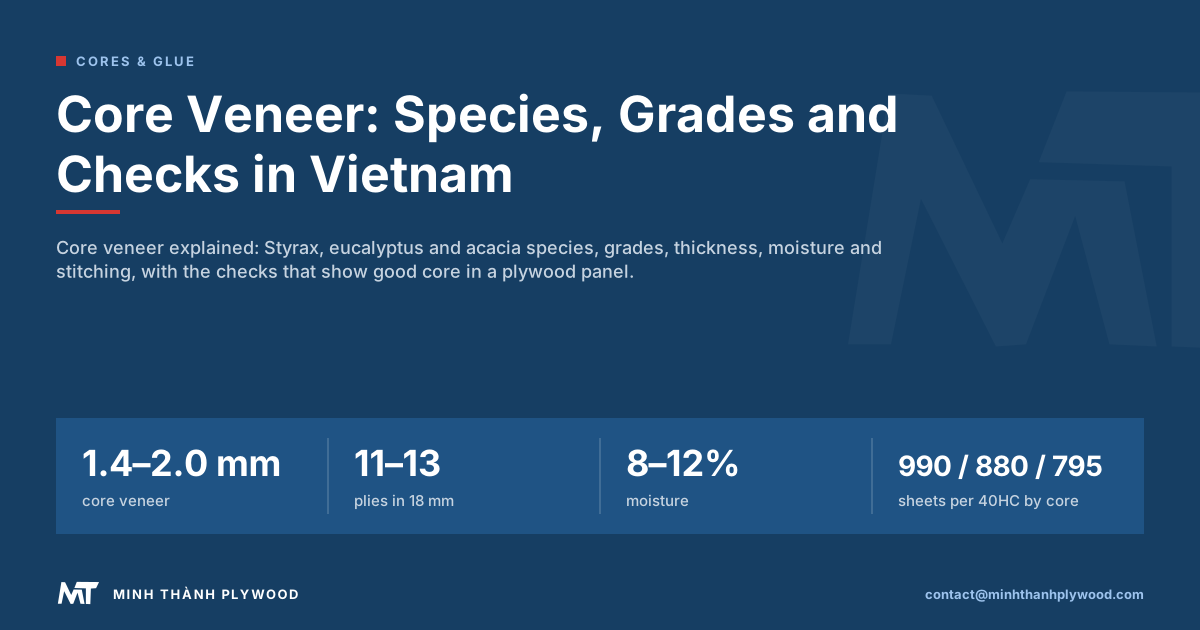 Core Veneer: Species, Grades and Checks in VietnamCore veneer explained: Styrax, eucalyptus and acacia species, grades, thickness, moisture and stitching, with the checks that show good core in a plywood panel.
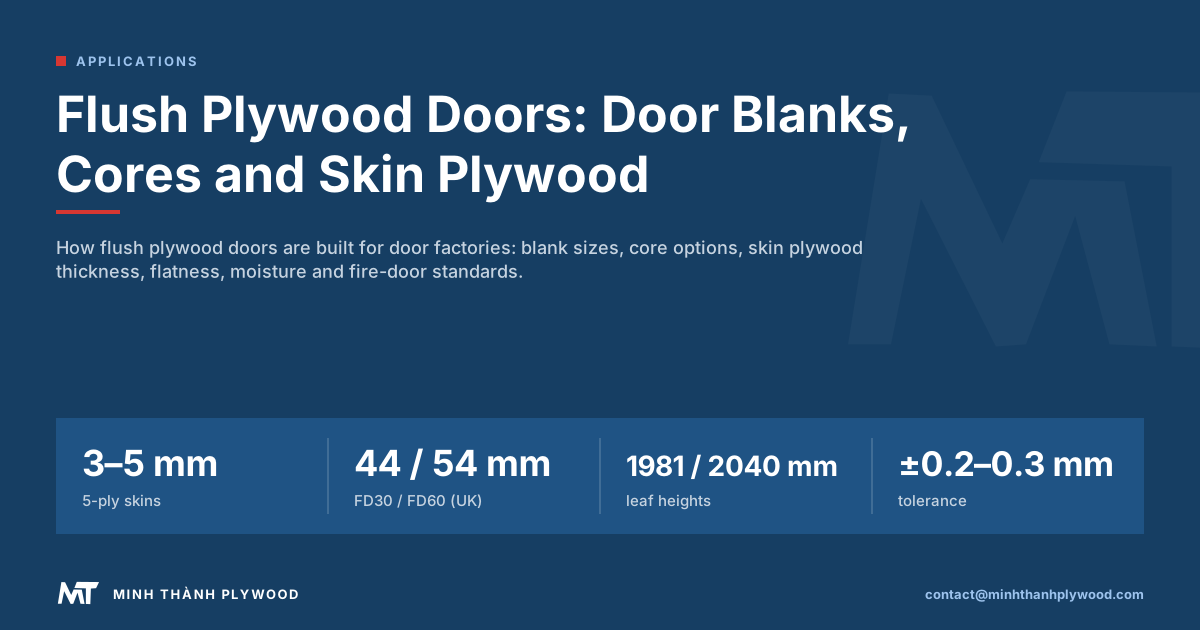 Flush Plywood Doors: Door Blanks, Cores and Skin PlywoodHow flush plywood doors are built for door factories: blank sizes, core options, skin plywood thickness, flatness, moisture and fire-door standards.
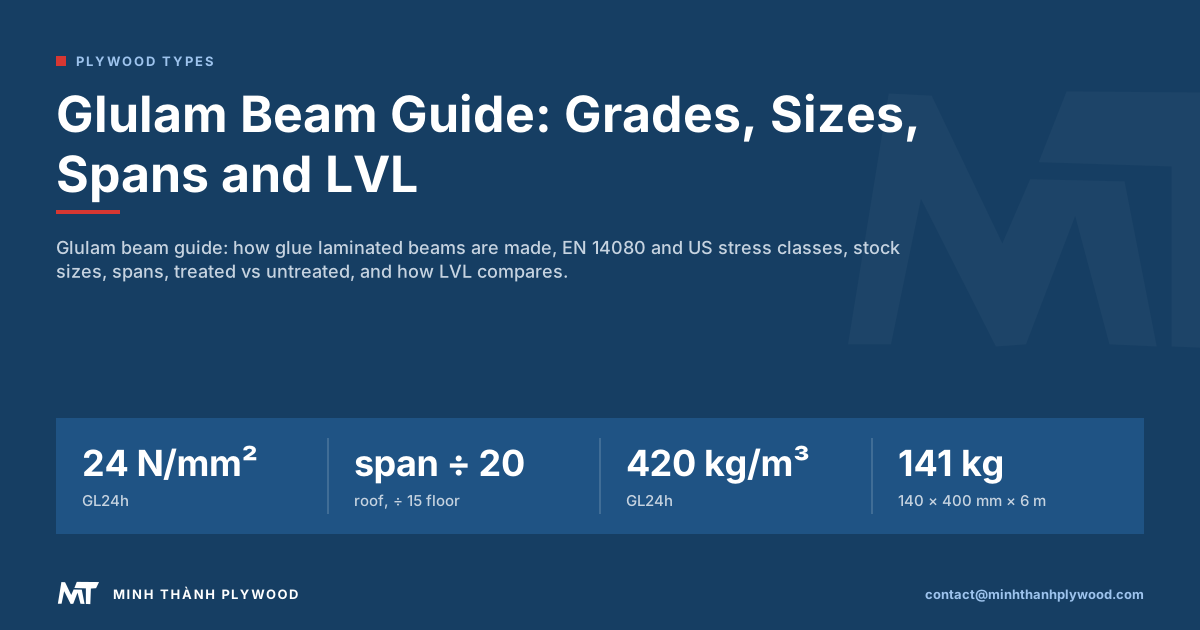 Glulam Beam Guide: Grades, Sizes, Spans and LVLGlulam beam guide: how glue laminated beams are made, EN 14080 and US stress classes, stock sizes, spans, treated vs untreated, and how LVL compares.
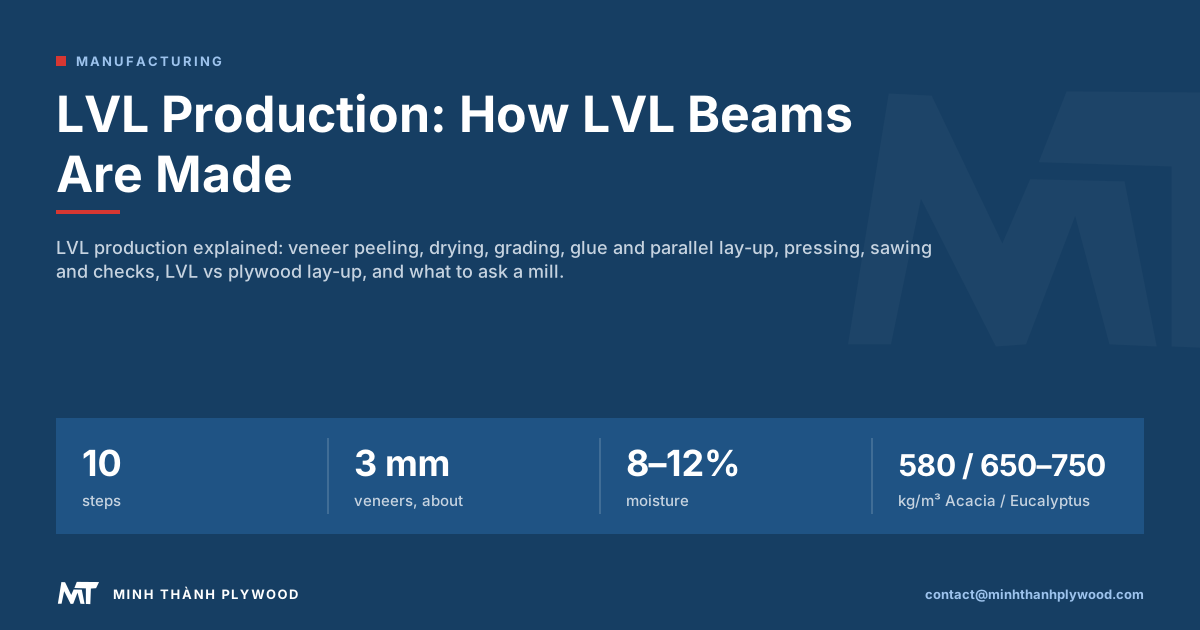 LVL Production: How LVL Beams Are MadeLVL production explained: veneer peeling, drying, grading, glue and parallel lay-up, pressing, sawing and checks, LVL vs plywood lay-up, and what to ask a mill.
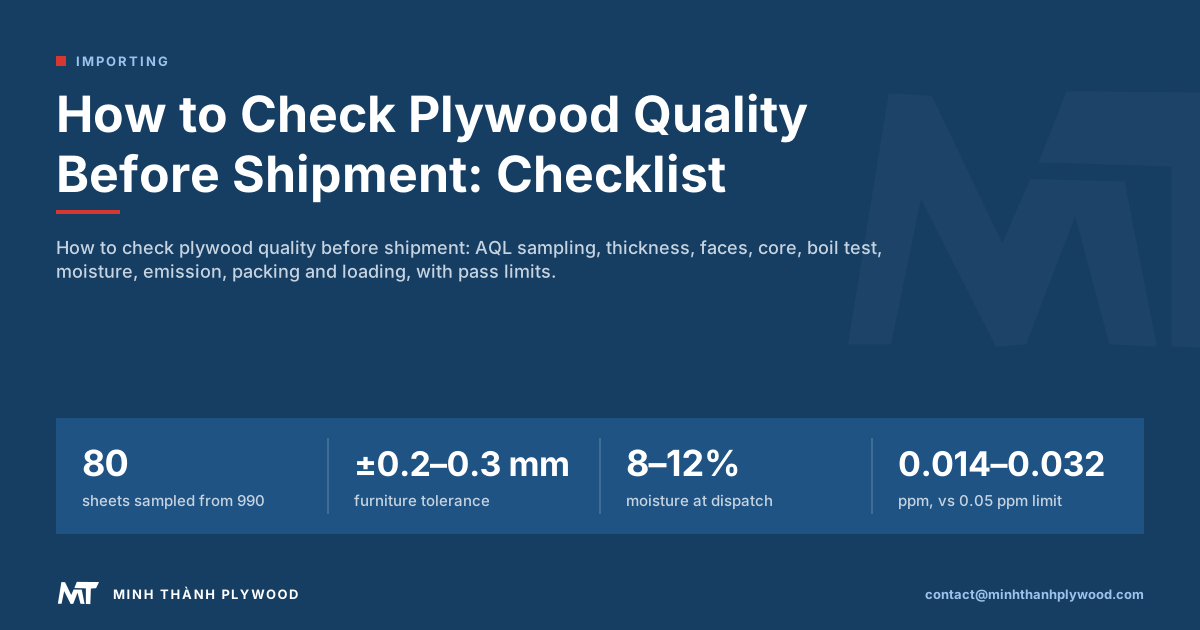 How to Check Plywood Quality Before Shipment: ChecklistHow to check plywood quality before shipment: AQL sampling, thickness, faces, core, boil test, moisture, emission, packing and loading, with pass limits.
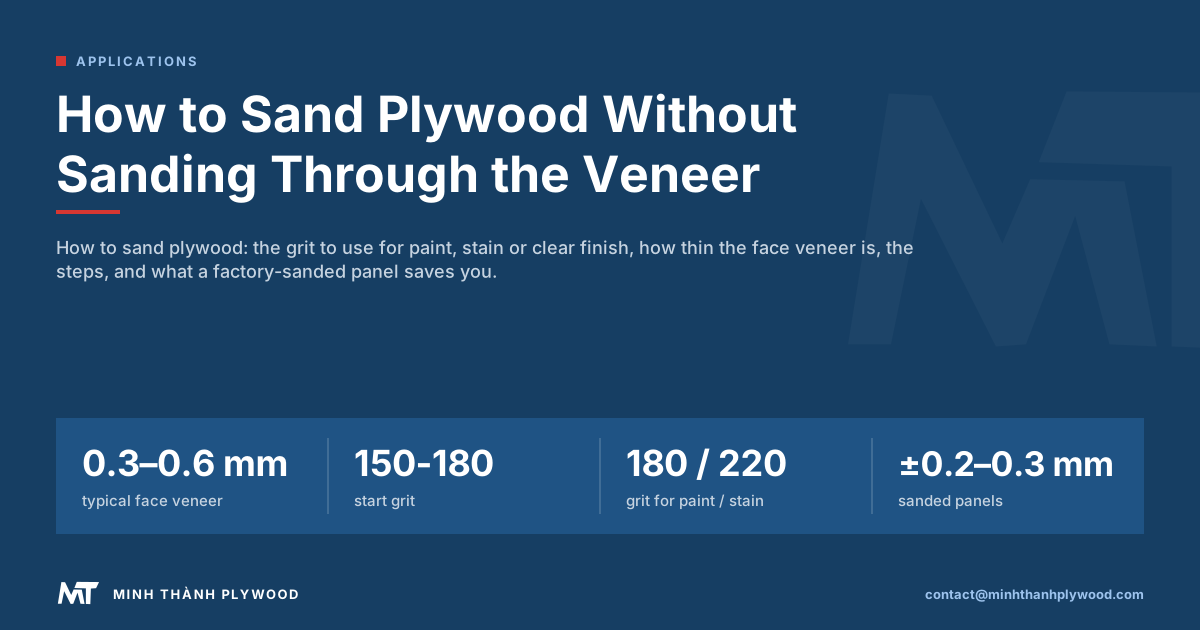 How to Sand Plywood Without Sanding Through the VeneerHow to sand plywood: the grit to use for paint, stain or clear finish, how thin the face veneer is, the steps, and what a factory-sanded panel saves you.
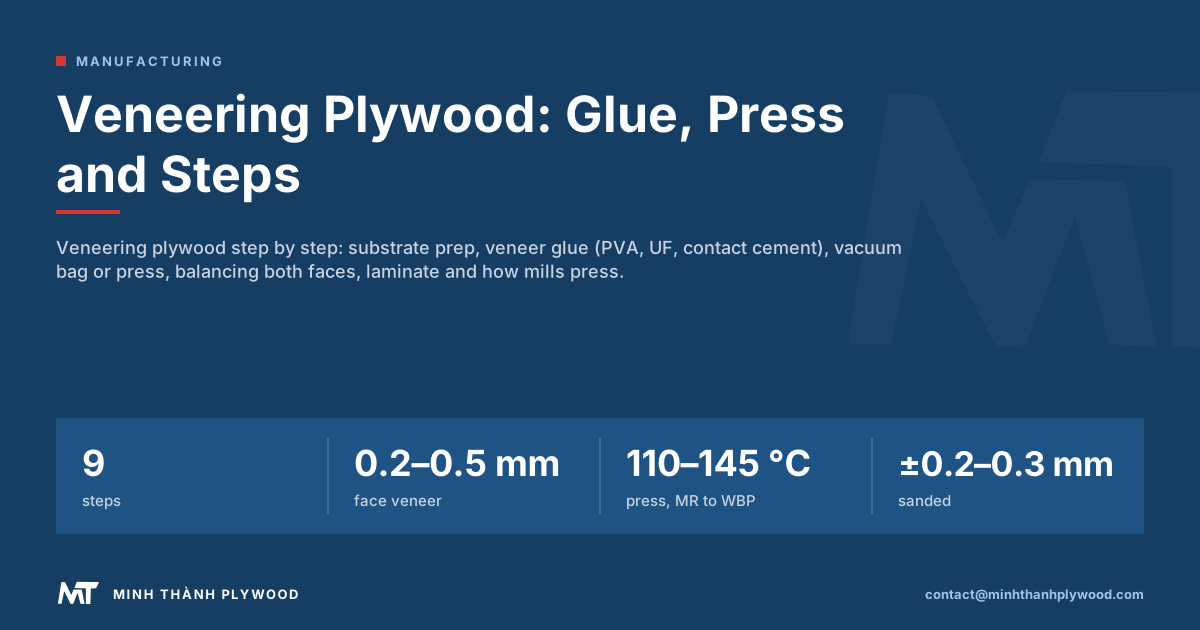 Veneering Plywood: Glue, Press and StepsVeneering plywood step by step: substrate prep, veneer glue (PVA, UF, contact cement), vacuum bag or press, balancing both faces, laminate and how mills press.
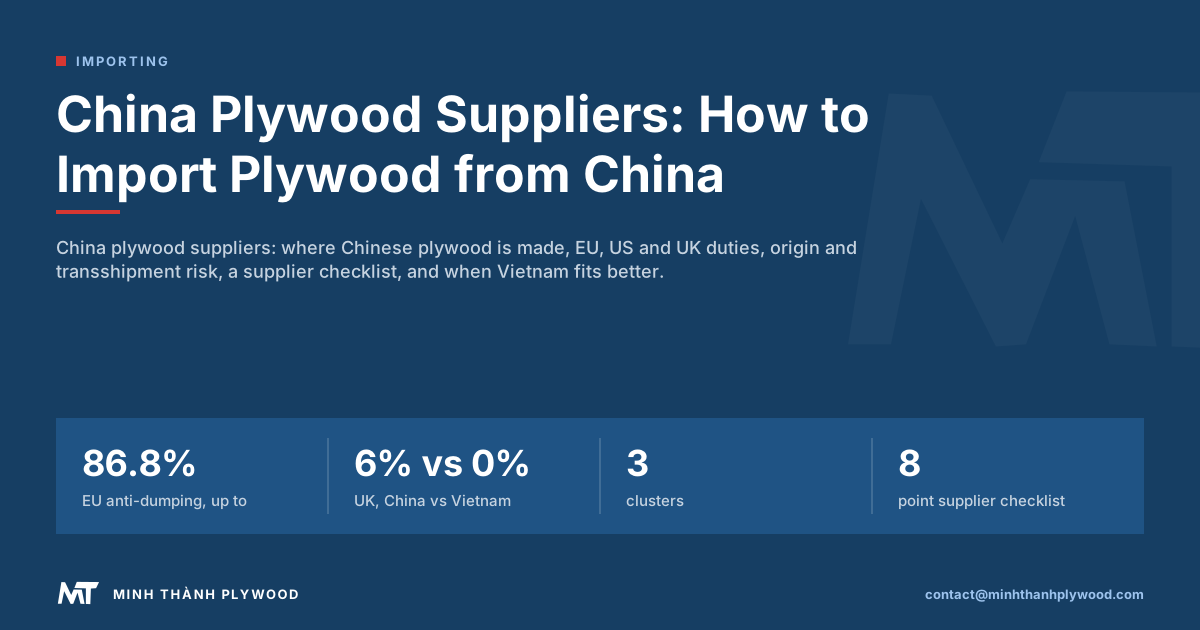 China Plywood Suppliers: How to Import Plywood from ChinaChina plywood suppliers: where Chinese plywood is made, EU, US and UK duties, origin and transshipment risk, a supplier checklist, and when Vietnam fits better.
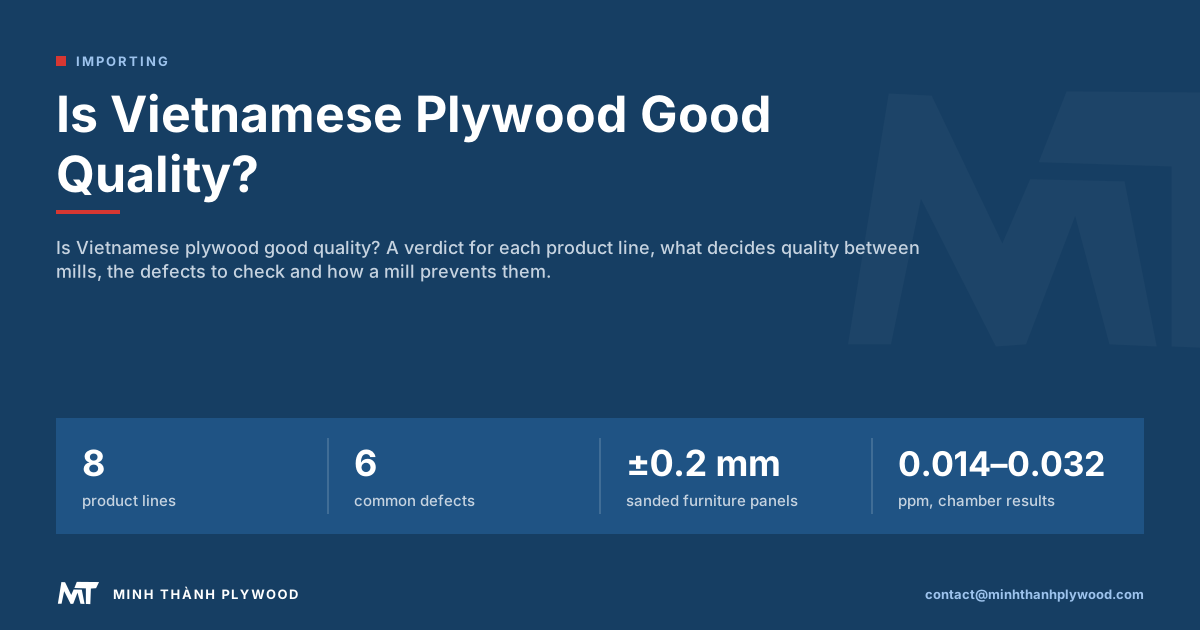 Is Vietnamese Plywood Good Quality?Is Vietnamese plywood good quality? A verdict for each product line, what decides quality between mills, the defects to check and how a mill prevents them.
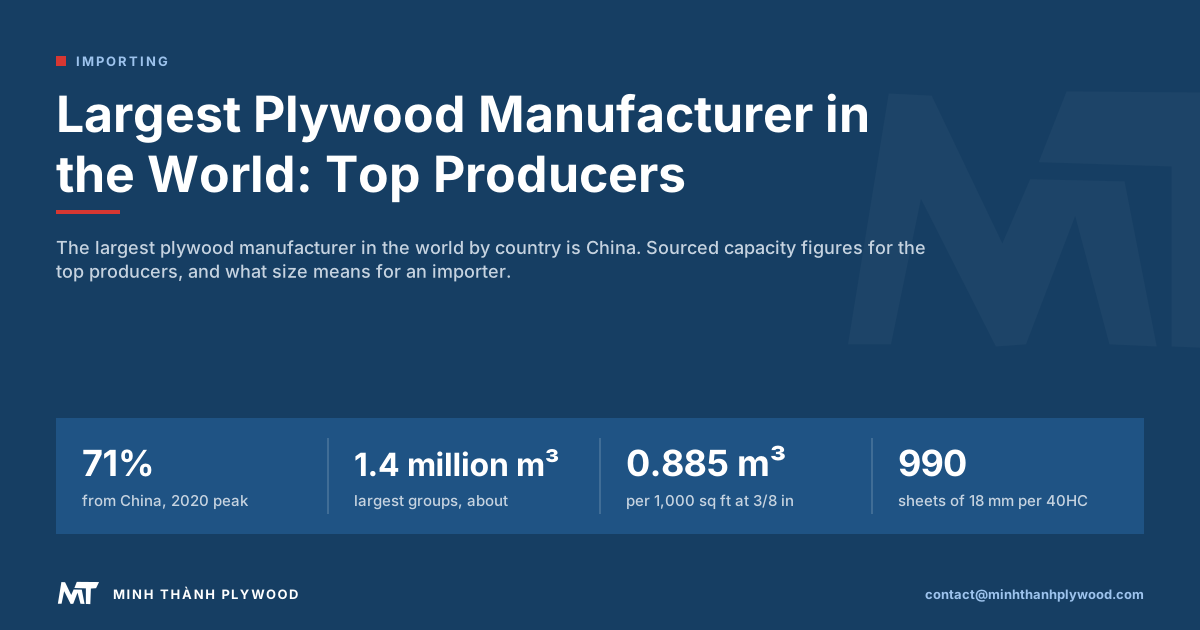 Largest Plywood Manufacturer in the World: Top ProducersThe largest plywood manufacturer in the world by country is China. Sourced capacity figures for the top producers, and what size means for an importer.
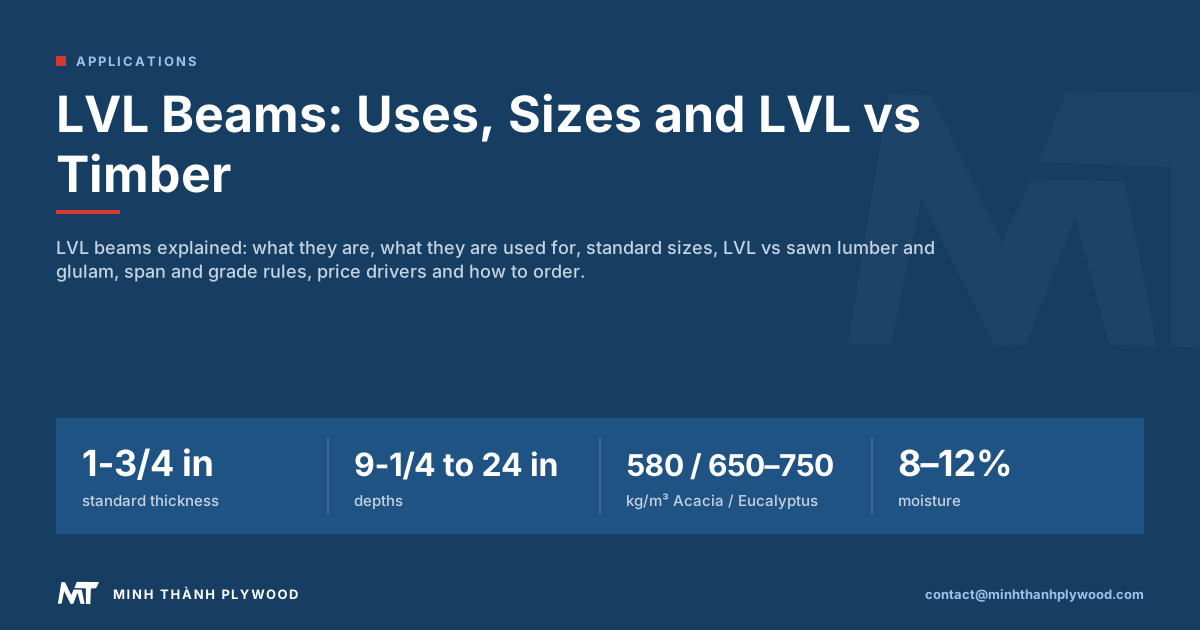 LVL Beams: Uses, Sizes and LVL vs TimberLVL beams explained: what they are, what they are used for, standard sizes, LVL vs sawn lumber and glulam, span and grade rules, price drivers and how to order.
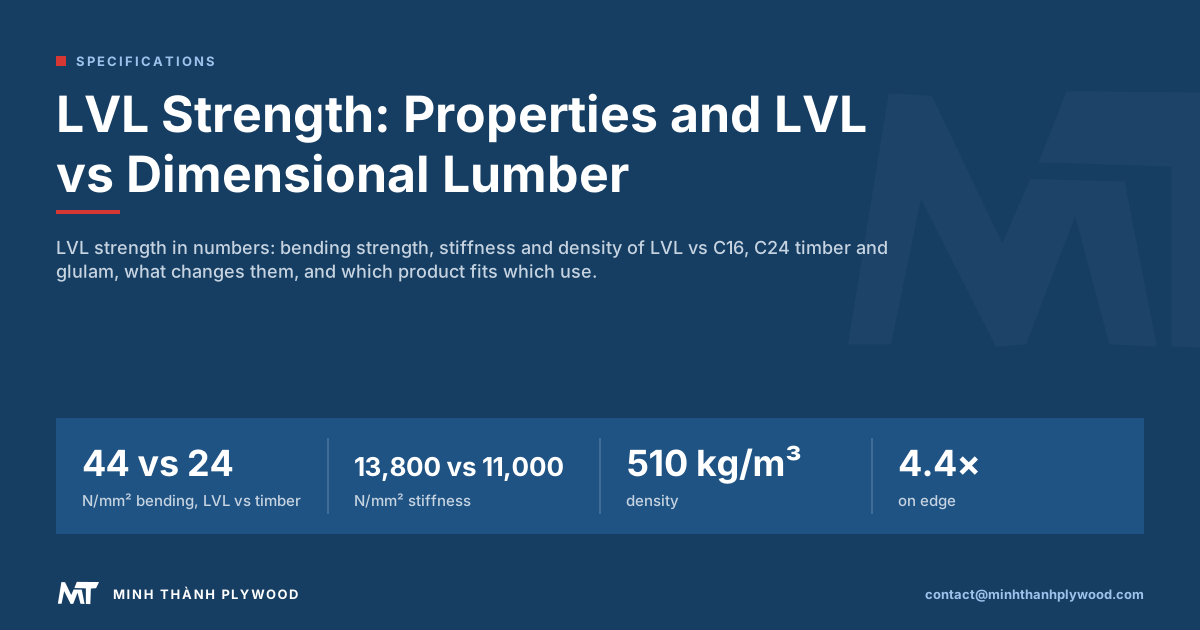 LVL Strength: Properties and LVL vs Dimensional LumberLVL strength in numbers: bending strength, stiffness and density of LVL vs C16, C24 timber and glulam, what changes them, and which product fits which use.
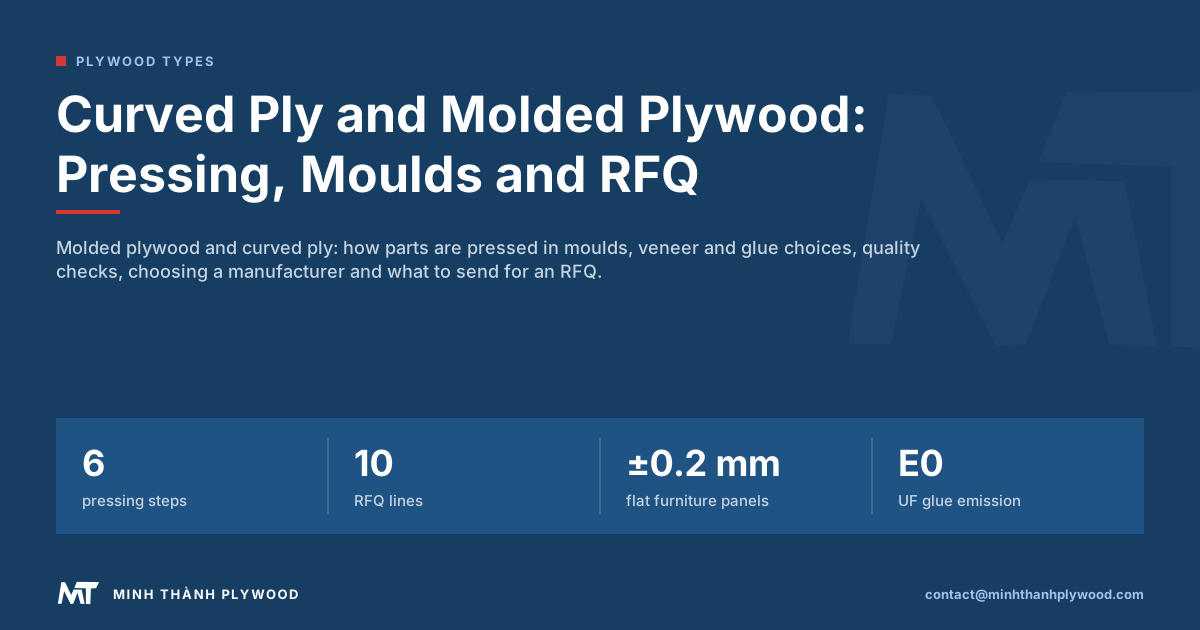 Curved Ply and Molded Plywood: Pressing, Moulds and RFQMolded plywood and curved ply: how parts are pressed in moulds, veneer and glue choices, quality checks, choosing a manufacturer and what to send for an RFQ.
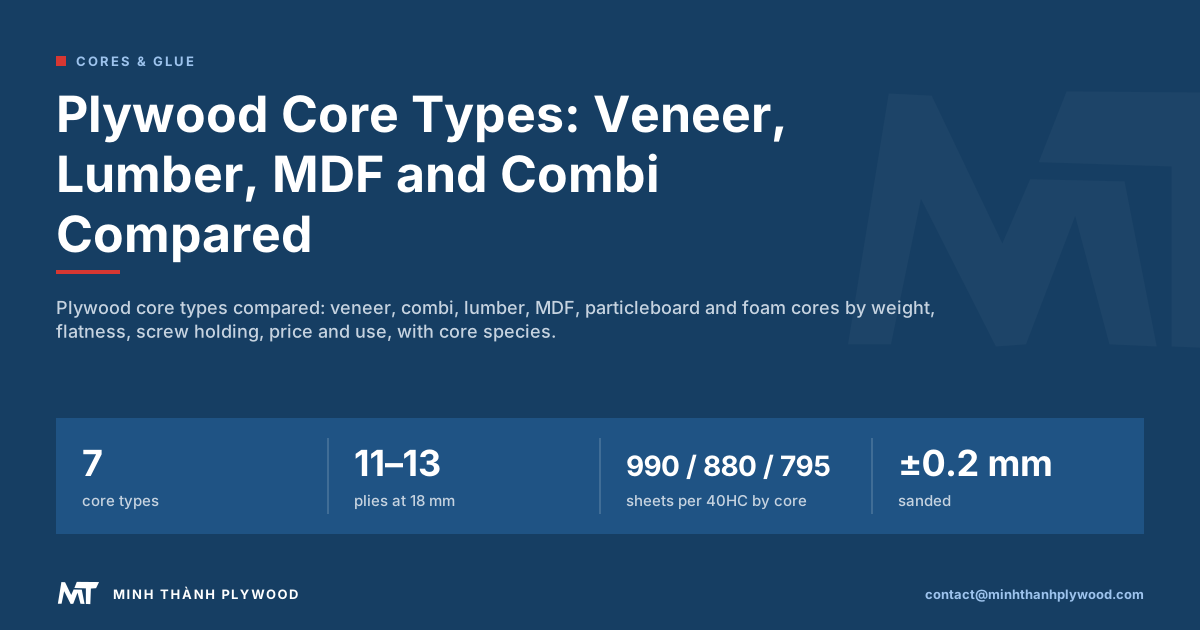 Plywood Core Types: Veneer, Lumber, MDF and Combi ComparedPlywood core types compared: veneer, combi, lumber, MDF, particleboard and foam cores by weight, flatness, screw holding, price and use, with core species.
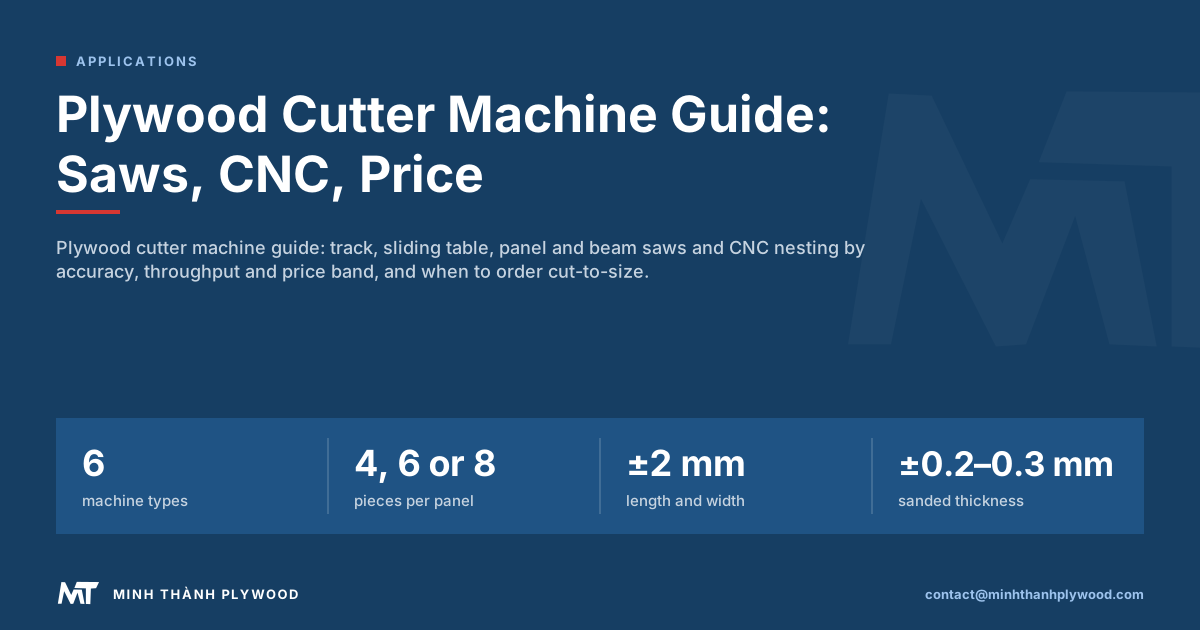 Plywood Cutter Machine Guide: Saws, CNC, PricePlywood cutter machine guide: track, sliding table, panel and beam saws and CNC nesting by accuracy, throughput and price band, and when to order cut-to-size.
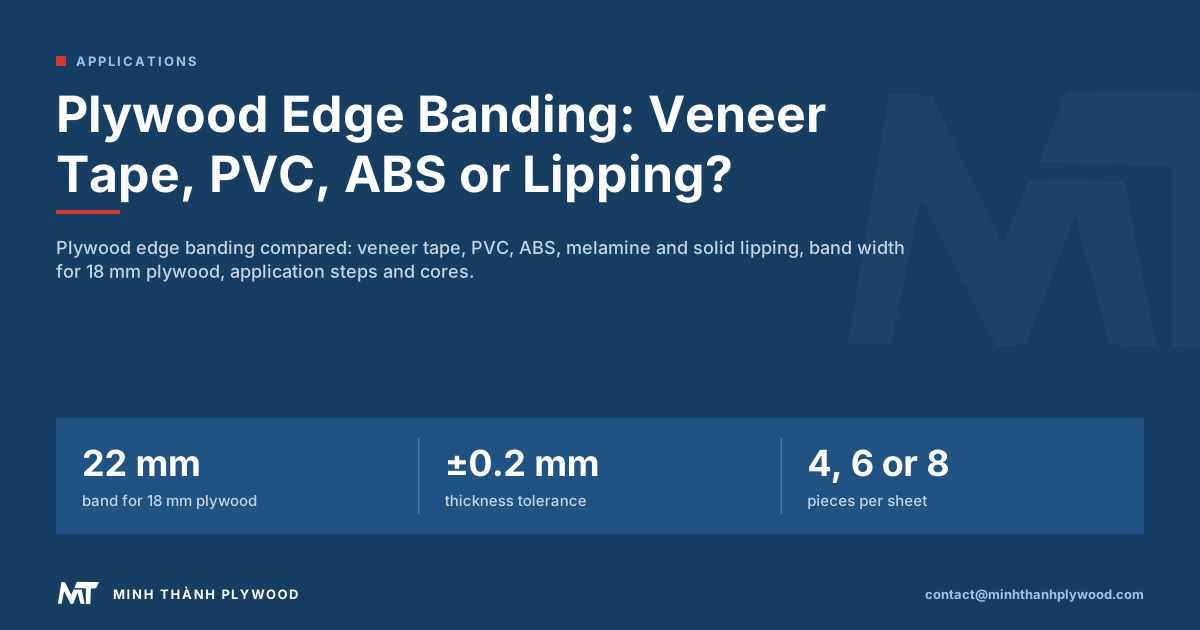 Plywood Edge Banding: Veneer Tape, PVC, ABS or Lipping?Plywood edge banding compared: veneer tape, PVC, ABS, melamine and solid lipping, band width for 18 mm plywood, application steps and cores.
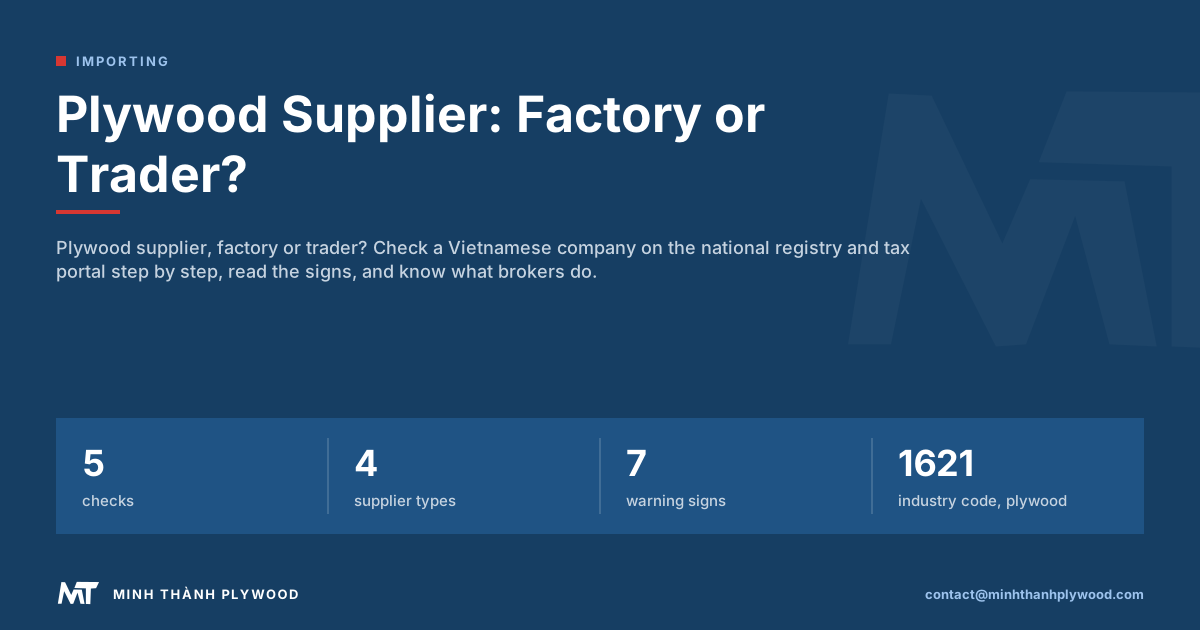 Plywood Supplier: Factory or Trader?Plywood supplier, factory or trader? Check a Vietnamese company on the national registry and tax portal step by step, read the signs, and know what brokers do.
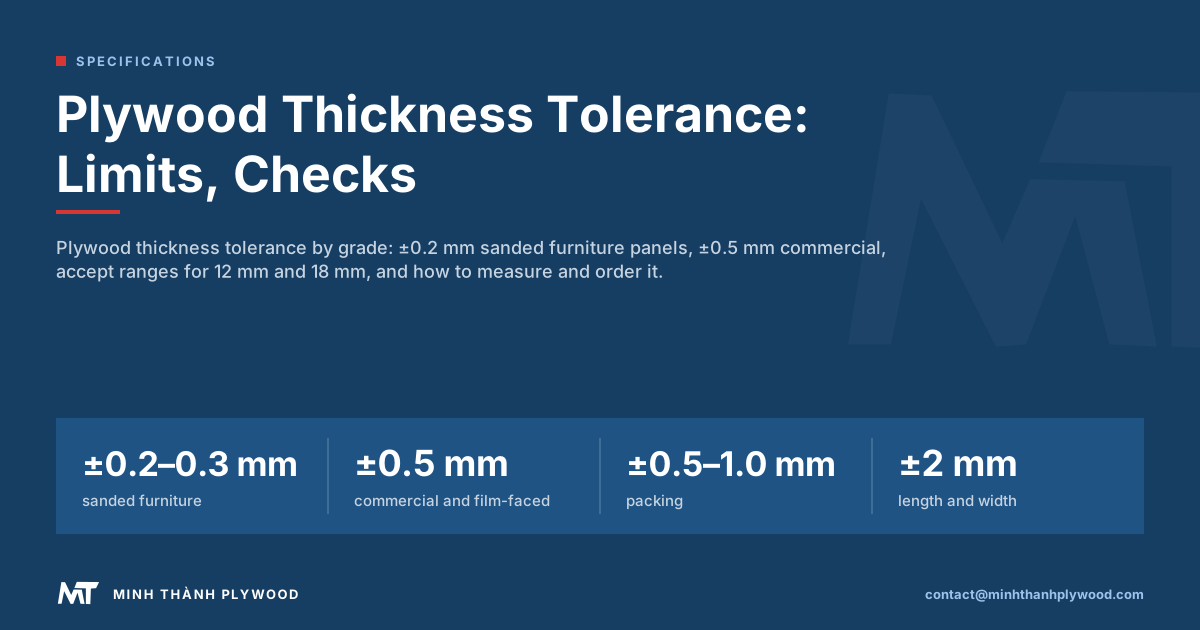 Plywood Thickness Tolerance: Limits, ChecksPlywood thickness tolerance by grade: ±0.2 mm sanded furniture panels, ±0.5 mm commercial, accept ranges for 12 mm and 18 mm, and how to measure and order it.
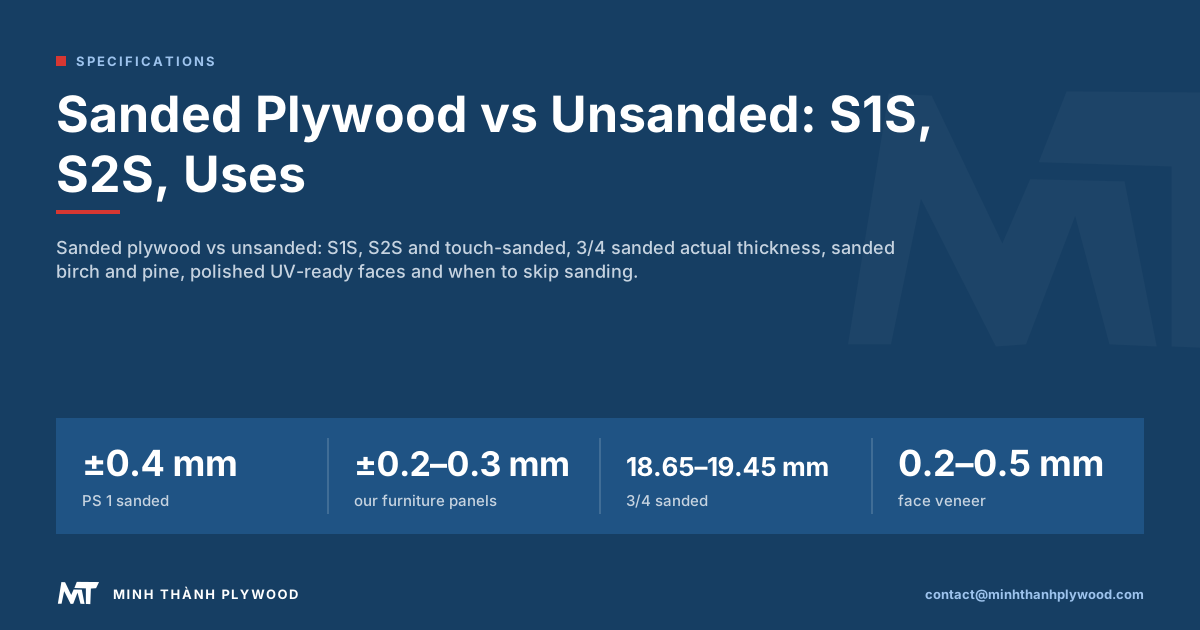 Sanded Plywood vs Unsanded: S1S, S2S, UsesSanded plywood vs unsanded: S1S, S2S and touch-sanded, 3/4 sanded actual thickness, sanded birch and pine, polished UV-ready faces and when to skip sanding.
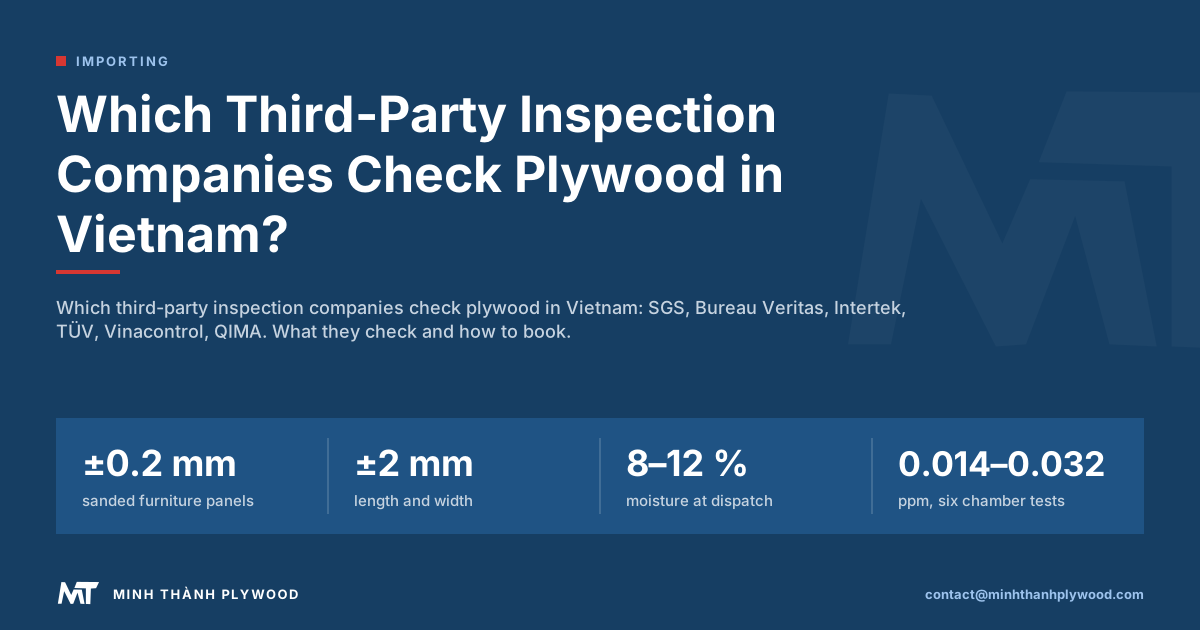 Which Third-Party Inspection Companies Check Plywood in Vietnam?Which third-party inspection companies check plywood in Vietnam: SGS, Bureau Veritas, Intertek, TÜV, Vinacontrol, QIMA. What they check and how to book.
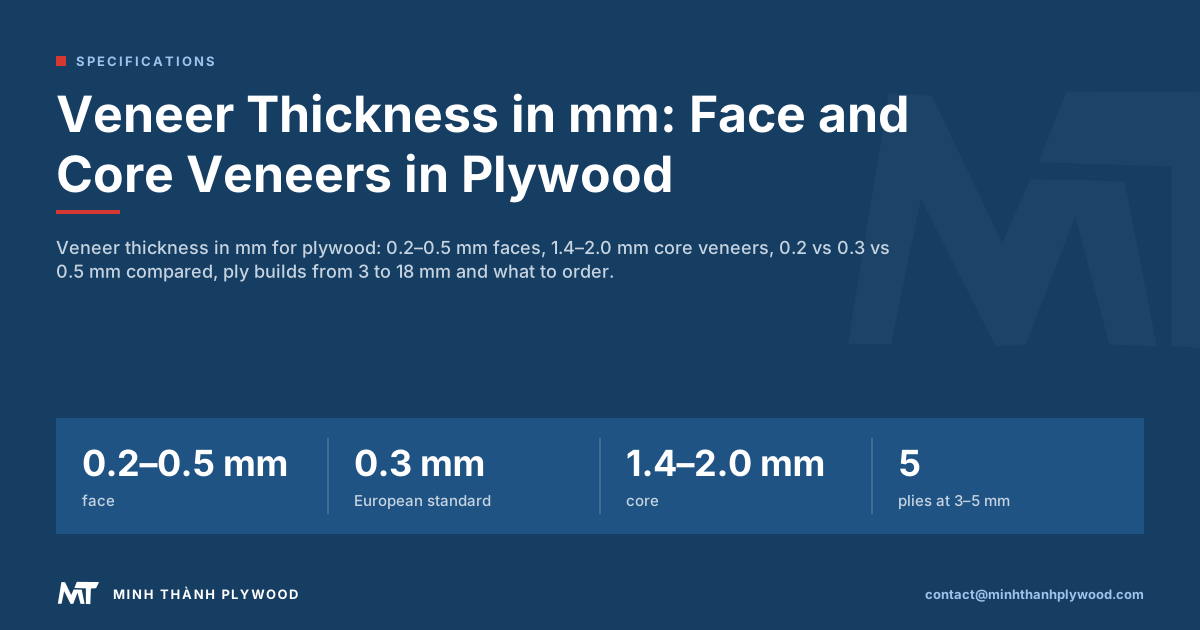 Veneer Thickness in mm: Face and Core Veneers in PlywoodVeneer thickness in mm for plywood: 0.2–0.5 mm faces, 1.4–2.0 mm core veneers, 0.2 vs 0.3 vs 0.5 mm compared, ply builds from 3 to 18 mm and what to order.
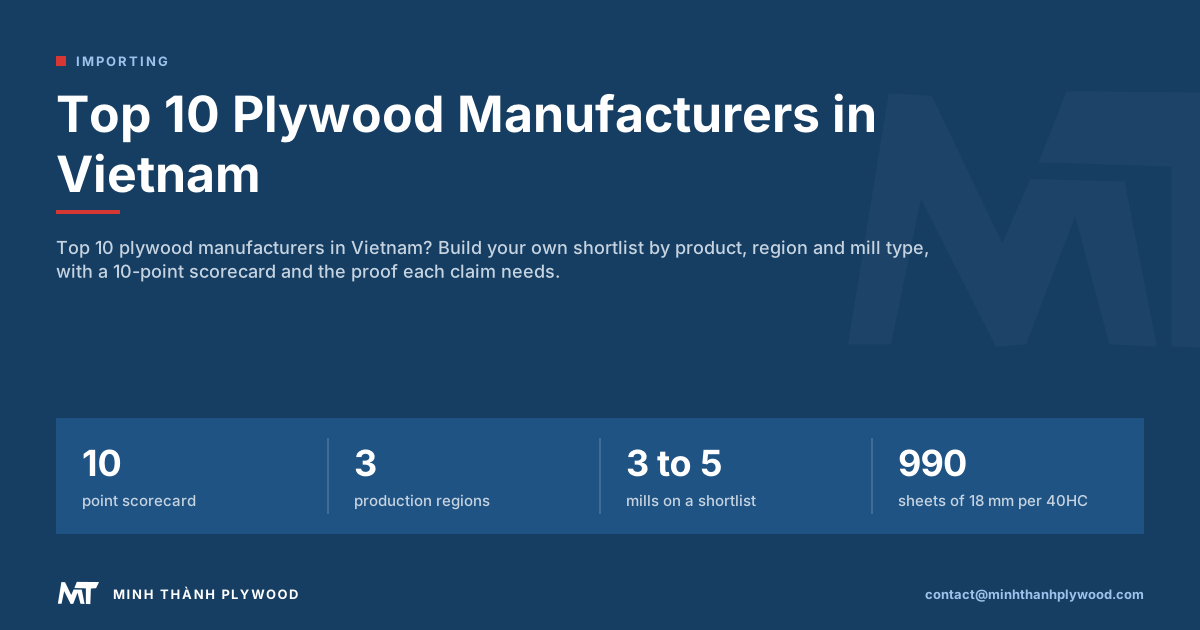 Top 10 Plywood Manufacturers in VietnamTop 10 plywood manufacturers in Vietnam? Build your own shortlist by product, region and mill type, with a 10-point scorecard and the proof each claim needs.
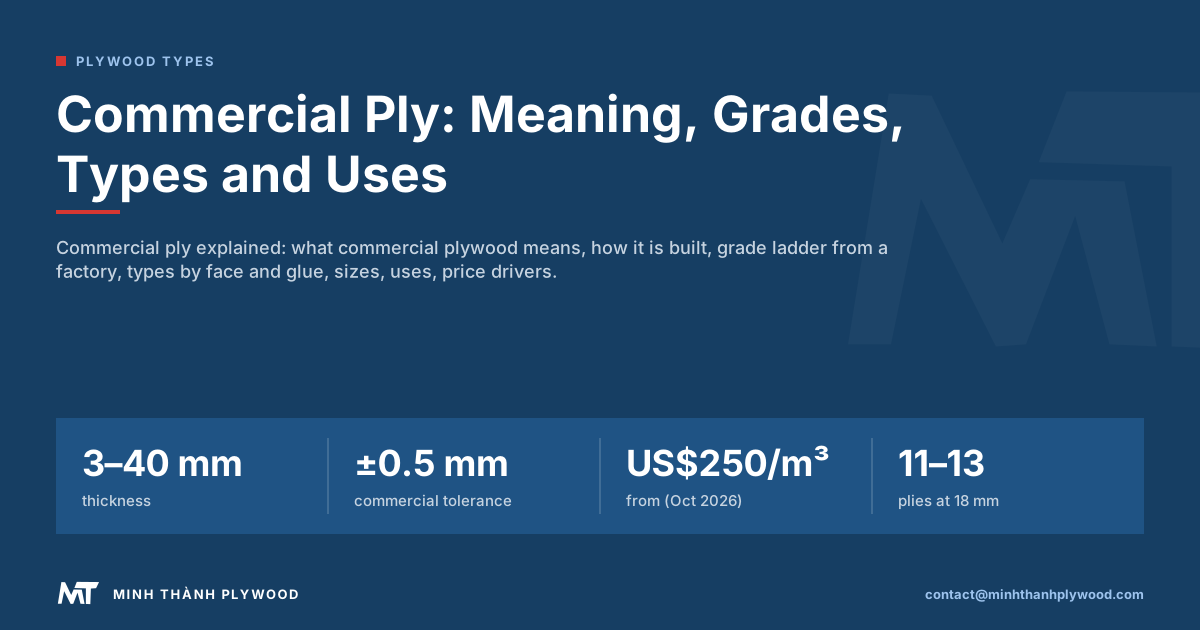 Commercial Ply: Meaning, Grades, Types and UsesCommercial ply explained: what commercial plywood means, how it is built, grade ladder from a factory, types by face and glue, sizes, uses, price drivers.
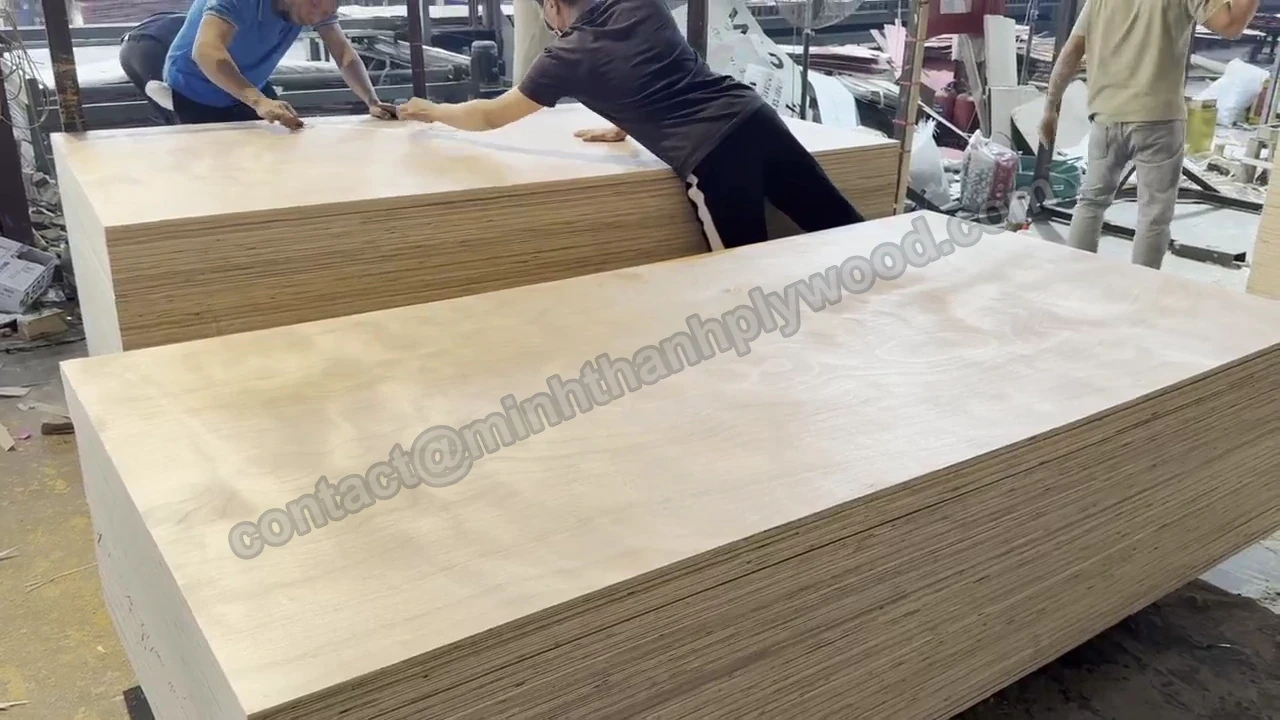 Bamboo Plywood: Types and Buying ChecksChoose bamboo plywood by strip, strand or mat construction, face pattern, service conditions and machining. Compare complete panels before ordering sheets.
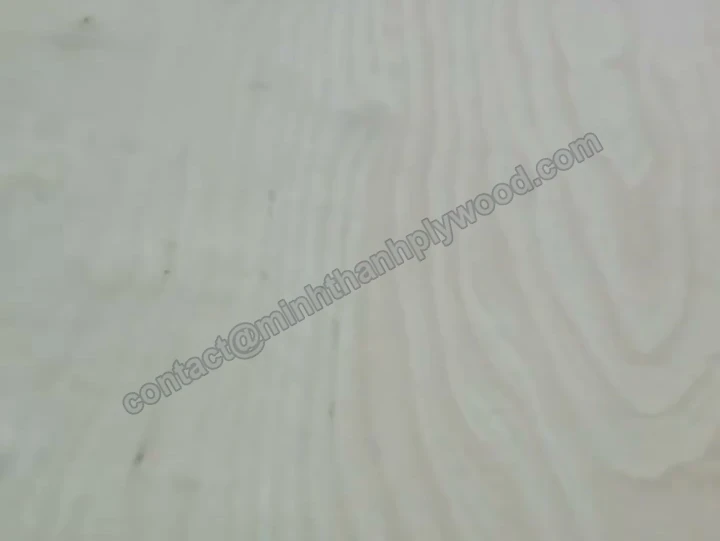 Birch Plywood for Furniture: Production Buyer GuideChoose birch plywood for furniture by component, face/back grade, core and finish. Use practical sample checks for shelves, desks, wardrobes and drawers.
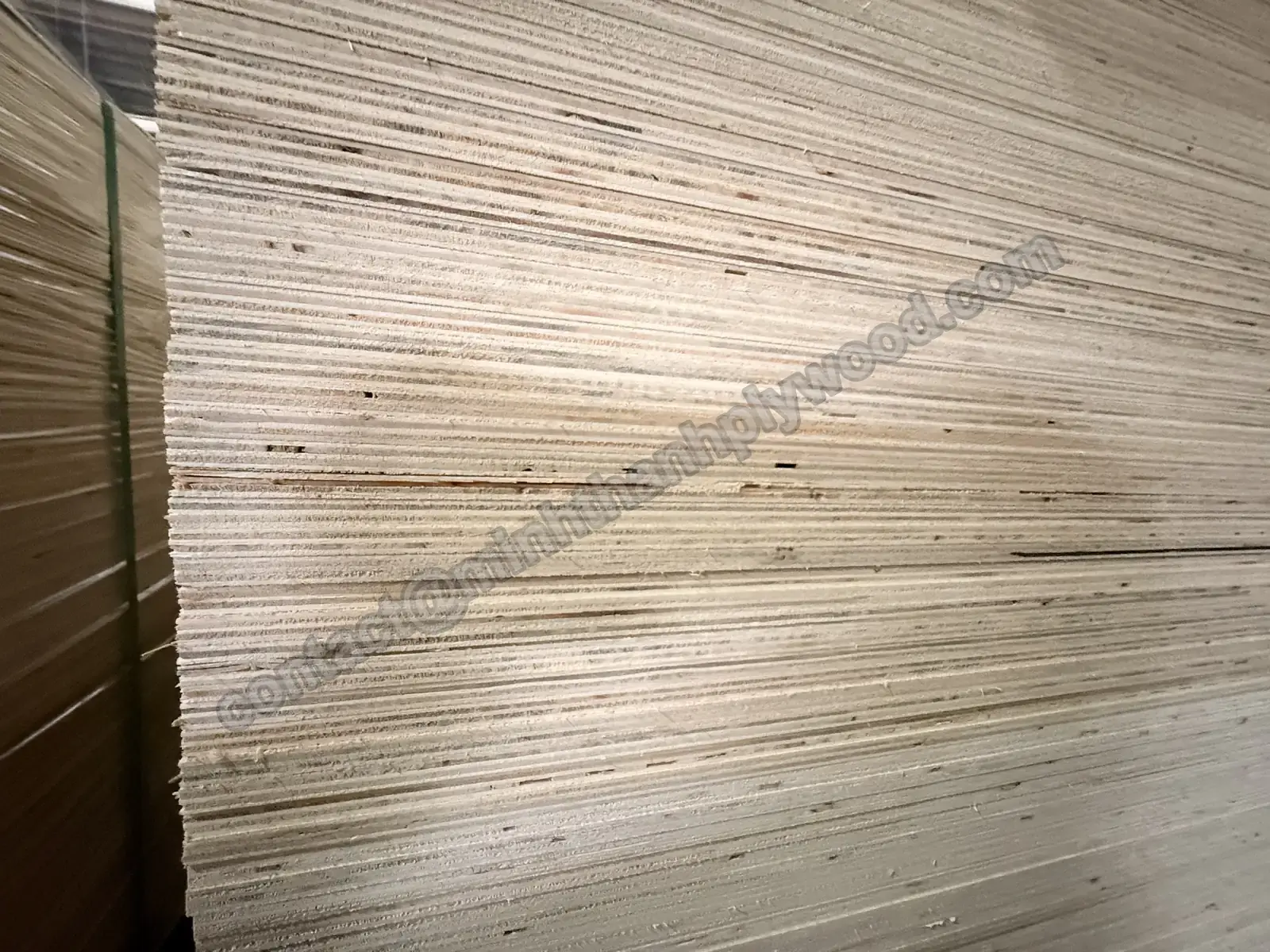 Plywood Delamination: Causes of Peeling PlywoodDiagnose plywood delamination, separate surface defects from peeling veneer, and specify bonds, inspection, storage and claim evidence for B2B orders.
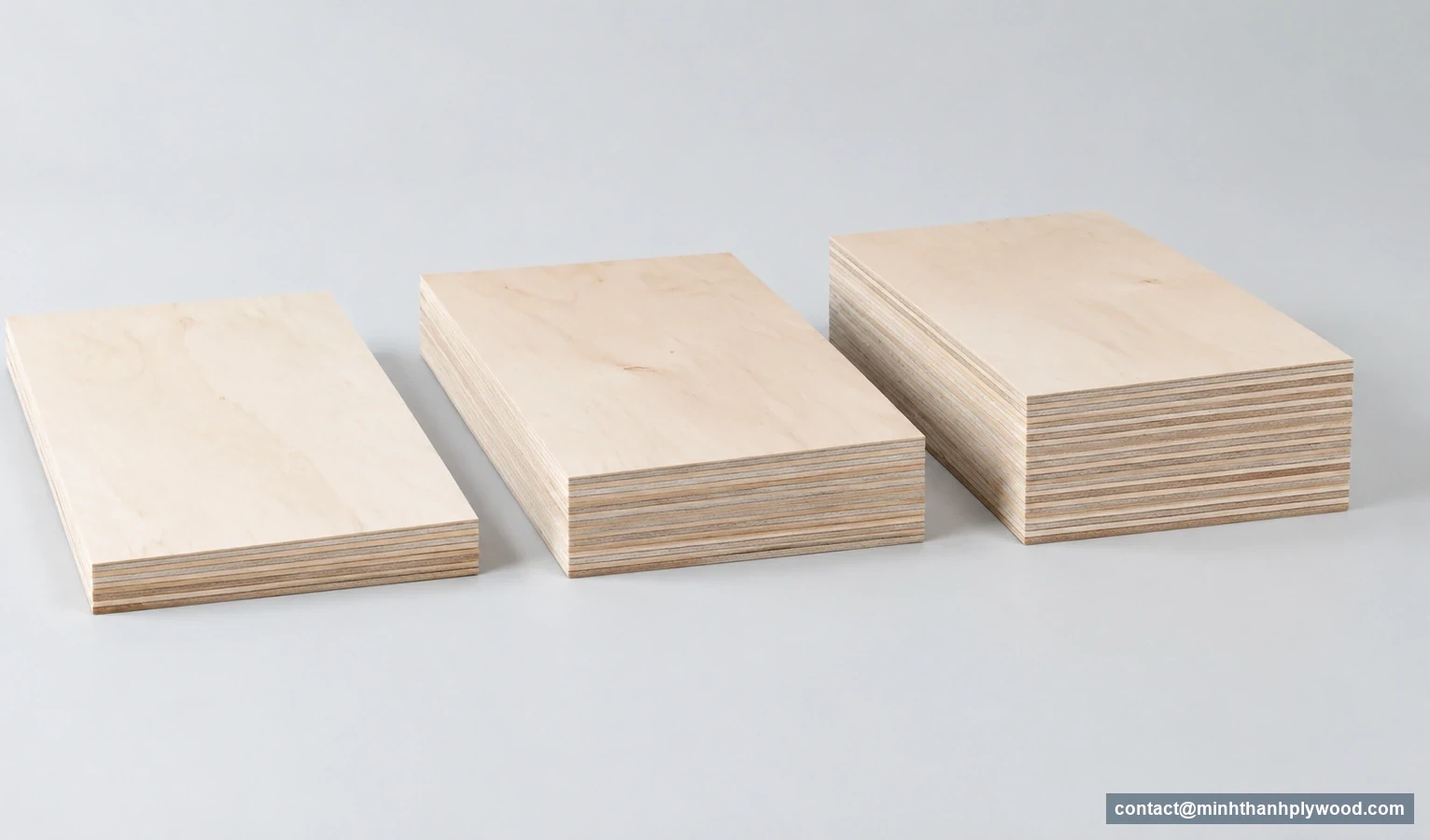 Plywood Thickness: Nominal & ActualChoose plywood thickness using metric and inch comparisons, finished tolerance, furniture applications, machining fit, sheet weight and container planning.
Work with Minh Thành Plywood
Have a plywood question? Send the specification.
Tell us the application and destination port. We reply within hours with the panel construction, a dated price and the documents for your market.