A pine plywood order names the glue and the emission class on two lines of their own. The glue line says how the bond must cope with damp; the emission line says how much formaldehyde the finished panel may release. Typical pairs are “glue: UF interior” with “emission: CARB P2”, or “glue: phenolic WBP” with whatever class your market sets.
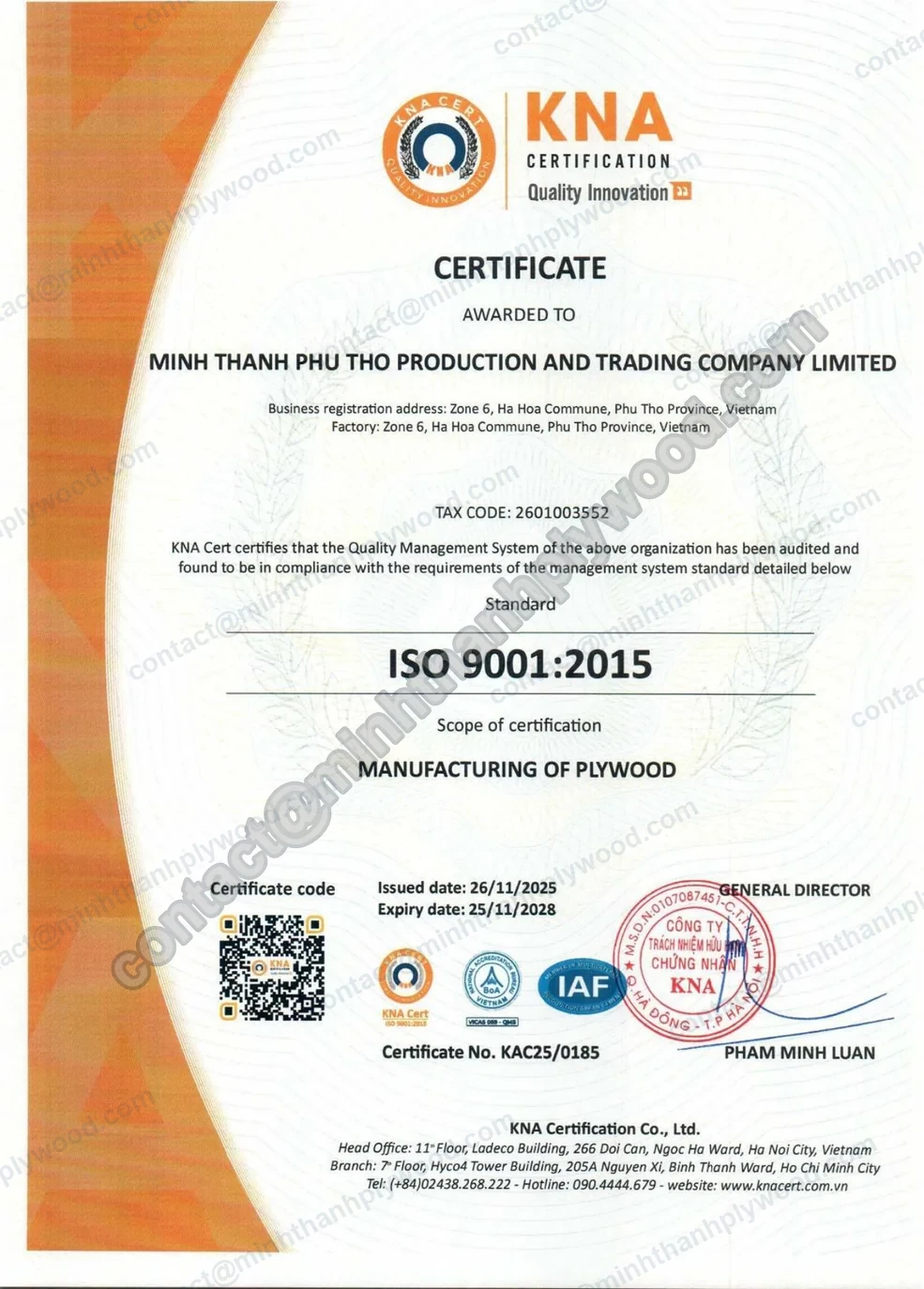
On a sample, our standard interior bond lasts roughly six hours in boiling water. If your specification asks for 12 hours, we switch to melamine-fortified glue; for panels that will live outdoors, phenolic WBP. Whichever water-resistant glue you pick is still made to the emission class you name.
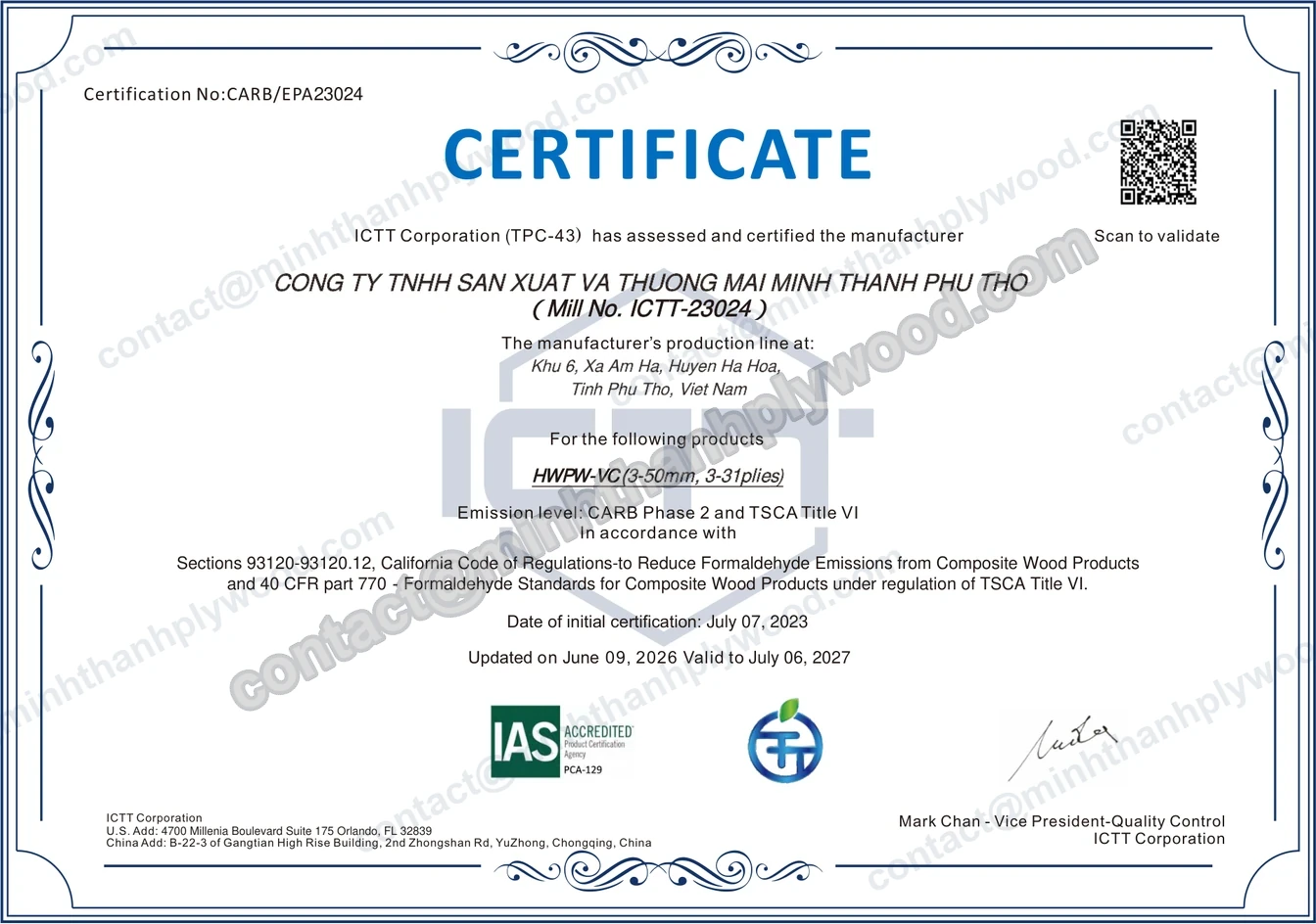
The emission numbers on this page are chamber results. Between April 2025 and June 2026 Shanghai Hongjun and ICTT Vietnam tested our 9, 15 and 18 mm panels six times to ASTM D6007, with averages of 0.014–0.032 ppm. Veneer-core hardwood plywood may release up to 0.05 ppm under CARB Phase 2 and TSCA Title VI. E0 testing repeats every 3 months.
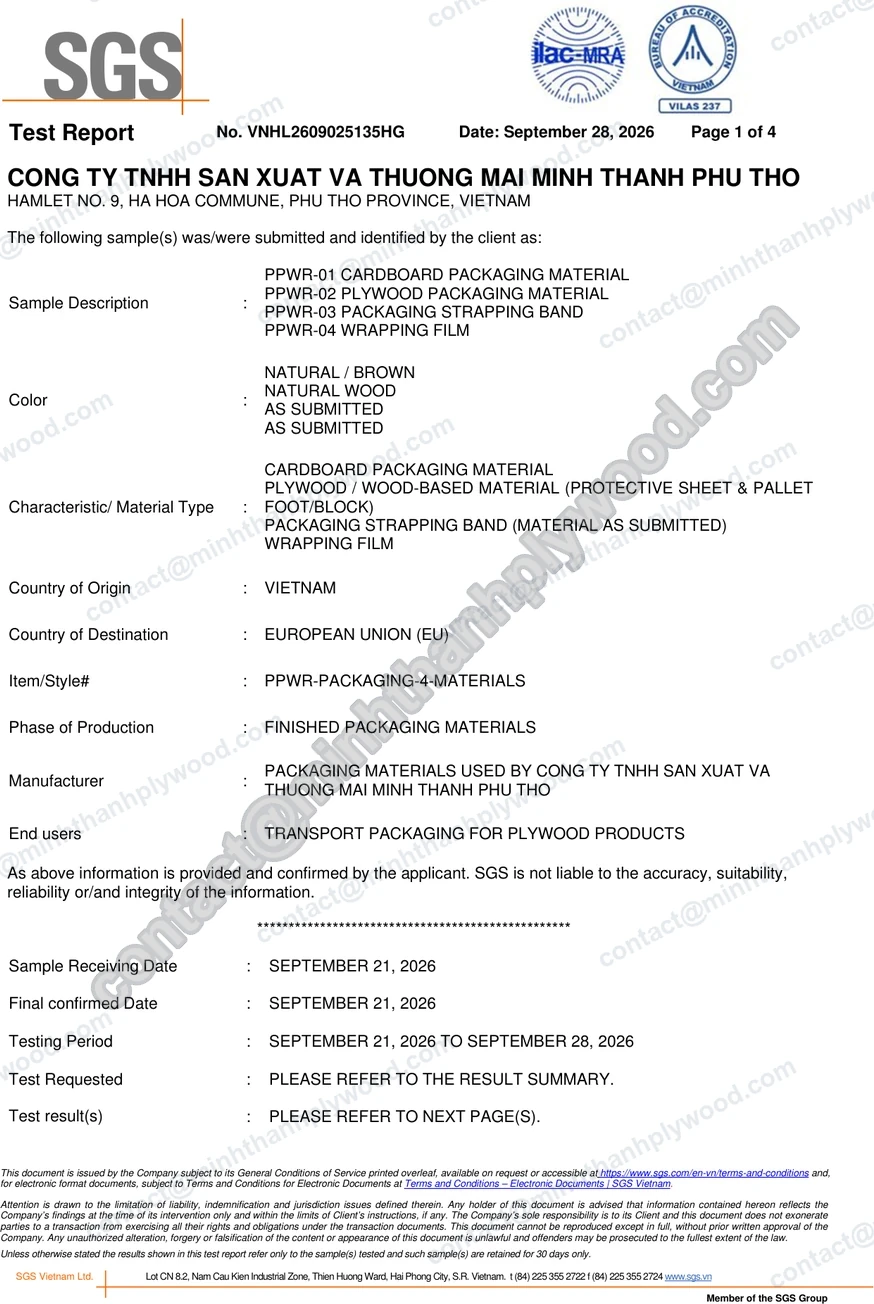
Pine panels for European furniture plants are pressed to the emission rules those buyers work under, including REACH entry 77, which applies to furniture and wood-based articles from 6 August 2026. Importers in Europe take our CARB P2 / TSCA Title VI certificate and the chamber reports as proof. If a customer needs a result by a European method such as EN 717-1, SGS tests our panels that way on request.
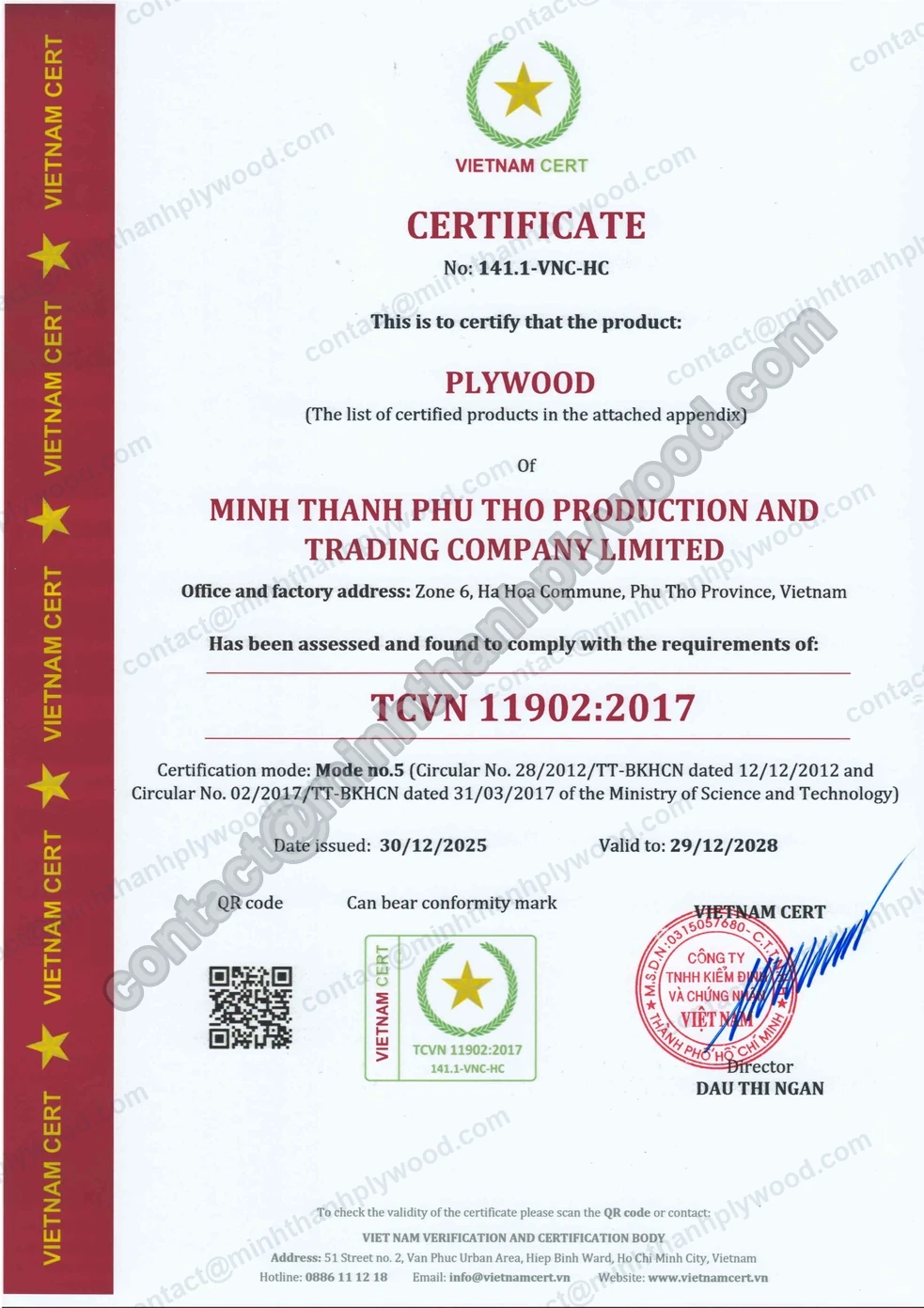
Drawings that name a service class get the matching glue: EN 636-1 dry interior, EN 636-2 humid interior, EN 636-3 exterior.