
In short, bamboo plywood is a bonded panel made from bamboo strips, strands or woven mats; some constructions combine bamboo with wood veneers. Choose it by the actual layer arrangement, surface pattern and intended service. Minh Thanh Plywood makes wood-veneer furniture panels, an alternative when your specification calls for a wood face and a separately chosen core.
What does bamboo plywood mean on a supplier’s quotation?
Bamboo plywood means a bonded bamboo-containing panel, but the name alone does not identify its construction. A quotation can describe a decorative strip panel, a strand-based board, a woven-mat formwork panel or a combination with wood veneers. These are different purchases even when the sheet dimensions match.
Start by asking for a cut-edge photograph and a layer description. The description should identify the exposed surface, intermediate layers and centre, including their grain directions. A bamboo surface over a wood core belongs in a different comparison from a panel made entirely from bamboo. The bill of materials should carry that distinction into the purchase order and the packing labels.
For a furniture programme, also identify the visible edge. A cabinet door with covered edges and a table with an exposed laminated edge demand different appearance checks. Approving only the broad face misses the surface your customer will see at the perimeter. Send a drawing showing visible faces, corners and routed details with the enquiry.
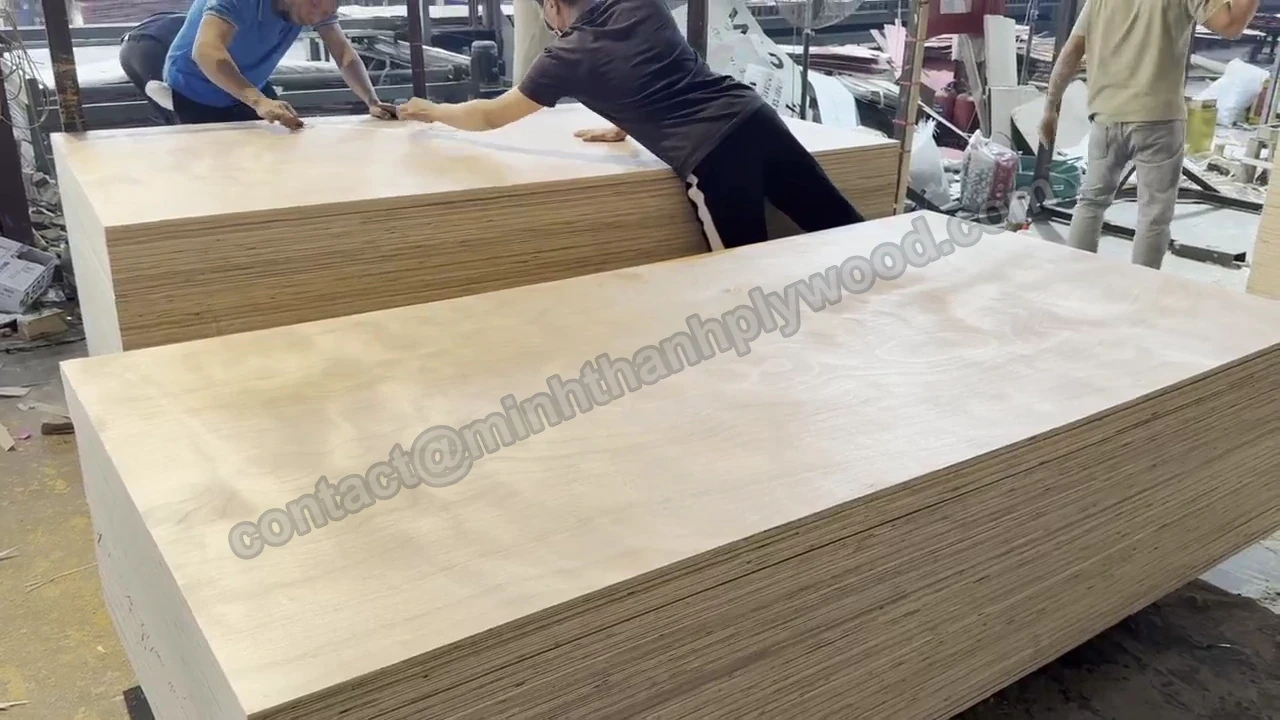
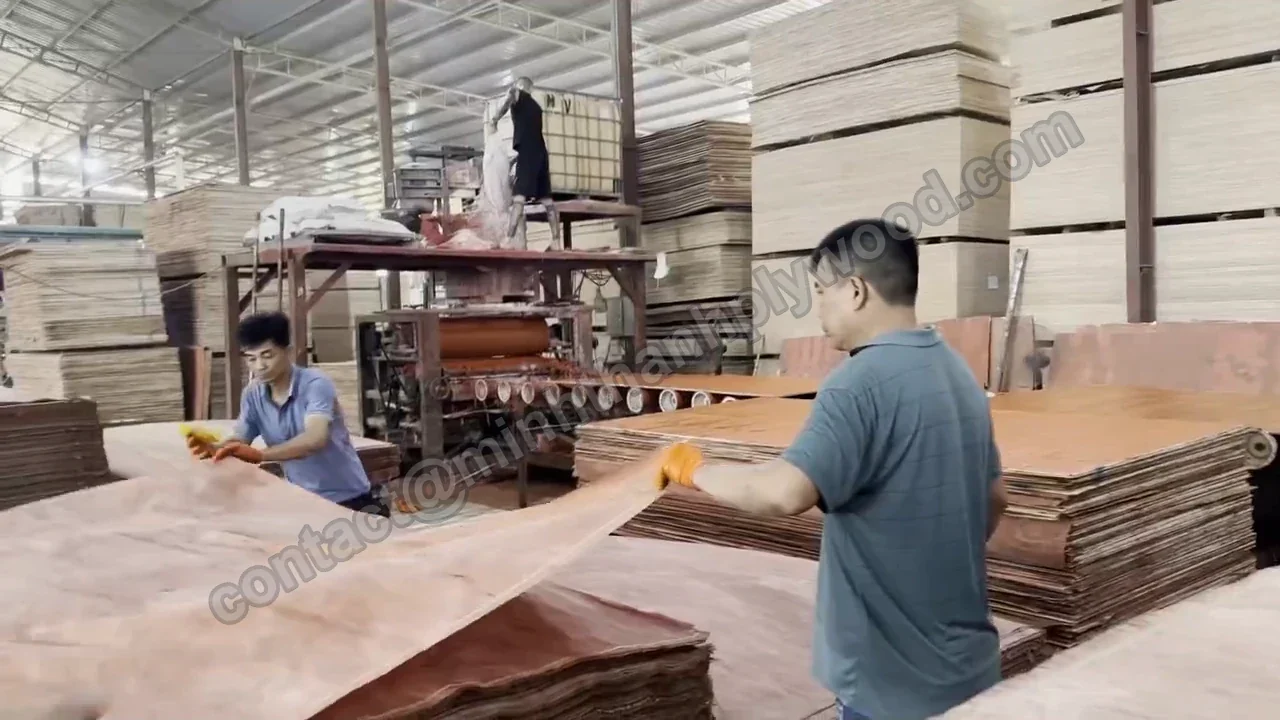
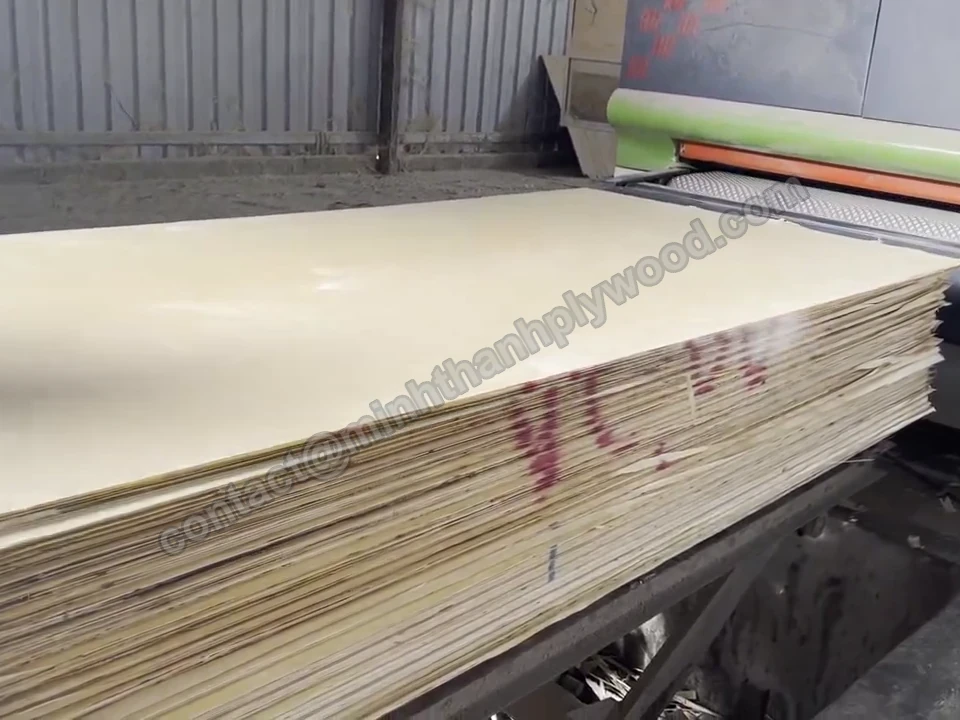
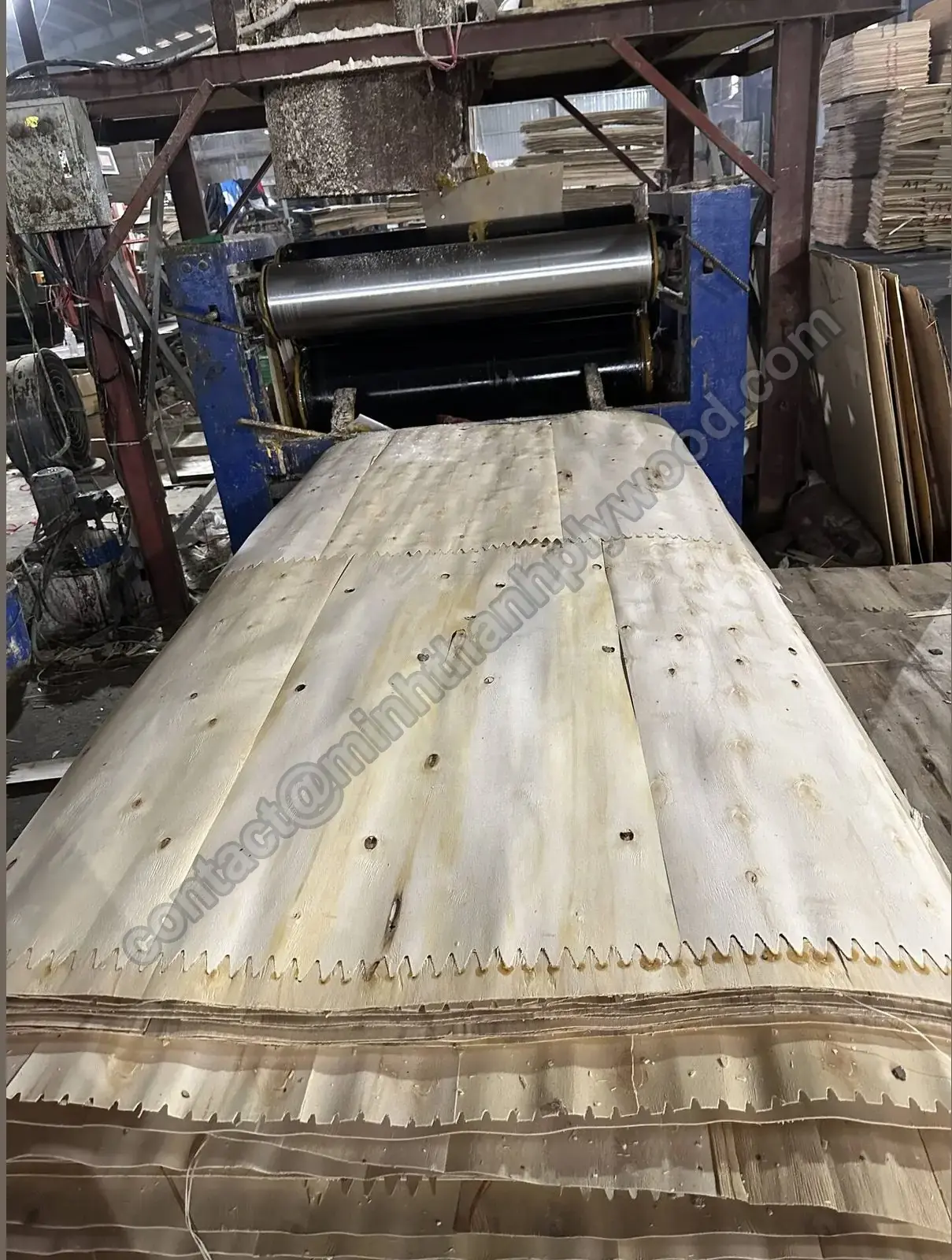
Minh Thanh’s furniture plywood range uses wood veneers, with Styrax or Eucalyptus cores as standard. This guide treats that range as a separate alternative. The factory photographs show wood-panel selection and quality control; they do not depict bamboo manufacturing or add bamboo to the catalogue.
How is bamboo plywood made?
Manufacturers make bamboo plywood by bonding prepared bamboo strips, strands or woven mats into panels. Layer orientation and any wood-veneer components determine the construction. A multilayer strip panel differs from a thin covering bonded onto another substrate, so ask the supplier to identify the materials and arrangement of each layer.
| Construction described in the offer | What to inspect | Buying consequence |
|---|---|---|
| Laminated bamboo strips | Strip orientation, joints and the exposed edge | Approve face pattern and edge appearance together |
| Cross-layer strip panel | Layer arrangement and grain direction | Match machining and bending evaluation to the layup |
| Strand-based bamboo panel | Surface figure and product-specific machining instructions | Trial tooling and finish on the actual product |
| Woven-mat bamboo panel | Mat pattern, facing system and intended service | Evaluate as the specified industrial or forming panel |
| Bamboo with wood veneers | Species and arrangement of both materials | Identify the composite construction on the order |
| Thin bamboo covering panel | Thickness, substrate and bonding instructions | Order it as part of a supported assembly |
As a primary manufacturer reference, MOSO’s bamboo solid-panel product description, consulted 8 October 2026, describes multilayer panels and distinguishes surface styles. Its single-layer covering product has a different role. Together these illustrate why a bamboo sheet name needs a construction and application line.
Keep the approved reference sample with the technical offer. Mark the sample’s face, back and orientation so that a later photograph cannot accidentally reverse the agreed construction. For repeat orders, compare the new offer with that record before accepting a change in layup, substrate or surface treatment.
How do flat-grain and edge-grain faces differ?
Flat-grain and edge-grain describe which side of the bamboo strips forms the visible surface. The broad strip faces produce one pattern; the narrower edges produce another. This is an appearance decision to approve under the intended coating, alongside the finished cut edge.
The edge-grain bamboo product sheet, consulted 8 October 2026, gives a specific material composition and finish status. Treat those entries as specifications for that product. A similarly named sheet from another source needs its own technical offer and sample approval.
For a furniture collection, lay adjacent samples in the position they will occupy. A surface that looks attractive by itself can produce an unwanted pattern change across adjoining doors. Record whether grain runs vertically or horizontally on each part, and whether a matched group must come from the same approved colour range.
Use raking light to examine the prepared surface before coating. It reveals ridges, joints and local sanding differences that a catalogue image hides. Then apply the actual finish to a sample and inspect it again. The two inspections distinguish substrate appearance from coating behaviour and give the workshop a useful acceptance reference.
What do natural, caramel and other colour names tell you?
Colour names identify the supplier’s visual offering; a finished sample establishes the accepted result. Specify a colour range with reference samples rather than relying on the word natural, caramel or amber. Different constructions and finishes can carry similar colour names without looking alike.
Inspect the colour after the coating system your workshop will use. A clear finish, a tinted finish and a pigmented coating expose different features of the substrate. Record the accepted result on a labelled sample, with its panel identity and finish schedule, so purchasing and production use the same reference.
Keep surface colour separate from structural or moisture performance. A dark panel does not establish an exterior bond. A pale sheet does not establish low emissions. Those characteristics have their own specification fields and evidence; buying by colour leaves important product requirements unresolved.
For a repeat furniture line, ask how the supplier groups sheets by appearance and identifies each pack. Your warehouse then needs a receiving method that preserves those groups. Mixing packs before cutting can create unnecessary variation across a finished set even where the individual panels are acceptable.
Which bamboo ply sheets fit furniture applications?
Bamboo plywood suits furniture when the approved surface, edge and panel properties match the designed component. Start with the visible part: a tabletop, door, shelf, divider or wall panel. Then assess the actual support and joining details rather than assigning the same requirement to every sheet.
A tabletop with an exposed edge makes the layer pattern part of the design. A painted cabinet back places greater emphasis on coating preparation and dimensional fit. A shelf needs the correct thickness and verified behaviour under its load. These uses can share a material family while requiring different constructions and acceptance trials.
Prepare a representative finished component, including the most demanding groove or fixing. Check the exposed edge, corner joints and coating around routed profiles. A plain rectangular sample is useful for appearance, but it does not answer whether a narrow detail cuts cleanly or whether the intended fastener holds in the chosen location.
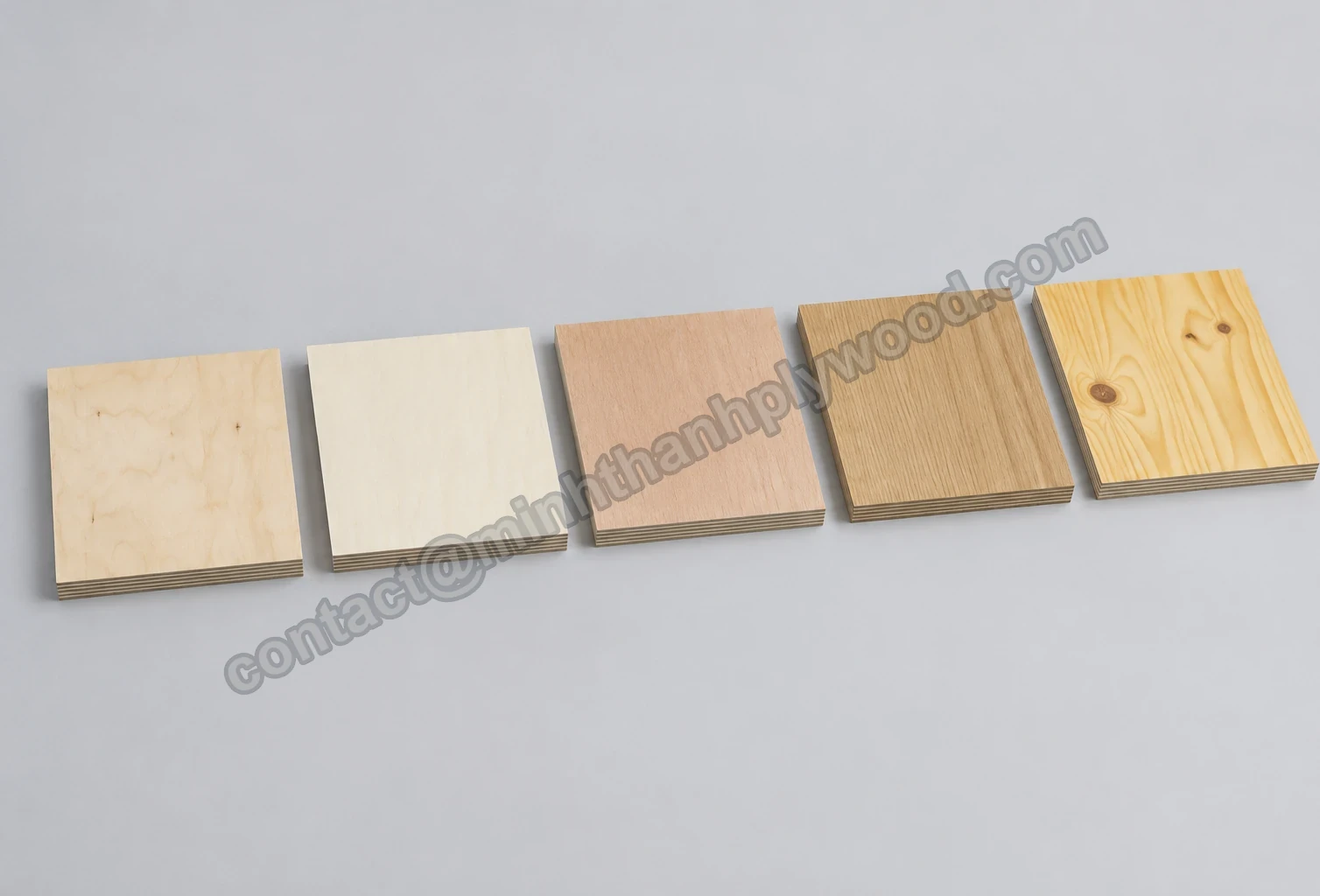
Where the design calls for a conventional wood grain, compare the bamboo option with Birch-faced plywood, Poplar or engineered veneer on a furniture core. Minh Thanh presses and calibrates the core board before pressing on the face and back. That production sequence supports a separately selected decorative face over the specified substrate.
Is bamboo plywood stronger than wood plywood?
Compare the properties of the finished panels for the same application; raw-material hardness does not rank complete sheets. The construction, thickness, loading direction and supports all belong in a bending comparison. A claim that bamboo is hard tells a buyer little about an assembled shelf’s deflection.
Ask for the test method and the product construction represented by the result. Check whether the reported direction matches the direction used in your component. A value measured along the visible grain should not be silently reused across it, and a result for one layup should not be attached to a different product offer.
For furniture, make a trial assembly with the intended unsupported span and fixings. Inspect both immediate movement and performance over the required evaluation period. Record the load arrangement and environment so the workshop can reproduce the trial. The result should identify the accepted component, not become a universal load claim for bamboo.
When a sheet enters a structural assembly, use the required structural product evidence and the project design. Decorative-panel literature is a different document. The guide to plywood load capacity explains why thickness, support and construction must be evaluated together.
Can bamboo sheets be used for formwork or outdoors?
Use a purpose-made panel whose documented service covers the intended forming or exterior assembly. A decorative bamboo furniture sheet and a bamboo mat formwork panel are separate products. Their names should remain separate in the technical submission and the order.
For concrete forming, identify the concrete-contact surface, panel stiffness, bond and edge treatment. Match the sheet to the formwork designer’s support arrangement and the required concrete finish. OSHA’s formwork requirements require the system to support anticipated vertical and lateral loads. A smooth-looking surface cannot establish the load capacity of the whole form. Obtain the product’s forming guidance before procurement.
Reuse planning also needs the site method. Cleaning, release agent, drilled holes, cut edges and storage all affect whether a sheet remains usable. Inspect panels between pours against the agreed acceptance criteria. An advertised reuse count without those conditions is too weak a basis for comparing the cost of two formwork systems.
For outdoor work, describe the complete exposure: sheltered or directly weathered, horizontal or vertical, and how water leaves the assembly. Obtain the offered product’s bond and finishing requirements for that service. The plywood water-exposure guide separates panel bonding from the covering, joints and drainage that protect an assembly.
How should you trial cutting, drilling and edge finishing?
Trial the actual panel on the workshop’s intended machinery before locking the production order. Use the supplier’s machining guidance as the starting point, then make representative parts. A product-specific trial gives purchasing usable evidence about surface quality, tool demands and accepted yield.
- Label the sheet identity and mark the face and grain direction before cutting.
- Cut the part with its intended tooling, including a demanding corner or narrow section.
- Machine the specified holes and grooves, and inspect their edges under good light.
- Fit the planned hardware or edging and assemble a representative joint.
- Apply the intended coating and inspect the finished component against the drawing.
Keep feed rate, tooling and the observed result in the workshop trial record. If a change improves the cut, record the change instead of leaving it as an operator’s memory. The next sheet should be assessed using the same setup, so that a material change is distinguishable from a machining change.
For exposed bamboo edges, inspect the appearance after the final machining operation. For covered edges, inspect adhesive contact and the finished corner. Wood-veneer alternatives need the same practical checks, especially where a core joint falls near a groove. Approve the component, not simply the unused sample board.
What should a surface and thickness inspection record?
Record the finished thickness, face condition, back condition and usable dimensions against the purchase specification. An inspection should describe the delivered sheet after its supplied preparation. A nominal sheet name is useful for ordering, but the production jig works with the actual panel.
For a fitted component, specify the allowed dimensional range before requesting samples. Measure at representative points using the agreed method and keep the locations in the record. A single reading at one corner cannot describe the whole sheet. Relate the acceptance decision to the grooves, hardware and adjacent materials in the drawing.
Inspect both sides even when only one remains visible. The reverse can still need preparation for bonding or balanced finishing. Check whether face repairs fall within an exposed or concealed part of the cutting plan. Separating those zones can improve useful yield without relaxing the appearance requirement for the finished furniture.
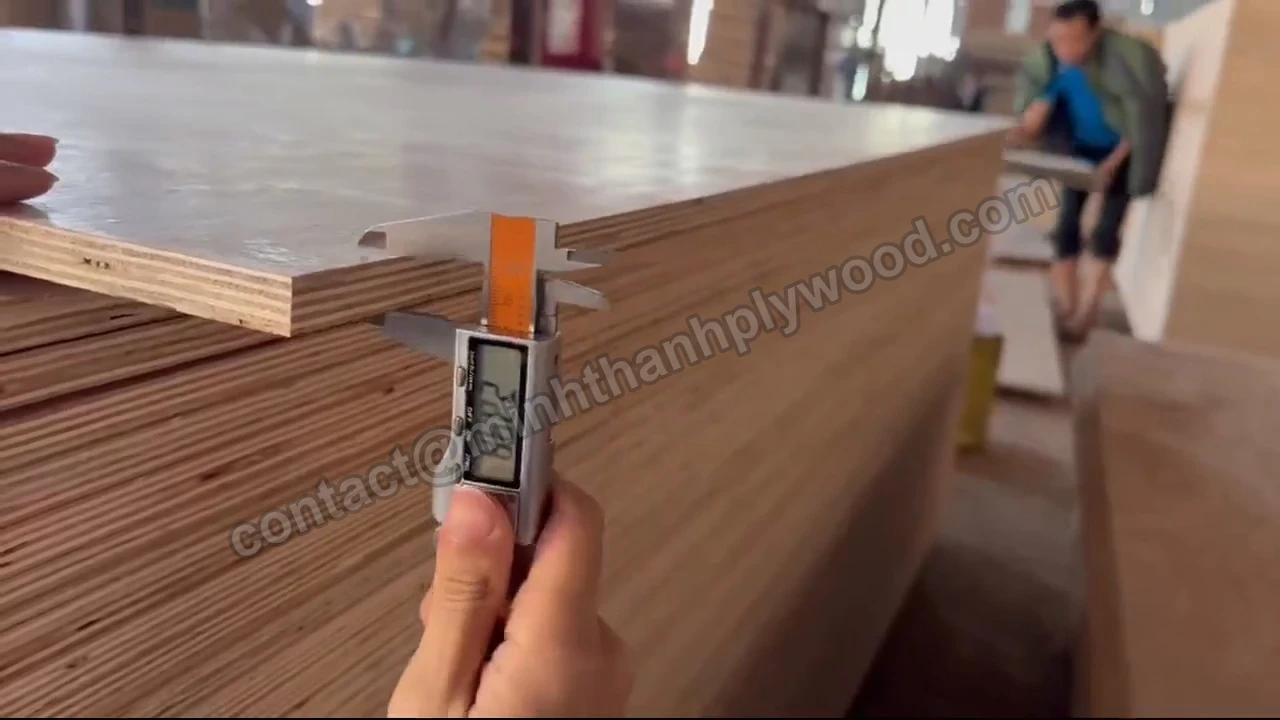
At Minh Thanh, sanded furniture plywood is specified with thickness tolerances down to ±0.2 mm; the exact ordered tolerance belongs in the offer. That factory figure describes its wood-veneer range, not bamboo products generally. The quality-control process shows how dimensional and surface checks connect to the order.
Which bond and emission documents belong with the order?
Specify bond performance and emission requirements on separate lines, with the product evidence needed at the destination. A resin description, an emission label and an exterior-use statement answer different questions. Keeping them separate helps a supplier quote the right configuration and lets receiving staff inspect the correct documents.
The bamboo plant itself does not establish the emissions of the bonded panel. EPA’s TSCA Title VI guidance explains that bamboo coverage depends on the product’s definition and construction, including whether it has a veneer or composite core. Obtain the supplied product’s technical and test records, with product identity and the relevant method. Where a coating is part of the offer, include that finish in the documentation review. Do not transfer a result from an unfinished product to a different coated assembly by assumption.
For a wood-veneer furniture alternative, Minh Thanh uses UF glue at E0 emission as standard. Its CARB P2 / TSCA Title VI certification and chamber-test records support the documented furniture range. Formaldehyde-emission guidance explains the distinction between resin and emission descriptions.
Origin and certification documents also need their own scope. Match the sales claim, product identity and shipment paperwork to the offered goods. A forest or plant description does not replace traceability, and a document from one production route should not be used to support another. Keep the verified records with the agreed panel specification.
Why is bamboo plywood so expensive?
A higher bamboo-panel quote can reflect the specified construction, appearance selection, finishing and delivery terms. Compare cost per accepted finished component using the same drawing and delivery basis. Sheet price alone overlooks cutting yield, processing and handling; compare these costs before deciding whether a premium fits the design.
Use a cutting plan to calculate how many acceptable parts come from each sheet. Include grain direction, edge trimming and rejected appearance zones. Then add the machining, edging and coating route needed to reach the same finished specification. Keep shared workshop costs consistent so the comparison reflects the actual material decision.
Freight needs the offered sheet mass and pack dimensions. A density slogan is a poor loading plan. Compare the total packed mass, including protective material, against the booking limit, then check pack geometry and unloading access. The order quantity follows the more restrictive condition rather than an assumed container capacity. MCA guidance on packed containers explains that the shipper must provide verified gross mass, including packaging and container tare.
For a repeat programme, include the cost of controlling appearance groups and replacement material. A finished set can need matching panels that are difficult to substitute after delivery. Preserve sample identity and pack traceability so the buyer can resolve a mismatch with specific evidence, instead of sorting an entire shipment by memory.
How should bamboo plywood sheets be packed and received?
Order protection for the faces, corners and edges that the finished component will expose. Define pack identification and lifting access with the supplier before dispatch. Packaging has to protect the panel through transport and support the way the buyer will actually unload and store it.
Ask for pack photographs showing the top sheet, protected edges, straps and identification. A useful record lets warehouse staff match the arrival to the packing list. Keep the construction and appearance group visible in the identification system, especially where the programme contains more than one colour or thickness.
Store packs as the product supplier instructs, with supported sheets and protection from moisture. Plan conditioning before production where the workshop environment differs from transport conditions. Document arrival damage before opening or mixing packs, then inspect representative sheets against the approved sample and purchase specification.
Minh Thanh photographs and films its wood-veneer shipments before loading. For a furniture alternative, that record connects the agreed panel with the dispatch condition. The export-packing process explains the practical checks buyers can request without confusing packaging evidence with panel-performance testing.
What specification should you send for a panel comparison?
Send the application, complete construction, visible finish and component drawing so suppliers compare the same job. State whether bamboo appearance is essential or whether a wood face is acceptable. This single decision prevents time being spent on alternatives that cannot satisfy the design.
| Specification line | What the buyer should state |
|---|---|
| Application | Finished component and intended interior or exterior service |
| Construction | Bamboo strip, strand, mat or mixed panel; required layer arrangement |
| Appearance | Face style, colour reference, back requirement and visible edge |
| Dimensions | Sheet or cut-part size, finished thickness and tolerance |
| Processing | Grooves, holes, hardware, edging and coating route |
| Performance | Required panel tests, direction, method and acceptance criteria |
| Documents | Destination requirements and evidence for the offered product |
| Logistics | Quantity, pack protection, unloading method and destination port |
Attach a finished reference sample or clear photographs where colour and edge appearance matter. Label each drawing with the same panel description used in the enquiry. If you accept alternatives, state which fields can change and which are fixed, so a proposed replacement can be assessed openly.
For a wood-veneer alternative, send Minh Thanh your specification with the preferred face, Styrax or Eucalyptus core, bond and emission requirement, thickness, size, packing and quantity. Free samples are available. The factory quotes the documented wood-panel construction that fits the component and delivery requirement.
Buyer questions, answered
What is bamboo plywood made from?
Bamboo plywood is made from bonded bamboo strips, strands or woven mats. Some products combine bamboo and wood veneers, so specify the material and grain direction of each layer rather than buying by the name alone.
Is bamboo plywood the same as wood plywood?
Bamboo is a grass, and bamboo panels can use strips or mats rather than peeled wood veneers. Both are bonded panel products, but their layer arrangement, machining and intended service need separate specifications.
What is the difference between flat-grain and edge-grain bamboo?
Flat-grain bamboo exposes the broad sides of the strips, while edge-grain exposes their narrower edges. Approve the actual surface pattern, colour and cut edge under the intended finish before ordering sheets.
Is bamboo plywood stronger than birch plywood?
Strength follows the finished-panel construction and loading conditions. Compare finished-panel bending properties, thickness, loading direction and supports; a hardness claim about the surface does not establish shelf stiffness or structural capacity.
Can bamboo plywood be used outside?
Use a bamboo panel outside only when its product documentation covers the intended exterior assembly. An interior bamboo furniture panel needs its own bond, coating and exposure assessment and should not be substituted for an exterior-rated product.
Can bamboo panels be used for concrete formwork?
Purpose-made bamboo mat or composite formwork panels can be specified for concrete forming. Decorative bamboo furniture sheets need a separate suitability assessment; order the form-facing system, panel properties and support design together.
Does bamboo plywood need edge banding?
An approved laminated bamboo edge can remain visible in furniture. Where the design calls for a concealed edge, trial the edging adhesive and machining on the supplied panel; inspect strip joints and corners before choosing either treatment.
Is bamboo plywood automatically low-emission?
Emission performance belongs to the bonded product and its documented test or certification. Specify the destination requirement and obtain evidence for the supplied panel, including any coating, rather than inferring performance from bamboo as a raw material.
How do I compare bamboo sheets with wood-veneer furniture plywood?
Approve finished samples, then compare core construction, usable component yield, machining, weight, finishing and delivered cost. For a wood-veneer alternative, Minh Thanh offers furniture panels with separately specified faces and Styrax or Eucalyptus cores.
Does Minh Thanh manufacture bamboo plywood?
Minh Thanh's documented range is wood-veneer plywood for furniture, interiors and other specified applications. This guide explains bamboo panel selection and helps buyers compare it with that wood-veneer range.