
Peeling plywood can mean a loose coating, detached face veneer or separation inside the core. Locate the failing layer before choosing a repair or rejecting a lot. Prevent delamination by matching the bond to service conditions and keeping the construction, test method and shipment identity consistent. Minh Thanh supplies specified furniture and other plywood with documented production and dispatch inspection.
What does peeling plywood mean?
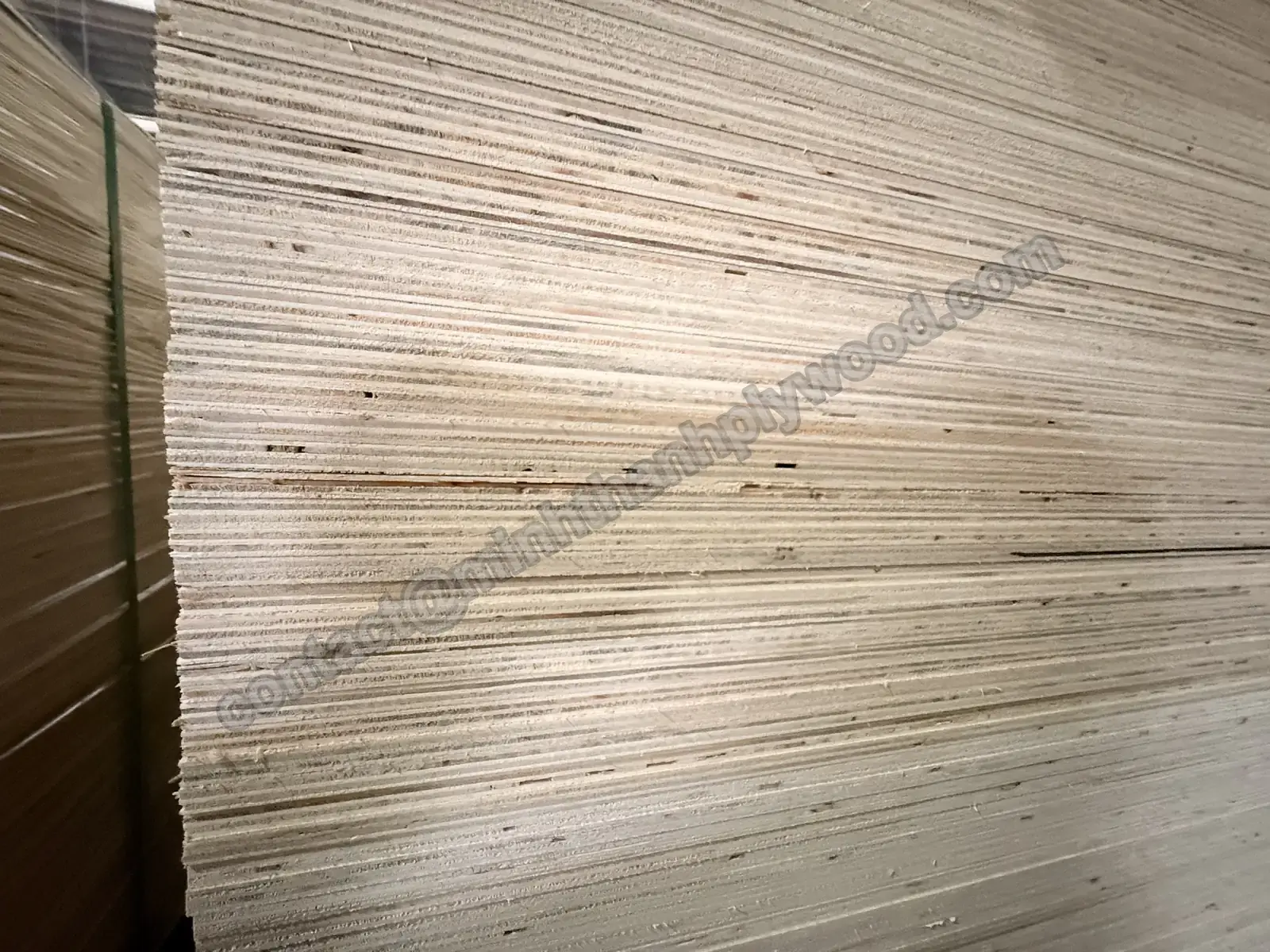
Peeling plywood describes several different defects, and the layer that is separating determines the next action. Plywood delamination is an opening between bonded veneers. A coating peeling from a sound face, a face veneer lifting from the core and an internal glue-line opening need different evidence and different dispositions.
Begin with the panel construction and the finished component. Identify the face species, core, adhesive, coating or laminate added by the workshop, and the application. The furniture plywood specification names face and core separately so an enquiry about a decorative Birch surface does not silently become an enquiry about an all-birch construction.
A visual description should say where the defect starts, which layer moves and how far it extends. “Peeling at the lower cut edge after installation” gives the investigation more information than “bad plywood”. Photograph the intact area alongside the defect so the assessor can compare the same construction rather than two unidentified scraps.
Minh Thanh furniture panels use two pressing stages: the core board is pressed and calibrated, then face and back veneers are pressed on. That sequence makes face-to-core and internal-core bond locations useful distinctions in the inspection record. Naming the failing interface helps the mill trace the relevant stage and helps the workshop avoid repairing the wrong layer.
How do you distinguish delamination from other defects?
Delamination follows an interface between veneer layers; other edge and surface features can occur within the wood or within a later finish. Use close photographs, a cut section where appropriate and a retained intact specimen to classify the observation. Keep the original edge available before destructive examination.
| Observation | Likely defect category to investigate | Evidence to collect |
|---|---|---|
| Paint flakes away while wood remains continuous | Finish adhesion or weathering | Coating system, preparation and film condition |
| Decorative face lifts from a sound-looking substrate | Face-to-core separation | Face interface, pressed construction and extent |
| Opening follows an internal veneer interface | Internal delamination | Full section and relevant glue-line specimens |
| Cavity sits within one veneer layer | Core gap or local veneer defect | Layer position and component cut layout |
| Crack runs through a veneer’s wood | Veneer split or checking | Grain direction and exposure history |
| Crushed corner separates after impact | Handling damage with local separation | Pack protection and impact location |
These categories direct examination; the photograph alone cannot assign the cause. A clean-looking separation can come from more than one bonding mechanism. A wood-fibre failure also needs interpretation within the specified test, rather than being described automatically as either good or bad glue.
Sounding the panel can help locate a suspicious area, but a hollow sound is a screening observation. It cannot quantify bond strength or replace the acceptance test. Record where it was heard, then use the agreed inspection process. This keeps an informal workshop check useful without turning it into an invented certification method.
Which causes start inside the manufacturing process?
Manufacturing-related separation begins when the veneers and adhesive fail to form or retain the required bond. Investigate surface preparation, glue application, assembly, pressing and conditioning as a connected process. Buying a named resin does not remove the need to control those operations.
The USDA Wood Handbook chapter on bond formation, 2021, consulted 8 October 2026, explains why clean wood surfaces, adhesive wetting, moisture control and assembly pressure affect bonding. It also distinguishes the adhesive layer from the surrounding wood interface. This is why the failure location matters when examining a separated coupon.
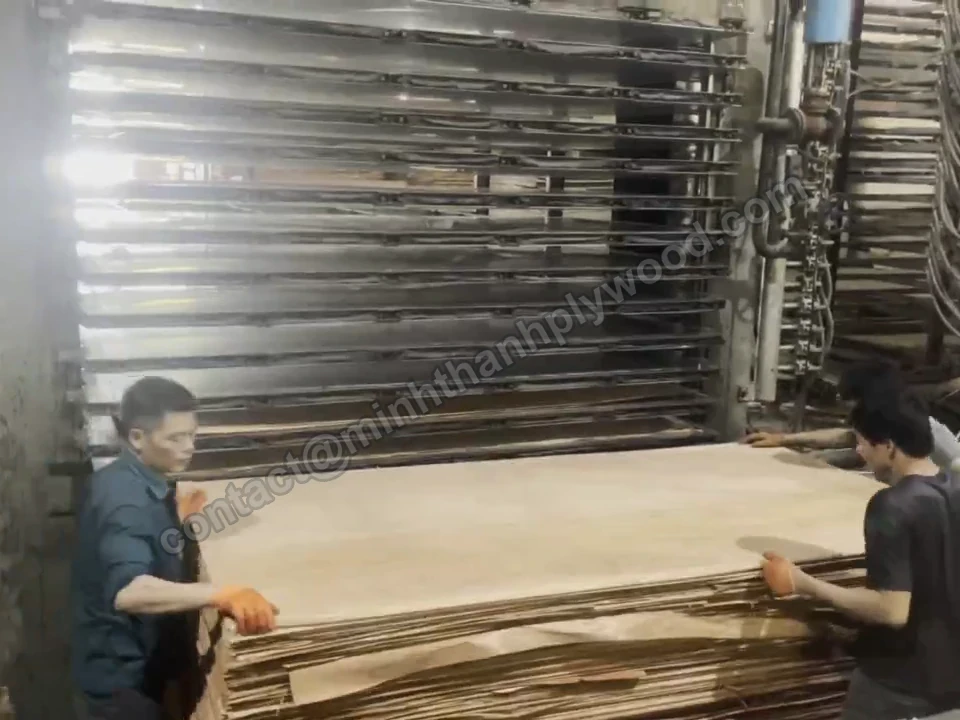
For production records, identify the construction and adhesive system alongside the relevant process reference. The investigation should connect the affected panel to its veneer preparation and pressing stages. A general photograph of a hot press shows equipment; the batch record and selected test show what happened to the supplied construction.
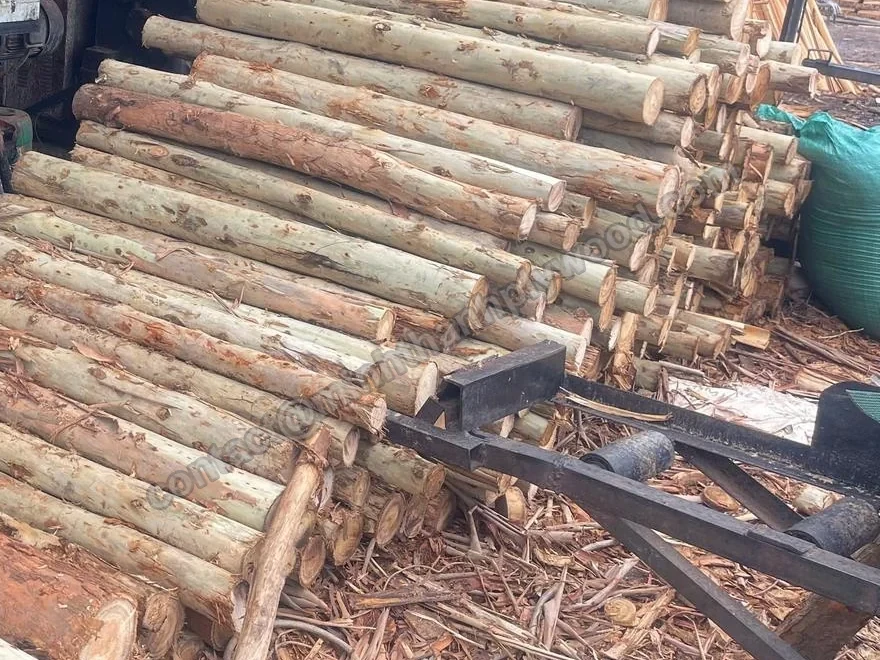
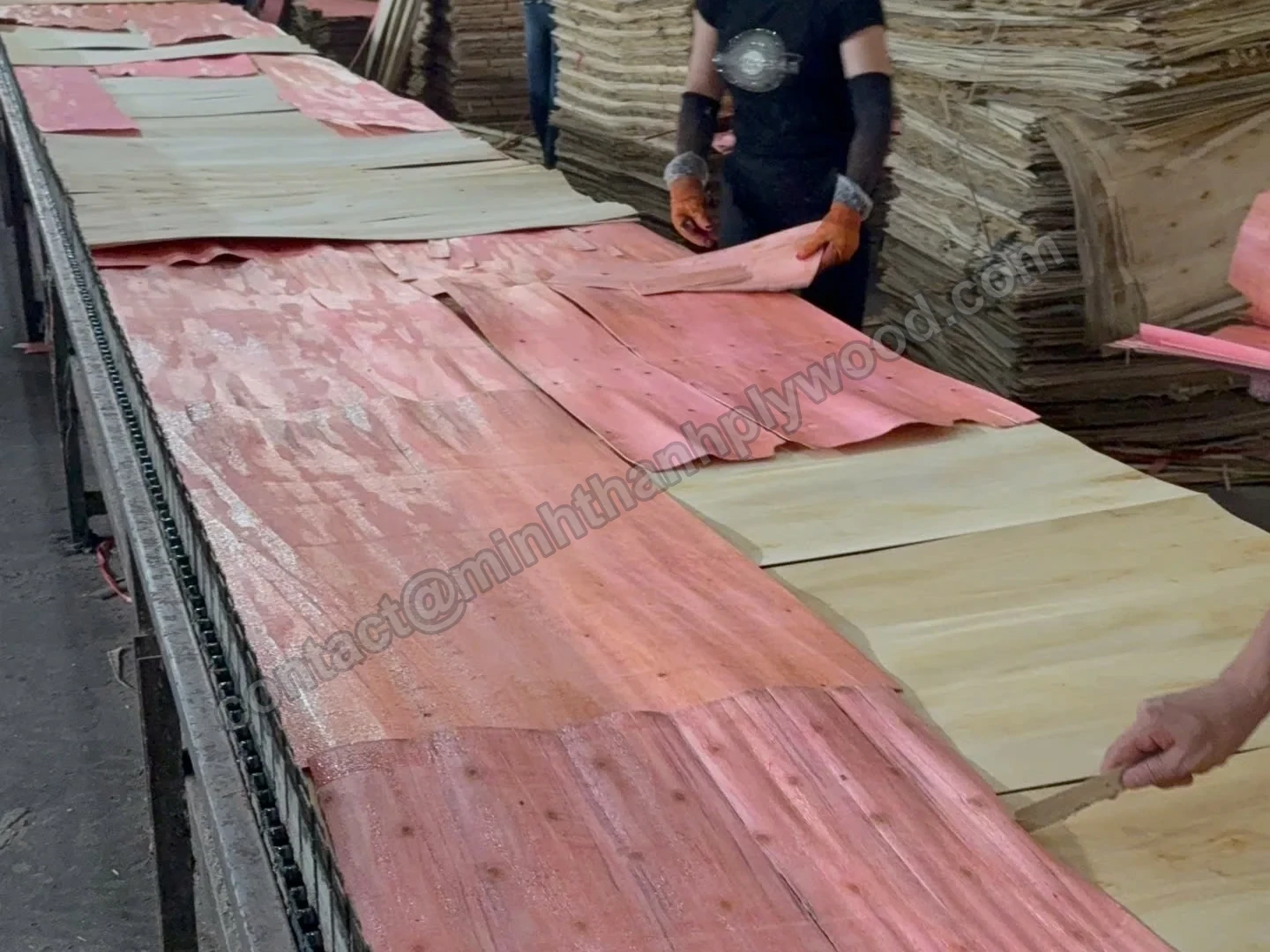
Minh Thanh stitches core veneers both horizontally and vertically, presses and calibrates the furniture core board, then presses the face and back on in a second cycle. Core gaps and overlaps that would leave unbonded pockets are closed before the faces go on, and veneers are dried to the 8–12% range before gluing. For an exposed-edge component, approve a cut sample so the edge you will see is the edge you receive.
How can the wrong bond lead to delamination of plywood?
A bond selected for dry interior service should be used in that intended environment. A panel exposed to sustained damp, wet cleaning or weather needs a construction and bonding requirement suited to those conditions. State that exposure before the sample and quotation are prepared.
Minh Thanh’s standard furniture and interior adhesive is UF at E0 emission. MR or melamine-fortified and phenolic WBP options follow the specified application. E0 and E1 describe emission requirements; they do not define water resistance. Keep “adhesive/bond” and “emission” as separate lines on the purchase document.
A kitchen enclosure with occasional splash exposure and an exterior panel repeatedly wetted by rain are different requests. The detail around plumbing, cleaning and drying is part of the application. Give the mill enough information to match the panel, and give the furniture manufacturer enough information to specify edge protection and installation.
For North American structural-panel terminology, APA’s moisture-exposure guidance, TT-002, revised December 2017 and checked 8 October 2026, distinguishes bond classifications and their end-use conditions. Use the actual declared classification. A trade term such as CDX should not overwrite the product’s marking or the project specification. The waterproof plywood guide develops that selection in more detail.
What do moisture changes and water entry tell you?
Water-entry patterns help locate the exposure that accompanied a defect, while moisture readings document the panel’s condition at a particular time. Record both. A reading after the material has dried cannot reconstruct every condition during transit, storage or service.
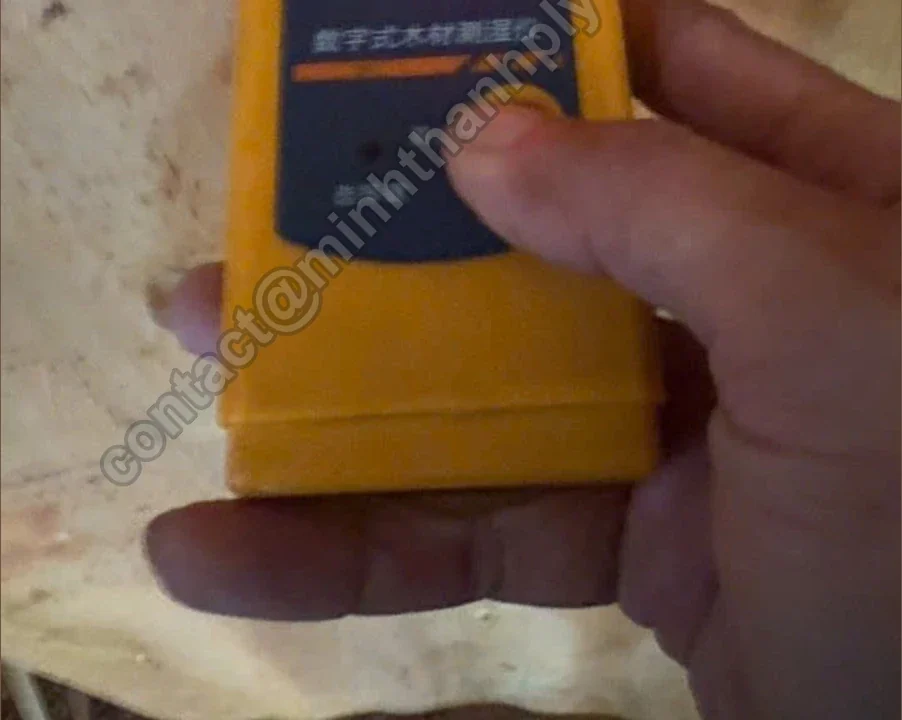
Minh Thanh dispatches furniture veneers and finished panels at 8–12% moisture content. Receiving records should identify the instrument, relevant correction, measuring position and time. Surface and internal conditions differ, and coatings can affect access. Use a consistent method for comparable readings rather than mixing values from unidentified instruments.
Inspect cut edges, routed openings, fastener holes and the lower edge of installed parts. These details can admit or retain water even when the broad face has a finish. A pattern concentrated around a pipe cut-out should prompt inspection of the cut-out and plumbing alongside the panel’s bonding evidence.
Keep moisture history separate from blame. Condensation, leakage, an unsuitable bond and a weak local bond can coexist. Record container condition at unloading, packaging condition and the subsequent storage sequence. The assessor can then compare the observed failure with the specified service and test evidence instead of treating one damp photograph as a complete cause analysis.
Why can separation appear during sawing or CNC machining?
Machining can reveal a pre-existing internal defect or create local damage at an unsupported exit edge. Examine both the original sheet and the machining operation. The appearance of separation at the saw does not by itself establish which mechanism came first.
Keep a sample from before cutting and preserve an affected offcut. Record blade or cutter condition, feed direction, workholding and whether the panel was adequately supported. Compare the defect on a clean test cut with the damaged production edge. A repeated opening along the same internal interface deserves bonding investigation, while a local breakout still needs a machining correction.
Check whether the cut intersects a core gap or veneer joint. The location can matter to a screw, narrow rail or exposed edge even when the original full sheet was accepted for another use. Give the mill the cut-to-size drawing and identify edge-critical parts before production. The approved sample should show the same edge expectation as the ordered components.
Finished thickness also affects clamping, grooves and fixtures. Our sanded furniture-panel reference is ±0.2–0.3 mm, down to ±0.2 mm for specified work. Set the selected interval on the order and trial the actual construction. The thickness and machining guide explains how a nominal dimension differs from the measured panel received by the workshop.
Which inspection and bond tests should a buyer request?
Request tests that match the agreed panel classification and application. The test method, specimen preparation, conditioning and acceptance criterion should be identified together. “Boil tested” describes an activity; it leaves the procedure and pass decision undefined.
For plywood purchased to European bonding requirements, agree the relevant EN 314-1 test method and EN 314-2 bonding-quality requirement with the technical specification. The BSI record for BS EN 314-2:1993 identifies the requirements standard; consulted 8 October 2026. Keep the applicable edition and selected class in the order package so the laboratory and inspector evaluate the same request.
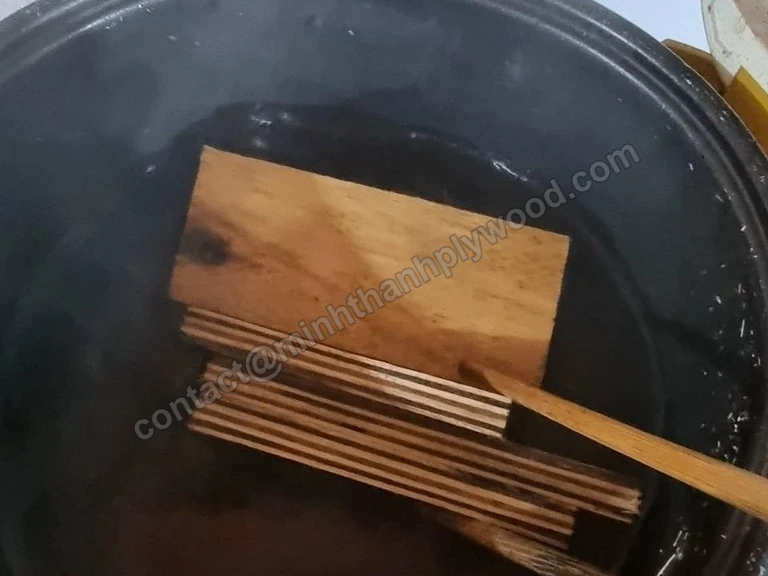
Ask the report to identify specimens, individual results, tested interfaces and failure observations. A result expressed as shear strength needs the stated method and relevant wood-failure assessment. An informal edge-pry or soak trial can screen sample behaviour, but it should stay labelled as that trial instead of acquiring a standard’s name after the event.
Agree the sampling plan and lot definition before production. Include representative positions and the ordered construction in the selection. Retain intact reference material so the supplier can compare a reported failure. At Minh Thanh, quality inspection connects the production and shipment records; the order’s bond acceptance belongs alongside dimensions and appearance.
How should you interpret a bond-test report?
Interpret a bond-test report by comparing the tested specimen and method with the purchase requirement. Start with identity, then conditions, then results and acceptance. The numerical result becomes useful only when these items describe the material you are buying.
| Report field | What the buyer should check |
|---|---|
| Product and lot | Correct construction and traceable sample reference |
| Specimen geometry | Dimensions and glue lines required by the method |
| Conditioning | Procedure appropriate to the selected classification |
| Test method and edition | Same requirement as the contract |
| Individual results | Distribution of outcomes, not only a favourable average |
| Failure observation | Adhesive interface, wood failure and relevant assessment |
| Decision | Acceptance evaluated against the specified requirement |
A report on another face/core combination or bond should remain evidence for that tested construction. It cannot silently become the result for a different repeat order. Where the specification changes, record the change and establish the required evidence before dispatch.
Emission and management certificates answer other questions. Minh Thanh holds CARB P2 / TSCA Title VI (ICTT mill no. 23024) and ISO 9001:2015 (KAC25/0185) certification, with the quality documentation available to buyers. Use chamber reports for CARB P2 / TSCA Title VI emissions, process records for ISO 9001:2015 quality management and bonding evidence for the selected bond requirement. Keep these documents together without replacing one with another.
How do storage and transport prevent avoidable damage?
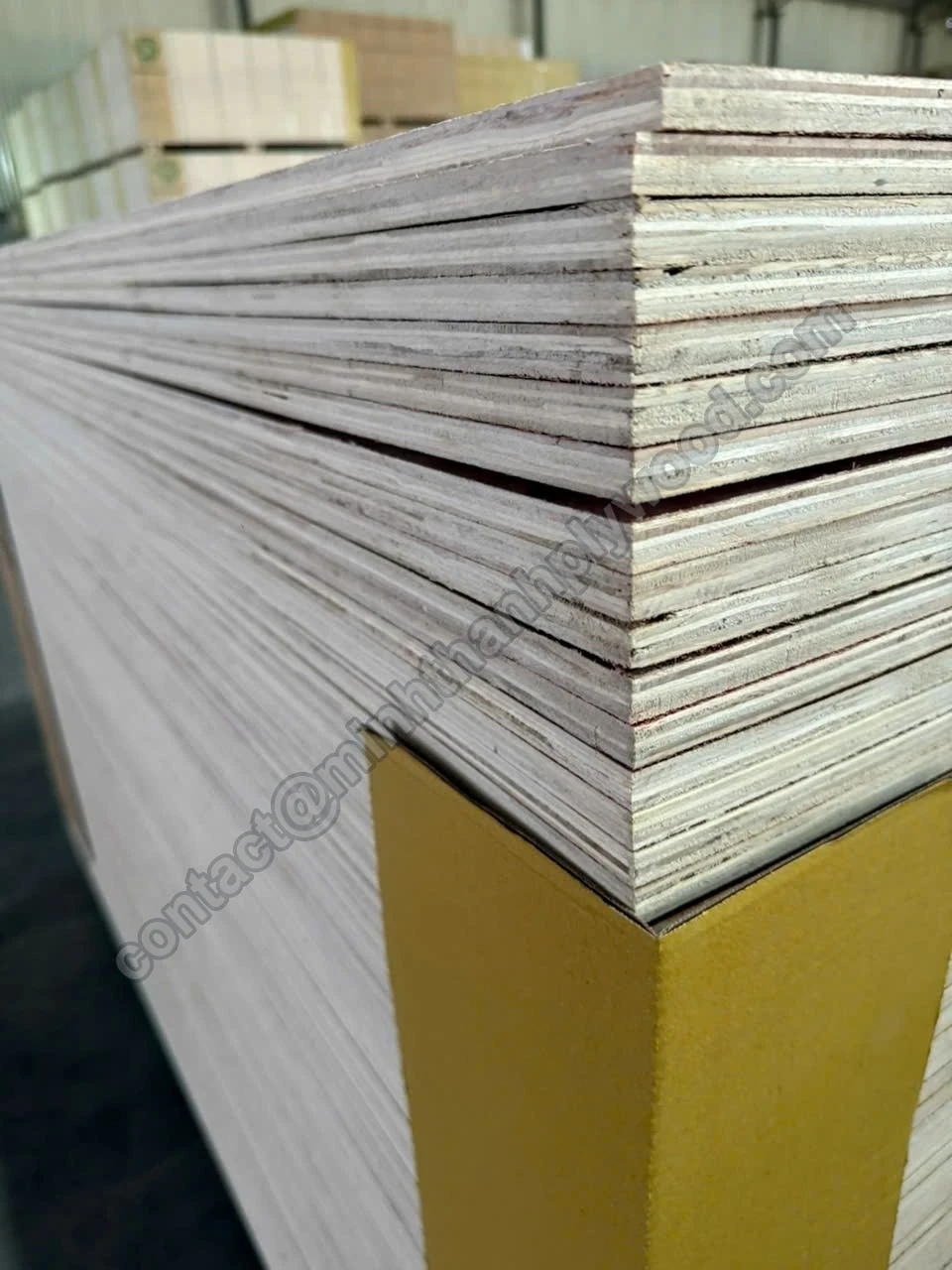
Store plywood flat, supported and protected from wet surfaces and weather. The pack needs enough support to retain its intended shape, and the surrounding space should allow moisture to be managed. A wrap protects handling and shipment; it cannot dry panels stored wet inside it.
Before loading, inspect the container’s interior, floor and visible signs of water entry. Keep pack bases, covers, corners and restraint arrangements suited to the load. Minh Thanh photographs and films shipments before loading, giving buyers a visual reference for pack condition at dispatch. Preserve that reference with the packing list and receiving photographs.
On arrival, photograph the container and packs before unwrapping, then record any wet cover, torn wrap, displaced support or impact. Distinguish a damaged outer sheet from the condition of the pack’s interior. That comparison is useful when deciding whether the problem is local or extends through a larger part of the delivery.
After opening, keep affected material separately identified and protected while it is assessed. Avoid leaving suspect sheets exposed to new rain or water during the claim process. A clear sequence from unloading to inspection makes the technical evidence more useful and protects material that remains suitable for the agreed application.
Can a finish or edge sealer prevent plywood delamination?
A compatible finish and complete edge treatment reduce water entry through the component, while the panel still needs a bond suited to its use. Apply the protection as part of the finishing design. A coating cannot rebuild an interface that has already separated.
For a furniture order, identify which faces, edges and openings will be coated by the receiving workshop. Minh Thanh supplies UV-ready furniture surfaces for customers to apply their coating. “UV-ready” names the surface preparation; the actual coating system and its service performance belong to the customer’s finish specification.
Prepare cut-outs, hardware recesses and inaccessible edges before assembly. A neatly finished broad face can hide an untreated opening behind a sink or appliance. Trial the complete detail, including the finish at edge banding, corners and joints. Keep the coating supplier’s instructions with the workshop route so a later operation does not remove essential protection.
Inspection should distinguish coating defects from panel-bond defects. If paint lifts while the wood below remains continuous, examine preparation and coating compatibility. If the face veneer lifts with the paint attached, preserve the face-to-core interface for assessment. This small distinction prevents an expensive coating change from leaving the underlying failure unresolved.
When is repair reasonable for delaminating plywood?
Repair of delaminating plywood is an assessment decision based on the defect location, component function and remaining sound material. A small decorative-face lift in a nonstructural piece can be evaluated for a controlled workshop repair. Internal delamination, decayed wood and damage in a load-carrying component need a technical disposition before reuse.
For a proposed face repair, first correct the moisture source and assess the substrate. Select an adhesive compatible with both wood and service, and a pressing arrangement that brings the whole repair interface into contact. Evaluate appearance, thickness, machining and subsequent finish on the repaired sample. Filling a visible edge cavity alone does not show that an internal opening has bonded again.
Do not convert a cosmetic repair into an assumed structural restoration. Building panels, temporary works, loaded packaging members and other safety-critical uses follow their designer’s or competent assessor’s decision. Keep the material identifiable while replacement, rejection or an engineered repair is agreed.
For a delivery claim, preserving an unaltered specimen usually helps more than repairing every affected sheet immediately. Agree with the supplier which samples will be retained, which parts can be isolated and which examinations are needed. This protects evidence and lets unaffected stock be assessed against its own condition rather than rejected by association.
What evidence makes a delamination claim actionable?
An actionable claim links the defect to the order, location and history of the material. Send a concise evidence package before the affected sheets lose their labels or are mixed with other deliveries. The supplier should be able to follow the observation from pack to panel to specimen.
- Identify order, product specification, shipment and affected pack references.
- Photograph labels, complete sheets and close-ups with a scale.
- Mark the failing interface and approximate extent on a sketch or photograph.
- List affected quantities and the inspection basis used to find them.
- Record unloading, storage, moisture observations and first machining or installation.
- Preserve unaltered specimens and identify every tested piece.
- Agree examination, acceptance and disposition before repair or disposal.
A defect count needs a denominator. “Five affected sheets” means something different in five inspected sheets and in five hundred inspected sheets. State the inspected quantity and how it was selected. These are reporting examples, not a sampling rule or a claim about a Minh Thanh shipment.
Use consistent defect terms across photographs, specimen labels and the report. Record observations first, then proposed mechanisms. A joint technical assessment can compare the supplied construction, production records, bond-test evidence and exposure history. This makes corrective action specific enough to improve the next order.
How do you write a specification that prevents repeat failures?
Write the next order around the complete component and its acceptance evidence. Carry forward the lessons from the defect investigation as measurable requirements: construction, bond, edge detail, inspection and traceable identity. A vague instruction for “better glue” loses the cause that the investigation worked to find.
For Minh Thanh furniture plywood, specify face/back appearance, white Styrax or Eucalyptus core, finished thickness and selected tolerance, sheet or cut dimensions, adhesive/bond and emission requirement. State the coating or lamination operation, exposed-edge expectation and service environment. Attach the approved sample reference and component drawing.
For humid or exterior enquiries, describe water exposure and drying conditions and request the appropriate melamine-fortified or phenolic bond. The exterior plywood product page provides the available application route. Keep structural grading and any prescribed test method attached to the project request.
Send the plywood specification for a quotation with application, core, glue/emission, face/back, size, packing and quantity, plus destination. Include the relevant acceptance test and inspection plan. Free samples, a clear construction reference and shipment records let the buyer compare the proposed panel with the actual workshop need before ordering the container.
Buyer questions, answered
What is plywood delamination?
Plywood delamination is separation between bonded veneer layers. Locate the opening in the face-to-core or internal core bond and record its extent; peeling paint or laminate requires a different investigation.
Why is my plywood peeling?
Possible mechanisms include a bond unsuited to exposure, a manufacturing bonding defect, water entering an edge or cut-out, and damage during machining or handling. Identify the separated layer and the history of the affected sheet before attributing the cause.
Can peeling plywood be repaired?
An isolated decorative-face defect on a sound nonstructural component can be assessed for a workshop repair using a compatible adhesive and controlled pressing. Internal separation, decay or damage in a load-carrying part requires technical assessment and replacement or an engineered disposition.
Does phenolic WBP glue prevent every delamination problem?
Phenolic WBP provides a water-resistant bond for the specified application. Sound veneers, correct bonding and protection of the wood remain necessary; adhesive naming alone does not establish the performance of the complete panel.
Is E0 plywood waterproof?
E0 describes an emission requirement, while UF, melamine-fortified and phenolic WBP describe adhesive or bond options. Specify the exposure and bond separately from E0 when ordering a panel for humid or exterior service.
Is a core gap the same as delamination?
A core gap is an interruption within a veneer layer; delamination opens between layers. Both can affect a component, but the inspection record should identify which feature is present rather than calling every visible edge cavity a failed bond.
How do I test plywood bonding quality?
Use the method and bond classification agreed for the product, with specified specimen selection, conditioning, loading and acceptance. Record individual results and failure location; a photograph of a boiled coupon alone does not establish compliance.
What moisture content does Minh Thanh dispatch?
Minh Thanh dries veneers and finished panels to an 8–12% dispatch moisture range for furniture plywood. Record receiving moisture separately because the panels encounter different storage and service environments after shipment.
What should I do when a delivery shows delamination?
Identify and hold the affected material, photograph its labels and damage, and preserve an unaltered specimen. Map findings to packs and sheets, record unloading and storage conditions, and send the evidence with the order specification for a joint technical assessment.
Will sealing an edge repair a weak glue line?
An edge coating reduces water entry through a finished detail but does not restore the bond between separated veneers. Inspect and resolve the underlying panel defect before treating the surface or returning the component to service.