
In short, a plywood quotation format needs ten lines: application, face and grade, core, glue and emission class, thickness and tolerance, size, surface, packing, quantity, and port with Incoterm and documents. Send them to Minh Thanh Plywood and every mill you compare, and the quotes describe the same panel, so price is the only difference left.
What does a plywood quotation format need to contain?
A plywood quotation request needs ten specification lines: application, face and grade, core, glue and emission class, thickness and tolerance, size, surface, packing, quantity, and port with documents. Each line changes the panel a mill will make, and therefore the price it will quote, as the table shows:
| No. | Line | Example | Why the price changes |
|---|---|---|---|
| 1 | Application | Kitchen cabinet carcasses, clear lacquer | Decides face grade, core and tolerance |
| 2 | Face and grade | Birch D/D | Face species and grade are the most visible cost |
| 3 | Core and construction | White Styrax, stitched, pressed twice | Core species sets density and price per m³ |
| 4 | Glue and emission class | UF glue at E0, CARB P2 / TSCA Title VI | Resin type and certified emission cost differently |
| 5 | Thickness and tolerance | 18 mm, ±0.3 mm | Tighter tolerance means more calibration and sanding |
| 6 | Size and cutting | 1250 × 2500 mm, or cut into 4 pieces | Non-standard sizes and cutting add work |
| 7 | Surface | Sanded both sides, UV-ready | Sanding and polishing are separate steps |
| 8 | Packing and labels | Export pack, cardboard, steel straps, your label | Materials and labour per pack |
| 9 | Quantity and mix | 1×40HC, one specification | Mixed containers cost more per m³ |
| 10 | Port, Incoterm, documents | CIF Genoa, EUR.1, EUDR dossier | Freight, insurance and document work |
A request that carries all ten lines gets a price the first time. A request that names only a thickness and a quantity gets either a list of questions or a price for whichever panel is quickest to make, which is rarely the panel the buyer had in mind. The rest of this guide explains each line, gives a template to copy, and shows a complete enquiry and the reply it gets.
Line 1: what is the panel for?
Start with the application, in one sentence, because a mill reads every other line through it. “Kitchen carcasses, clear lacquer on the visible gable” tells us that the face and back both matter, that the edge will be banded, that the panel goes into a CNC router and that the buyer sells into a market with emission rules.
Useful details in this line:
- the product the panel becomes (cabinet, wardrobe, drawer, door, shelf, shop fitting, formwork, packaging, vehicle floor);
- the finish the buyer applies (clear lacquer, paint, UV coating, laminate, veneer, none);
- the market the finished product is sold in (EU, UK, US, Middle East, Asia);
- whether the panel is processed on CNC or cut by hand.
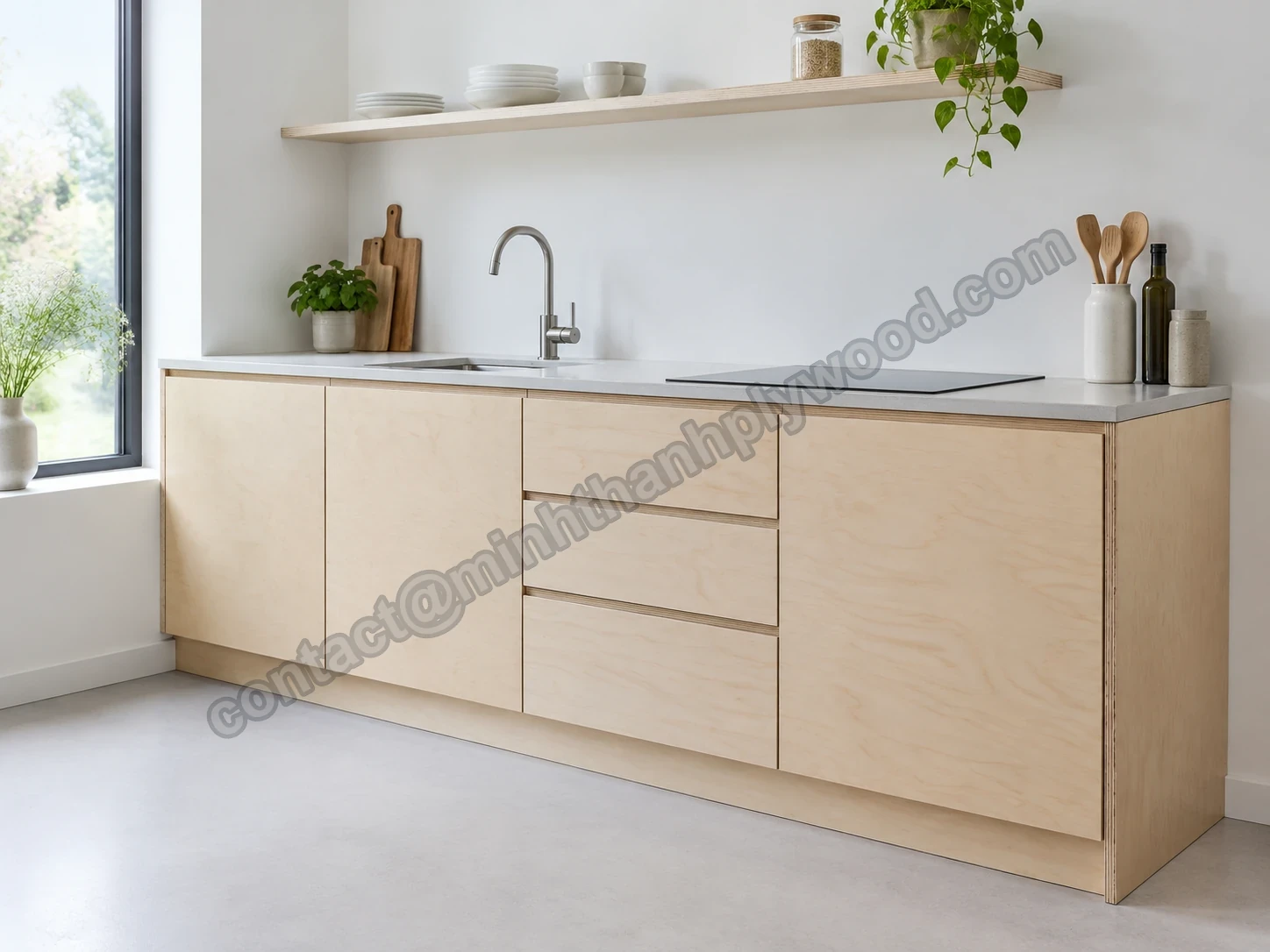
If you buy for resale and do not know the end use, say so and name the customers you sell to: “distributor, kitchen and furniture workshops in Italy”. That is enough for a mill to propose the right line.
Line 2: which face, and which grade?
The face is two specifications: the species, and the grade of the face and back.
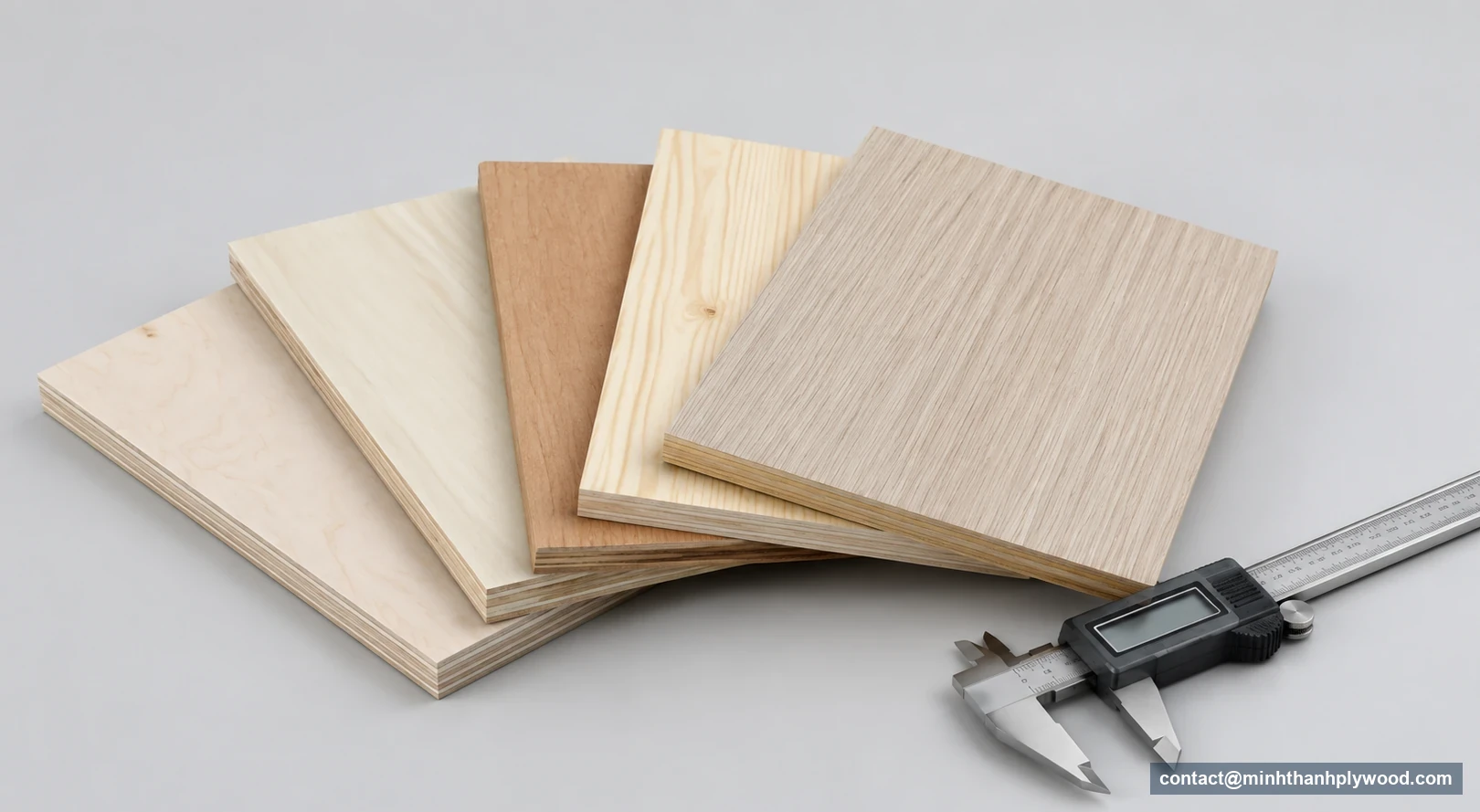
Species. Name the face veneer you want. Minh Thanh makes more than ten faces; the most produced are engineered veneer (EV), poplar, birch, okoume and pine, with bintangor, eucalyptus, gurjan and sapele on request. If you want a look rather than a species (“pale, plain, for painting”), say so and we propose faces.
Grade. Grades are quoted as face/back pairs, and each face species has its own ladder:
| Face | Grade pairs at Minh Thanh | Close equivalent buyers use |
|---|---|---|
| Birch | D+, D, E, quoted as D+/D, D/D, D/E | D+ ≈ B, D ≈ BB, E ≈ CP/C; so D+/D ≈ B/BB, D/D ≈ BB/BB |
| Poplar | A/A, A/B, B/B | Also ordered by B/BB, BB/CC and CP on the same ladder |
| Pine | A/A, A/B, B/B, and B/C for utility parts | European softwood classes I to IV, US A to D |
| Eucalyptus | A/A, A/B, B/B | A/A two visible faces, A/B one, B/B for paint or overlay |
| Exterior / CDX-type | C/D utility appearance | Matched to the order sample |
Write the pair, not a single letter: “birch D/E” tells us the back can carry more repairs than the face. And write which side the customer sees. A shelf is seen from both sides; a cabinet back is seen from the inside only. The approved sample fixes the appearance for the whole order, so the grade line and the sample travel together.
Line 3: which core, and how is it built?
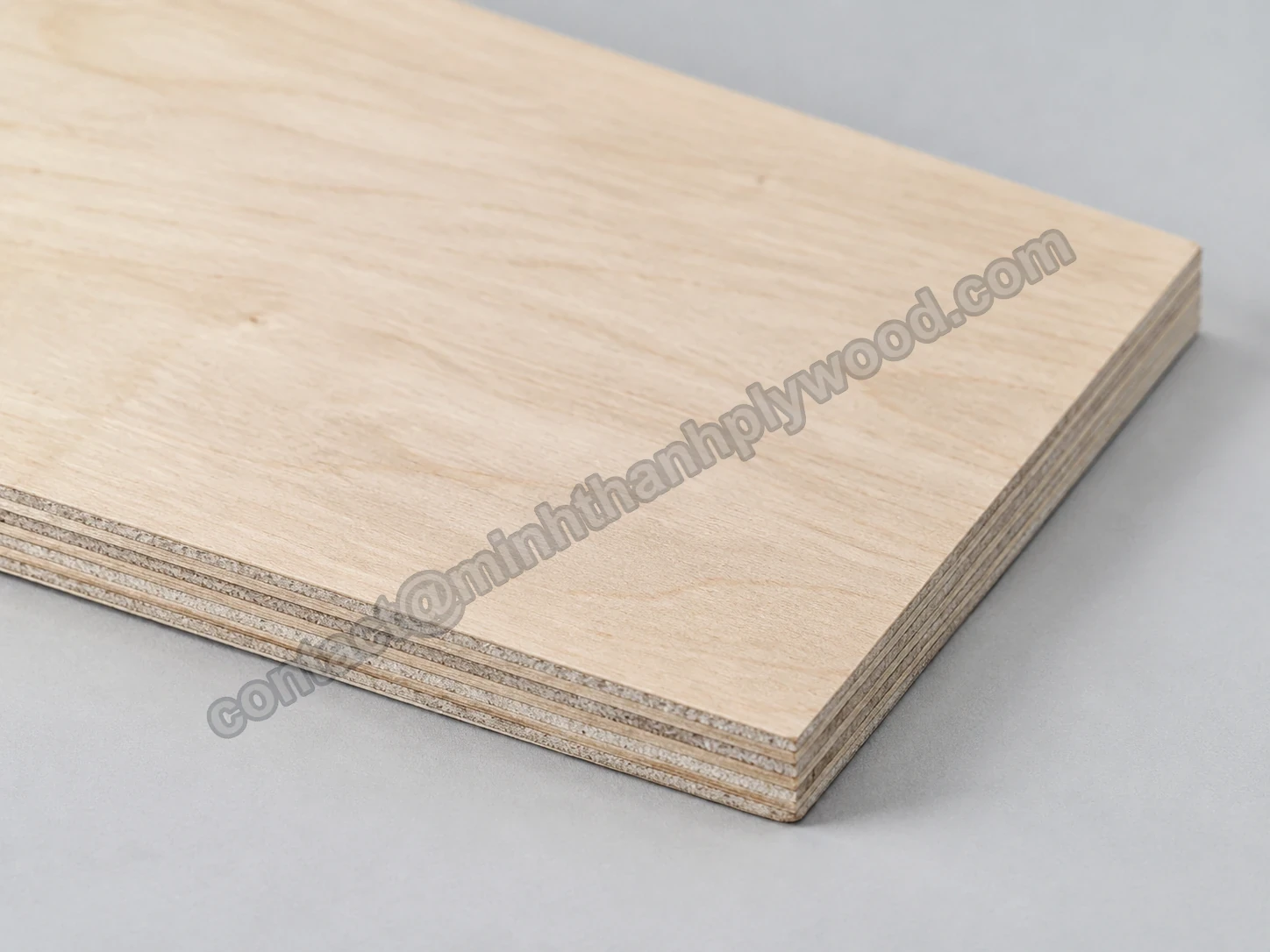
The core is the largest part of the panel by volume, so it moves the price per cubic metre more than any other line. It also decides the weight of each sheet, the colour of the edge and how many sheets fit in a container.
Name the core species. At Minh Thanh, white Styrax and Eucalyptus are the standard furniture cores; Acacia and Pine cores are made on order.
| Core | Reference density | Edge | Typical use |
|---|---|---|---|
| Styrax | 500 kg/m³ | Pale, almost white | Furniture and interior, the most sheets per container |
| Acacia | 580 kg/m³ | Light brown | Firmer panels, made on order |
| Eucalyptus | 650 kg/m³ | Pink to light brown | Heavy-duty furniture parts, many fixings |
Then name the construction if it matters to you. For furniture panels, two construction lines are worth writing:
- stitched core (core veneers joined horizontally and vertically, so no gap opens under the face);
- pressed twice (core pressed and calibrated, then face and back pressed on).
Both are standard for Minh Thanh furniture-grade panels. Writing them on the request still helps: it puts them on every mill’s quotation, and a mill that does not do them has to say so.
Line 4: which glue, and which emission class?
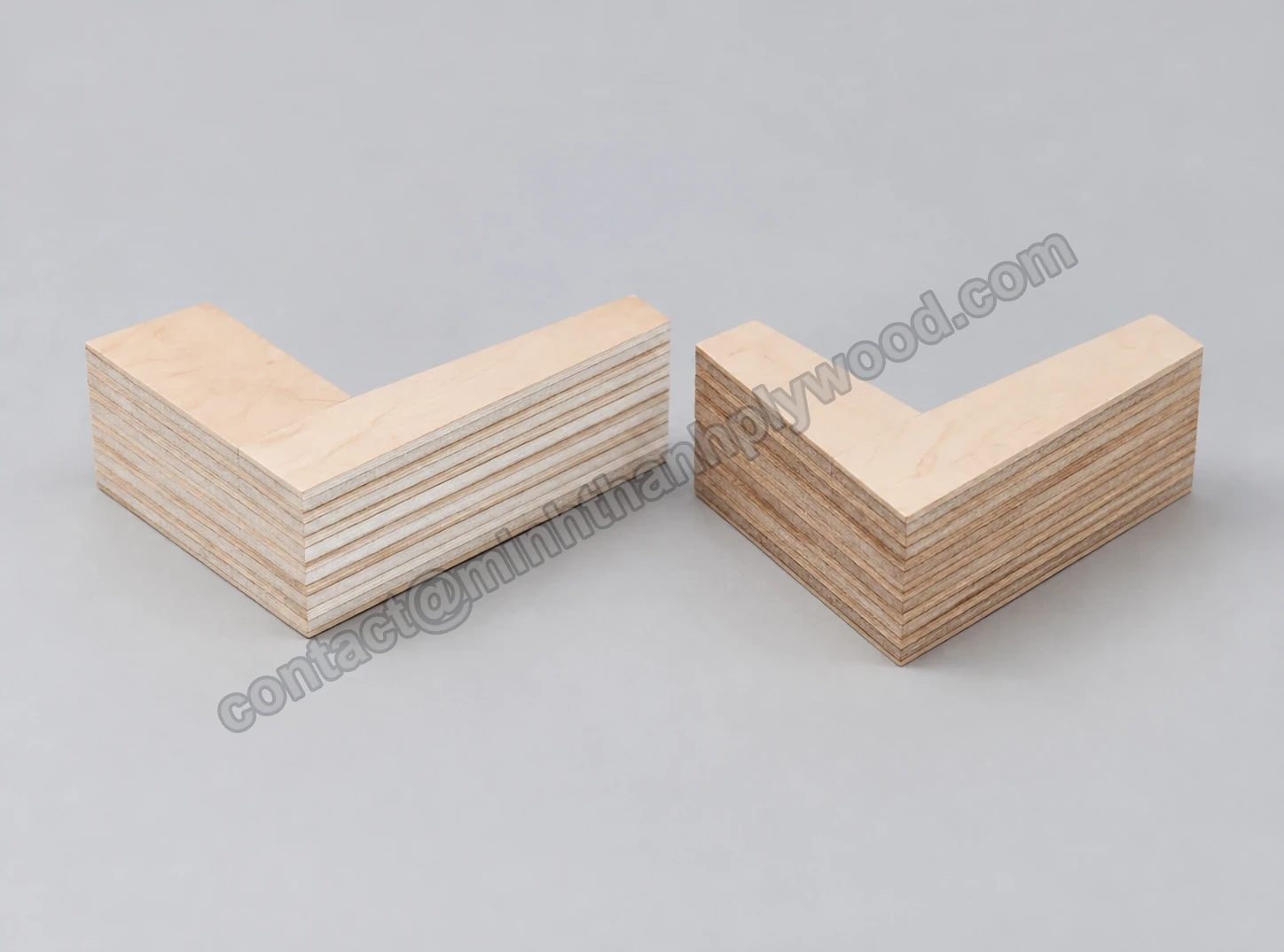
Glue and emission class are two separate lines, and mixing them up is one of the most common reasons two quotes do not match.
Glue (resin type) decides moisture resistance:
- UF (urea-formaldehyde): standard for furniture and interior panels used in dry rooms;
- MR / melamine-fortified: for kitchens, bathrooms and humid interiors;
- WBP / phenolic: for exterior, formwork and transport floors.
Emission class decides how much formaldehyde the panel releases, and is proven by certification and tests, not by the resin name:
- E0 at Minh Thanh for furniture and interior panels, made with UF glue at E0 emission;
- CARB P2 / TSCA Title VI for the US market, set by the California Air Resources Board and the US EPA (checked October 2026). Minh Thanh holds it (ICTT mill no. 23024, veneer-core hardwood plywood, 3–50 mm).
- E1 is an emission class, not a glue type: write “UF glue, E1” if that is what your market accepts.
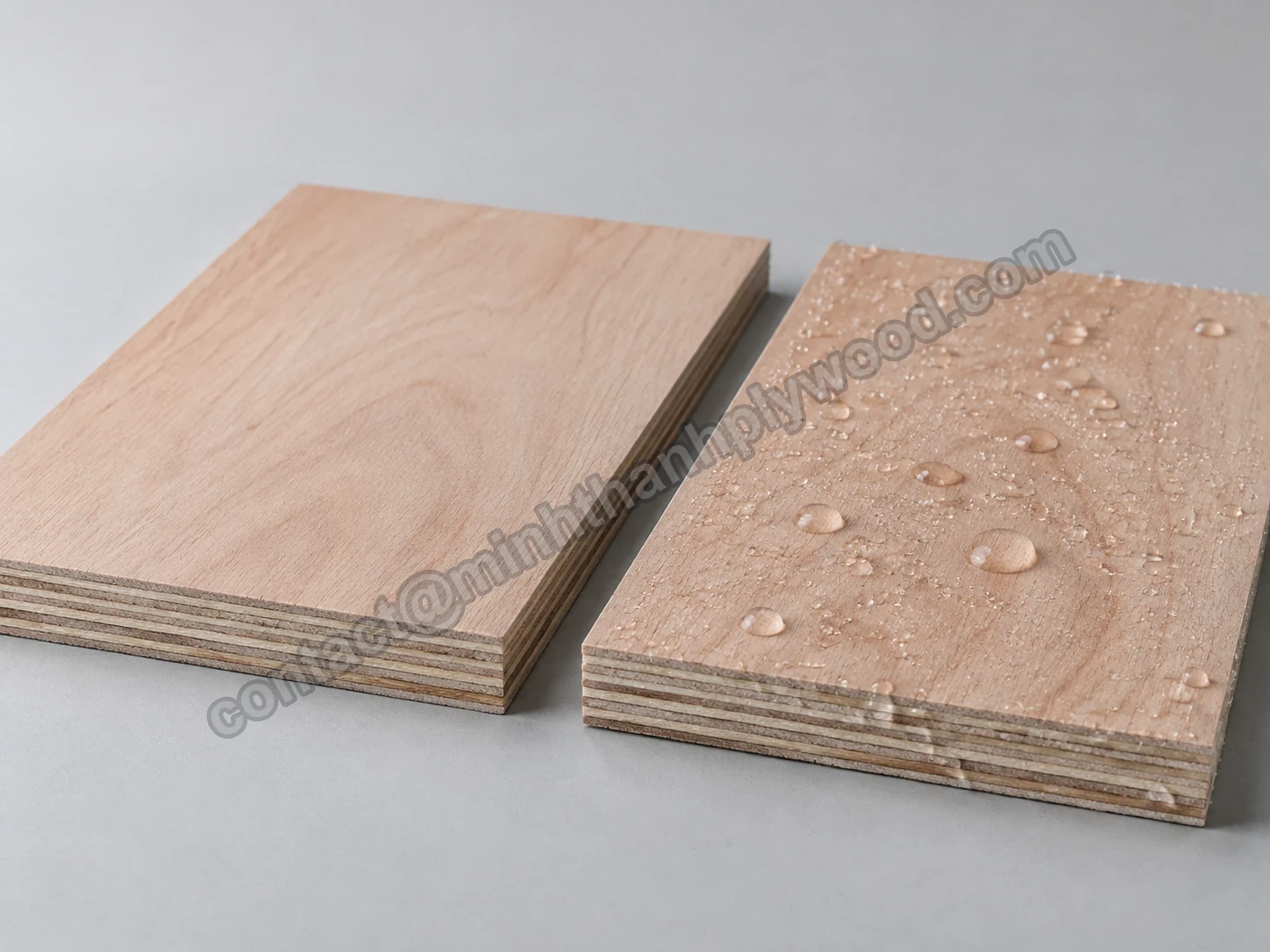
Ask for the evidence in the same line. For Minh Thanh panels it is the CARB P2 / TSCA Title VI certificate, six ASTM D6007 chamber tests between April 2025 and June 2026 on 9, 15 and 18 mm panels that averaged 0.014–0.032 ppm against the 0.05 ppm limit, and E0 tests every three months. If your customer wants a test to its own method, for example EN 717-1, write it on the request: we arrange it through SGS.
Line 5: what thickness, and what tolerance?
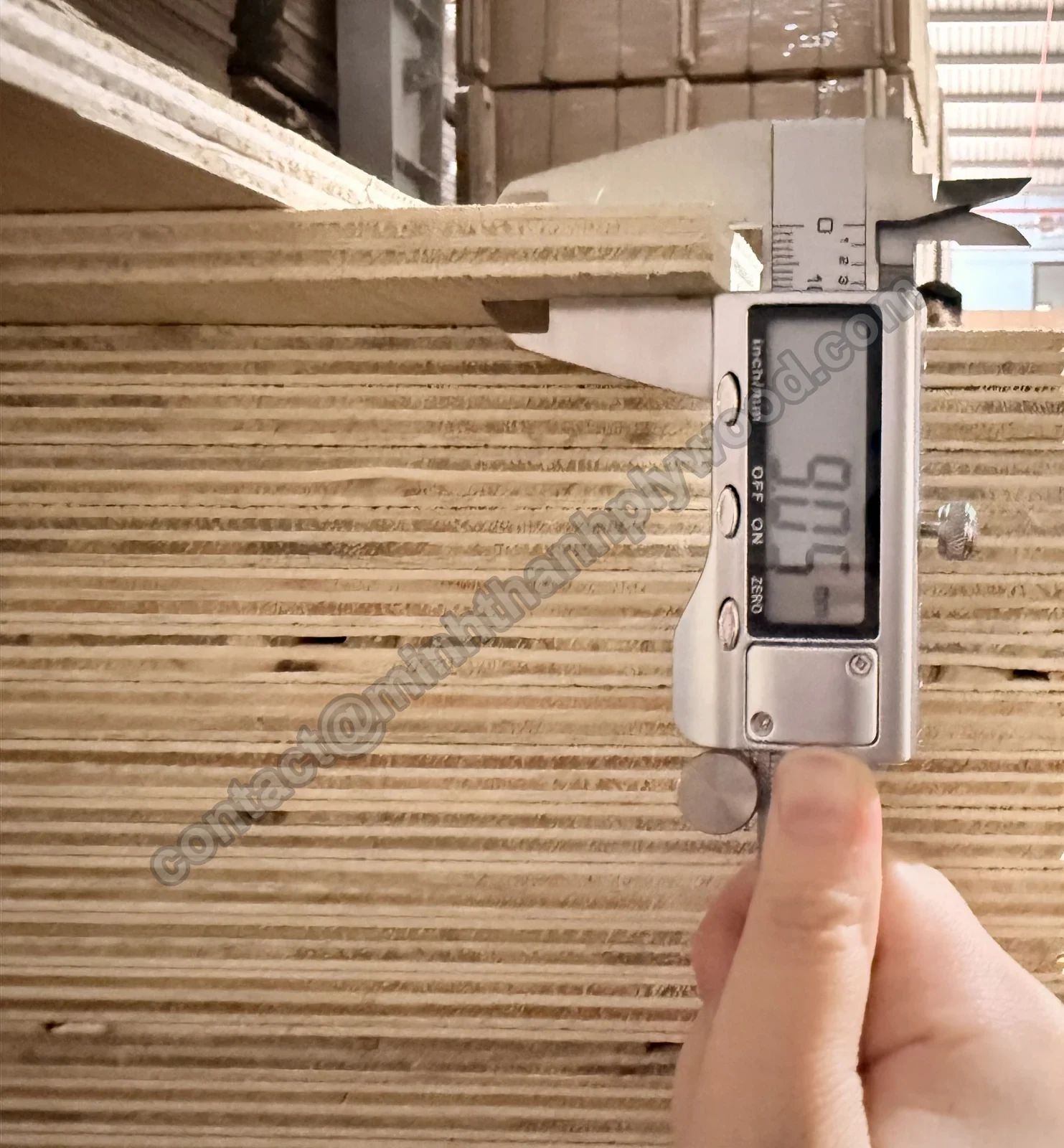
Write the thickness in millimetres and the tolerance next to it. “18 mm” alone is a nominal size; “18 mm ±0.3 mm” is a specification.
Tolerances Minh Thanh works to:
| Line | Thickness tolerance |
|---|---|
| Sanded furniture panels | ±0.2–0.3 mm, down to ±0.2 mm on request |
| Commercial and film-faced panels | ±0.5 mm |
| Packing plywood | ±0.5–1.0 mm |
| Length and width, all lines | ±2 mm |
If you buy in inches, write the inch size and the millimetre panel you expect. A 3/4 inch order from Asia is normally 18 mm, a 1/2 inch order 12 mm; if you want 19 mm, say so. Thickness range at Minh Thanh is 3–40 mm; thin panels from 3 to 5 mm are always 5-ply.
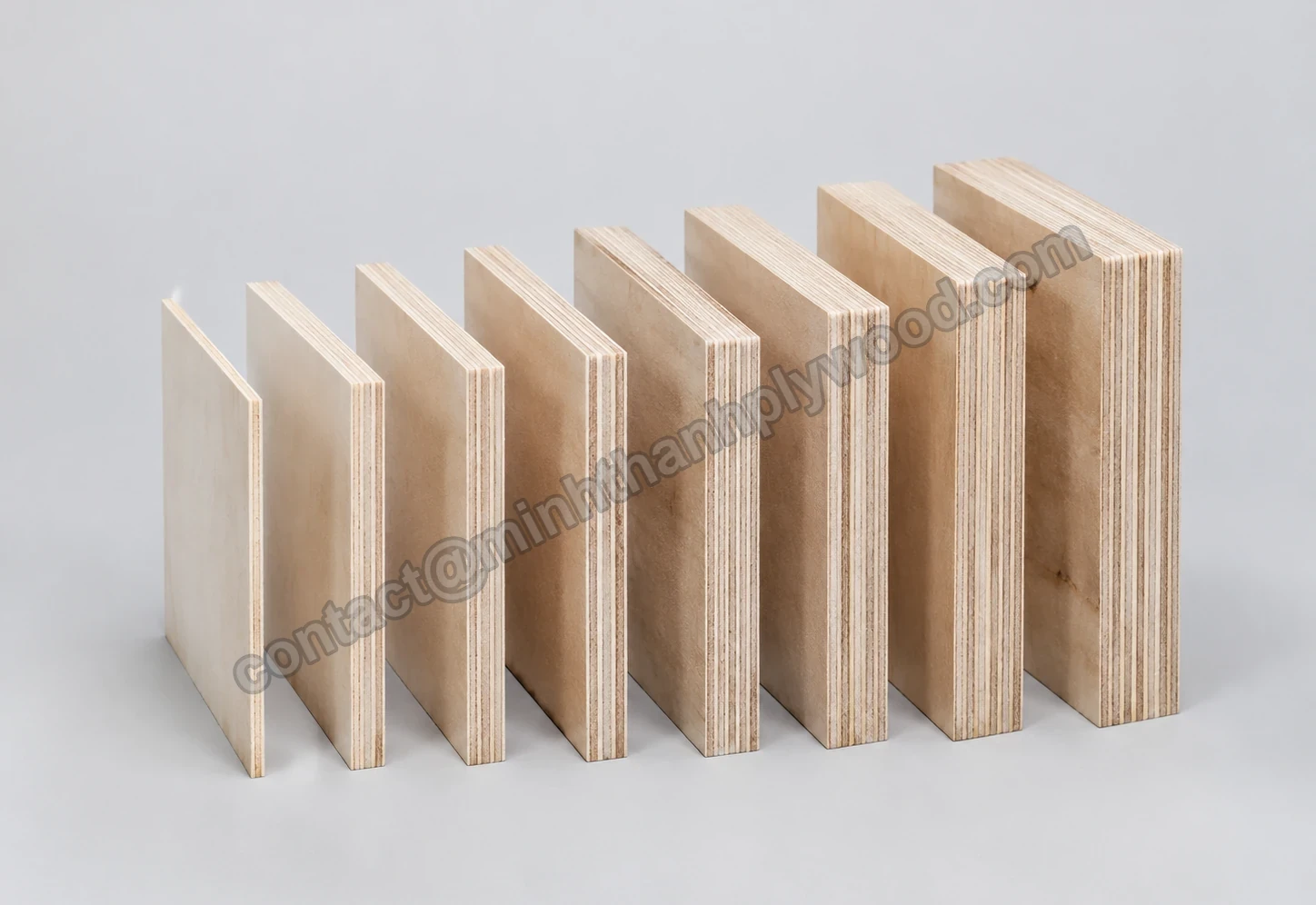
Thickness also sets the sheet count per container. Two worked lines from our 40HC plan with 1220 × 2440 mm sheets and a 28,000 kg planning payload:
| Thickness and core | Sheets per pack | Packs | Sheets per 40HC |
|---|---|---|---|
| 12 mm, Styrax | 83 | 18 | 1,494 |
| 18 mm, Styrax | 55 | 18 | 990 |
| 18 mm, Eucalyptus | 53 | 15 | 795 |
The 12 mm and 18 mm guides give the full tables by core.
Line 6: what size, and do you want it cut?
The standard sheet is 1220 × 2440 mm (8 × 4 ft). European buyers often order 1250 × 2500 mm, which suits metric cutting lists. Custom sizes such as 1220 × 2500 and 1220 × 2280 mm are made on order.
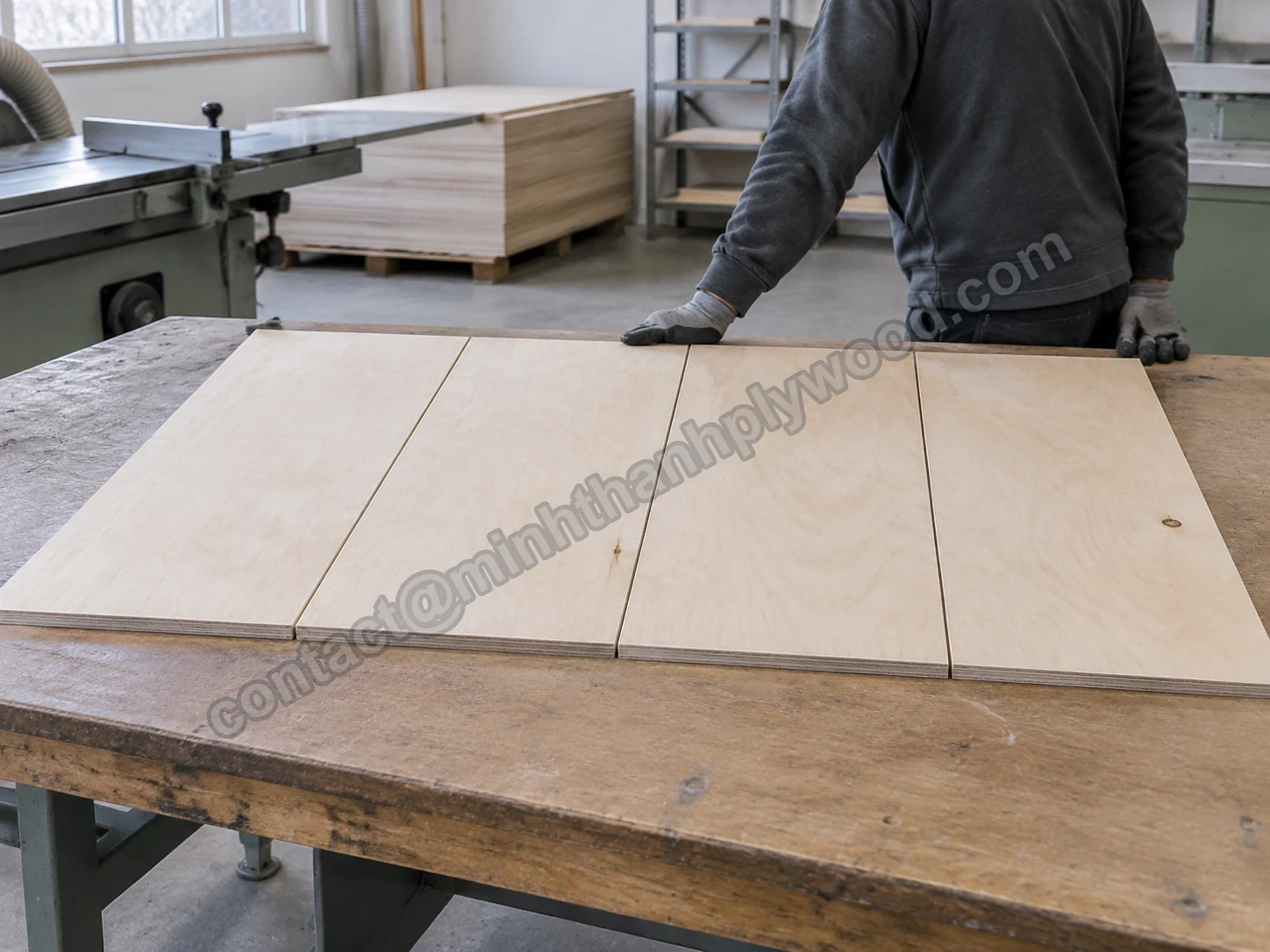
If your factory cuts every sheet into the same parts, consider cut-to-size: one panel cut into 4, 6 or 8 pieces before packing. Minh Thanh ships cut-to-size regularly to Italy and other European markets. Write the finished part size, the number of pieces per sheet and the tolerance on the cut, and attach the cutting drawing.
Write the grain direction when it matters. On a 1220 × 2440 mm sheet the face grain normally runs along the long side; doors and tall gables usually need it that way, and a cutting plan that needs it across the sheet must say so.
Line 7: how should the surface arrive?
Surface is its own line because sanding and finishing are separate steps with their own cost.
Write one of:
- sanded both sides (standard for furniture panels);
- sanded and polished, UV-ready (Minh Thanh furniture panels leave the line ready for the buyer’s own UV coating);
- sanded one side (for parts with a hidden back);
- unsanded (packing plywood);
- overlaid (film, melamine or another overlay, with its specification).
If you apply a coating, name it: “clear UV lacquer”, “white paint”, “HPL laminate”. It tells the mill which face defects matter after your finish and which do not.
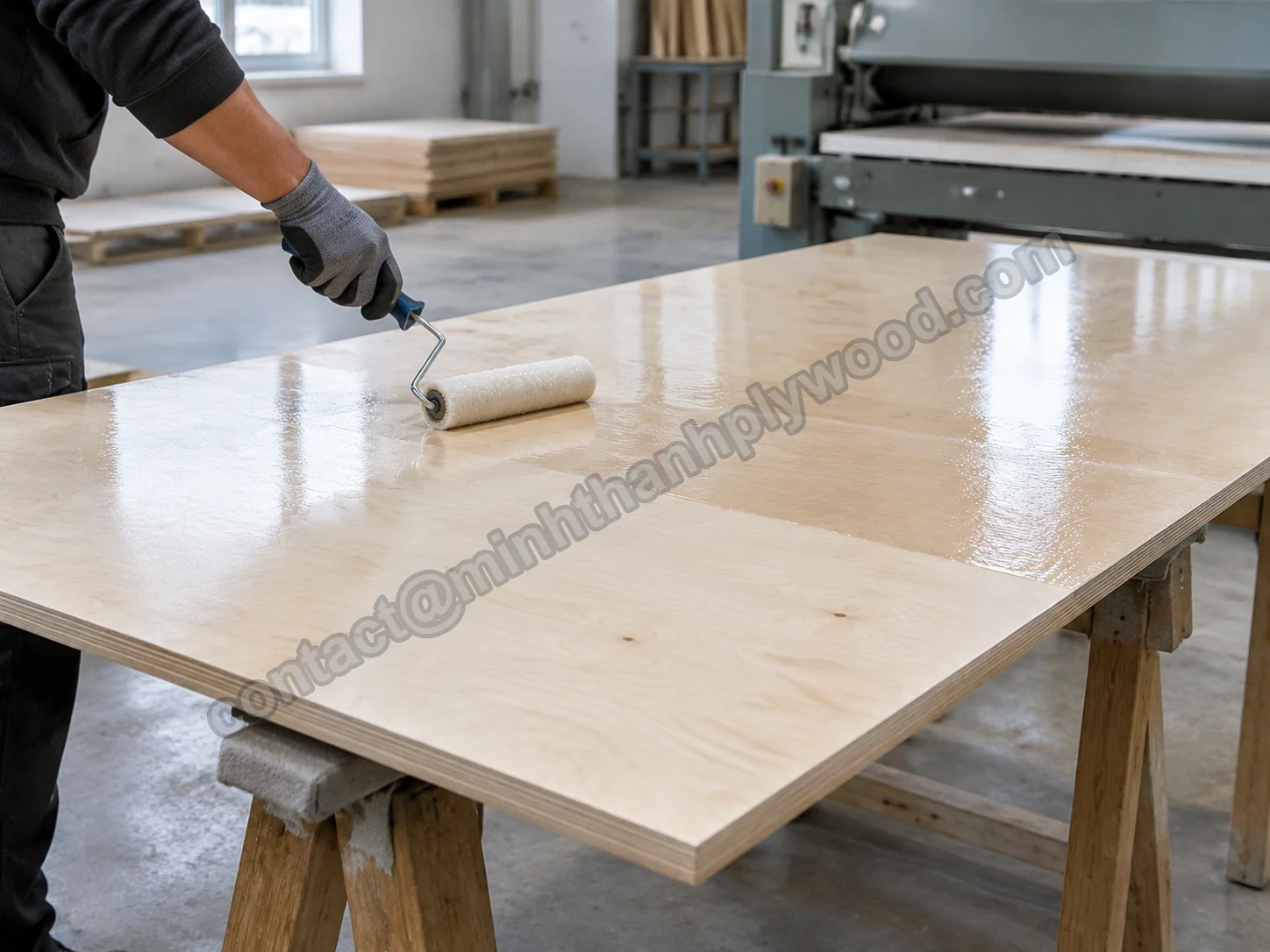
Moisture belongs in this line too. Minh Thanh dries veneers and panels to 8–12 % moisture content at dispatch, the normal range for furniture plywood. If your factory works at a different moisture level, write the target.
Line 8: how should it be packed and labelled?
Packing protects the panels for 30–40 days at sea to Northern Europe or 35–45 days to the US East Coast, and it decides how the packs come off the truck at your warehouse.
Write:
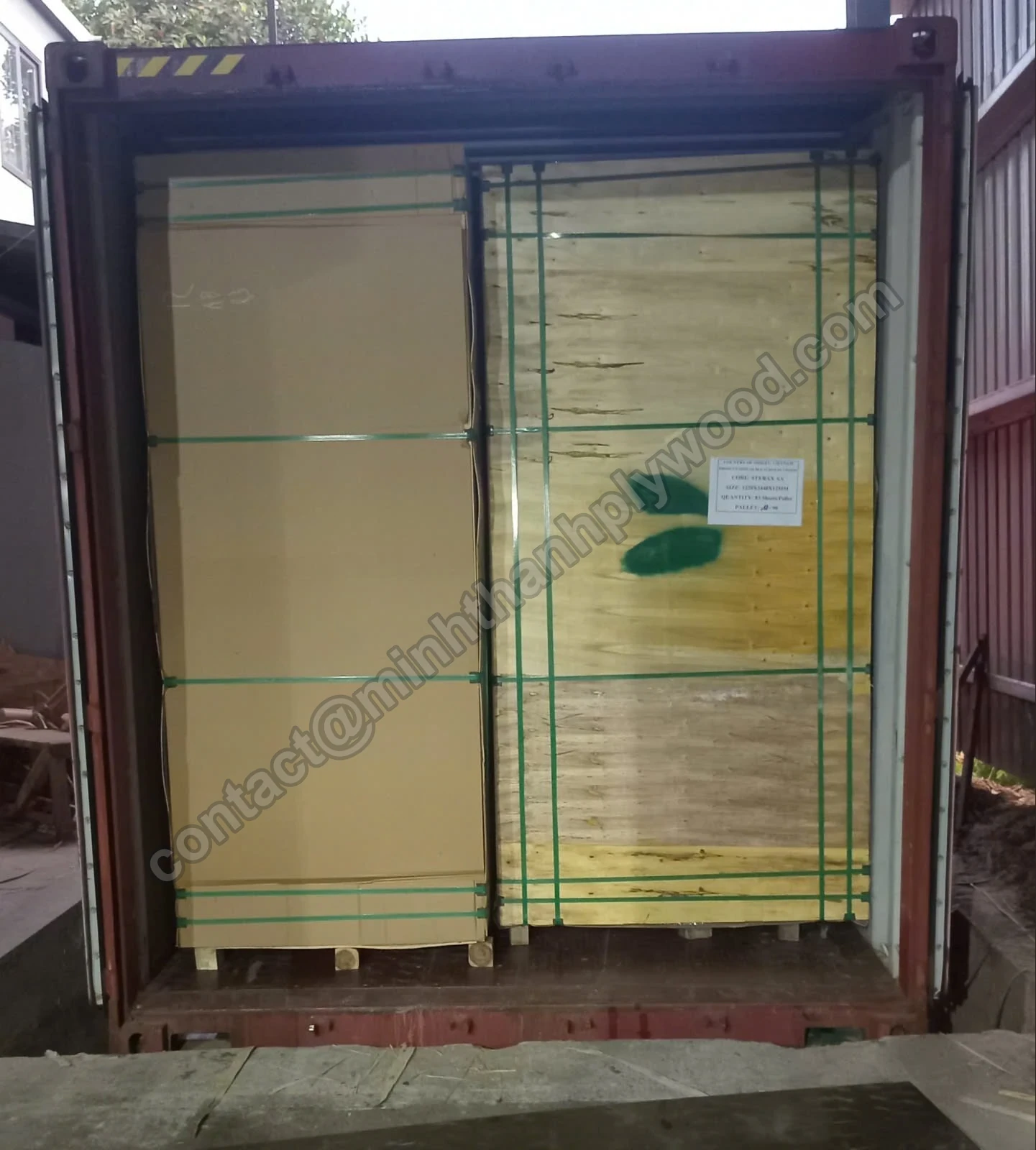
- pack type: export pack on a pallet base, wrapped in cardboard with corner protectors and steel straps, or plain strapped packs for packing plywood;
- pack size: the standard pack is about 1,000 mm high; if your forklift or racking needs lower packs, give the maximum height or weight;
- labels: your brand, product code, language and the pack data you want printed (thickness, size, grade, sheet count);
- marking on the panels: for US orders, the TSCA Title VI label on each panel is standard.
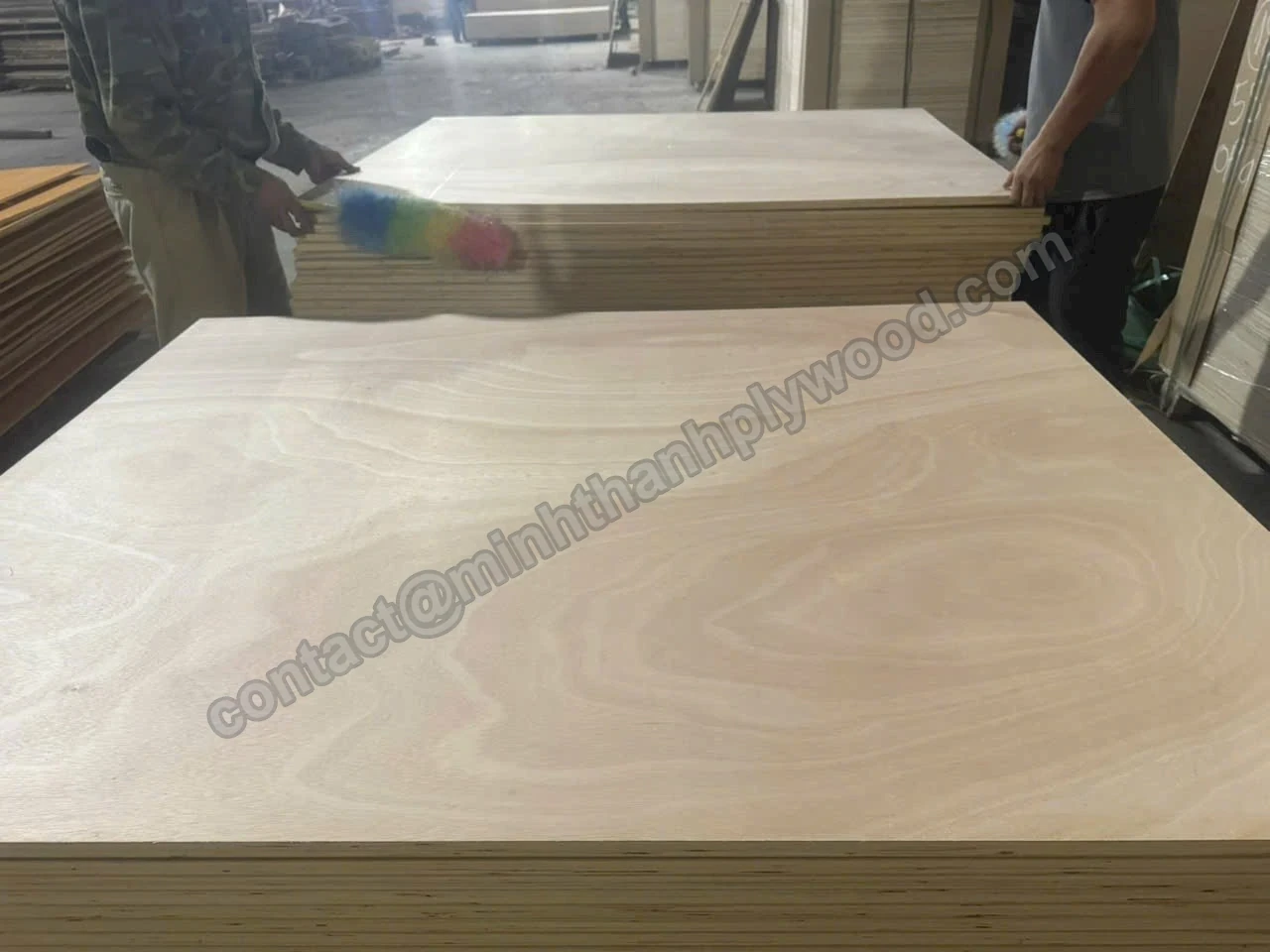
Every Minh Thanh shipment is photographed and filmed before loading; the buyer receives the photos and the video. If you want specific shots, such as caliper readings on chosen sheets or the pack labels, list them in this line.
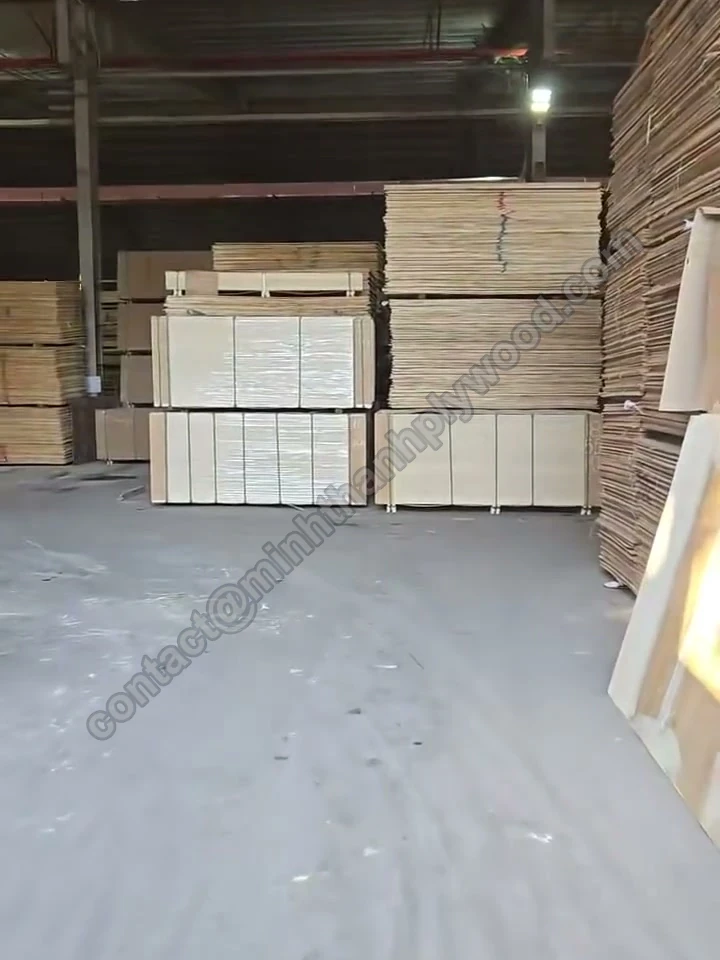
Line 9: how much, and in how many specifications?
Quantity is the line that turns a price into a quotation. Write it in containers or cubic metres, and in sheets per specification if you know them.
- Minimum: one 40HC.
- Mixed loads: by agreement; usually one or two specifications in a container, three to six when the volumes justify the extra handling.
- Repeat orders: if this is the first of a series, say how often you expect to order. It changes how the mill plans veneer stock.
A mixed container is common for furniture buyers: 18 mm carcass panels, 12 mm drawer stock and a few packs of thin backs. List each specification as its own line with its own quantity, and the mill checks that the total fits the container by space and by weight.
How do you write the request for a mixed container?
A mixed container is one request with several specification columns and one delivery block. Write each specification in full, even when only one line changes, and give the quantity in packs or sheets for each. An example from a furniture buyer who fills one 40HC with three products:
| Spec | Panel | Quantity |
|---|---|---|
| A | 18 mm, engineered veneer face A/B, Styrax core, UF glue at E0, 1220 × 2440 mm, ±0.3 mm | 10 packs |
| B | 12 mm, poplar face A/B, Styrax core, UF glue at E0, 1220 × 2440 mm, ±0.3 mm | 6 packs |
| C | 3 mm, poplar face B/B, 5-ply, UF glue at E0, 1220 × 2440 mm | 2 packs |
Three things the mill checks on a mixed request, and you can check first:
- The container fills by space and by weight. Packs of different thicknesses weigh differently; the heavier cores reach the payload sooner.
- Every specification has enough volume to be worth a production run. One or two specifications per container is normal; three to six by agreement.
- Thin panels take longer. Premium thin veneer is scarce, so a 4 mm line can set the loading date for the whole container. We do not lower the standard to go faster; we tell you the date.
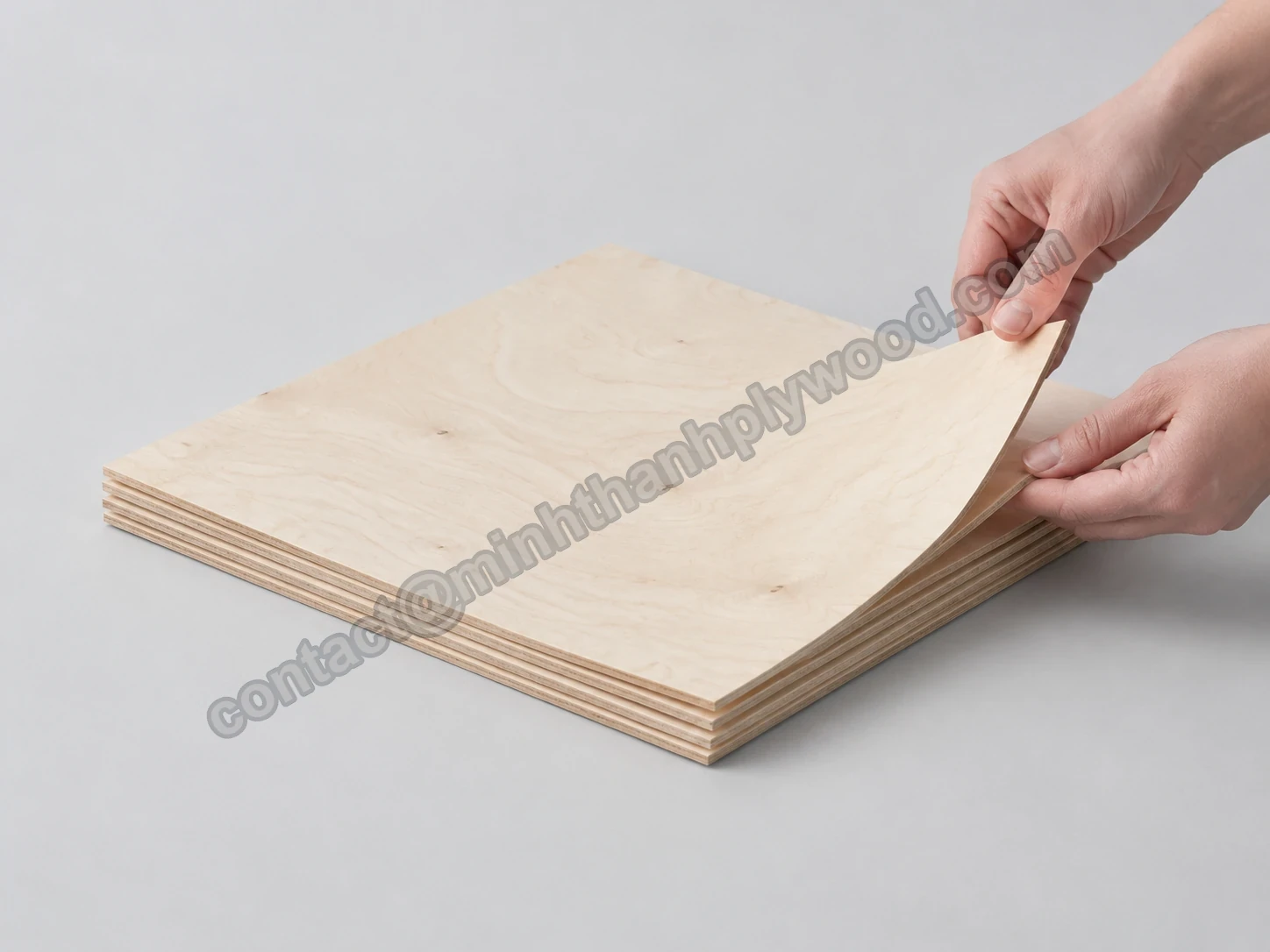
If you are not sure how to split the container, send the specifications and the total you want; the reply proposes a pack plan.
Line 10: where to, on which term, with which documents?
Port and Incoterm. Minh Thanh quotes FOB Hai Phong, CFR or CIF. Name the destination port for CFR and CIF quotes. Typical days at sea from Hai Phong: South-East Asia 5–12, Middle East 15–25, US West Coast 20–30, Mediterranean 25–35, Northern Europe 30–40, US East Coast 35–45, West Africa 35–50; Japan and Korea about two to three weeks, by carrier and route.
Payment. The standard terms are a 30% deposit and 70% against the scanned bill of lading, or an irrevocable L/C at sight. Write which you want.
Documents. List what your customs broker and your customers need:
- commercial invoice, packing list, bill of lading;
- certificate of origin, EUR.1 for the EU;
- phytosanitary and fumigation certificates;
- insurance certificate with CIF;
- compliance files on order: CARB P2 / TSCA Title VI certificate, chamber test reports, the EUDR compliance dossier (origin records and geolocation files) for the EU Deforestation Regulation, and the packaging test report for the Packaging and Packaging Waste Regulation (EU) 2025/40 (both checked October 2026).
For US imports, ask for face and core species and the Vietnamese harvest origin for your Lacey Act declaration; Minh Thanh supplies them with the order.
What changes in the documents line by market
- European Union: EUR.1 certificate of origin for the preferential duty under the EU–Vietnam trade agreement, the EUDR compliance dossier with origin records and geolocation files, and, when your customer asks, the PPWR packaging report and an SGS test to EN 717-1. Write the importer of record on the request, because the EUDR dossier is prepared for the company that places the goods on the market.
- United States: the TSCA Title VI label on each panel, the compliance statement on the commercial invoice and the bill of lading, and the face and core species with the Vietnamese harvest origin for the Lacey Act declaration. Name the US port and the customs broker if you want the documents sent to them directly.
- Other markets: certificate of origin, phytosanitary and fumigation certificates as standard; name any extra certificate your importer needs and the authority that will read it, so the mill can say what it supplies and from which file.
One documents line written this way saves the most expensive delay in plywood importing: a container that has arrived while a certificate is still being requested.
Plywood quotation Vietnam download: the RFQ template to copy
Buyers who look for a plywood quotation Vietnam download usually want exactly this table. Copy it into your email or your purchasing system, or ask us and we email it as a spreadsheet; fill one column per specification, and send the same table to every mill you want to compare.
| Line | Your specification |
|---|---|
| 1. Application and finish | |
| 2. Face species / face-back grade | |
| 3. Core species / construction | |
| 4. Glue type / emission class / evidence | |
| 5. Thickness / tolerance | |
| 6. Size / cut-to-size / grain direction | |
| 7. Surface / moisture | |
| 8. Packing / labels / photos | |
| 9. Quantity per specification / containers | |
| 10. Port / Incoterm / payment / documents | |
| Samples needed | |
| Target delivery month | |
| Drawings attached |
Three habits make the template work:
- Same table to every mill. If one mill gets “eucalyptus core” and another gets “hardwood core”, you will compare two panels.
- One column per specification. Do not combine “12 and 18 mm” in one line; the sheet counts, weights and prices differ.
- Attach the sample photo or drawing. A face photo of a panel you already buy says more about grade than any letter.
What to specify when buying plywood from Vietnam?
Each product has two or three lines that buyers forget. These are the ones we see missing most often.
Birch-faced furniture plywood
| Line | What to write |
|---|---|
| Face and grade | Birch D+/D, D/D or D/E; say if the face is imported birch |
| Core | Styrax or Eucalyptus; birch-faced panels at Minh Thanh are not all-birch |
| Emission | UF glue at E0; name the certificate your market needs |
| Tolerance | ±0.2–0.3 mm for CNC and grooves |
| Surface | Sanded and polished, UV-ready, if you coat in-house |
| Edge | Covered, banded or exposed: an exposed edge needs a pale core |
Commercial plywood
| Line | What to write |
|---|---|
| Face | Poplar or eucalyptus utility face; grade pair A/B or B/B |
| Core | Name it; “mixed hardwood” is not a specification |
| Glue | MR or UF, and the emission class your market accepts |
| Tolerance | ±0.5 mm is normal |
| Use | Fit-out, joinery, distribution: tells the mill the face standard |
Construction and film-faced plywood
| Line | What to write |
|---|---|
| Face | Film, colour and film weight, or utility C/D face for exterior/CDX-type |
| Glue | WBP phenolic for formwork and exterior use |
| Edges | Edge sealing paint on film-faced panels |
| Thickness | Common formwork thicknesses are 12, 15, 18 and 21 mm |
| Use | Formwork pours, wall sheathing, stair treads, transport floors |
Eucalyptus-faced plywood
| Line | What to write |
|---|---|
| Face and grade | Eucalyptus A/A, A/B or B/B, matched to the approved sample |
| Core | Eucalyptus or Styrax |
| Finish | Paint, laminate or clear coat: B/B is for paint and overlay |
| Weight | Eucalyptus is denser; check the weight cap in your container plan |
Panels for melamine or other overlays
| Line | What to write |
|---|---|
| Face | A plain, even face that does not telegraph through the overlay |
| Surface | Sanded, with the flatness your press needs |
| Tolerance | ±0.2–0.3 mm when the overlay line runs at fixed settings |
| Overlay | If the mill applies it: paper, colour, finish and which sides |
Terms that mean the same in different markets
Buyers in different markets use different words for the same specification. Writing the term the mill uses avoids a round of questions:
| You may write | The mill reads it as |
|---|---|
| “B/BB birch” (European ladder) | Birch D+/D at Minh Thanh |
| “BB/BB birch” | Birch D/D |
| “CP or C face” | Birch E |
| “BB/CC poplar” | Poplar on the A/A–A/B–B/B ladder, matched to the sample |
| “Low-formaldehyde glue” | Name it: UF glue at E0, plus the emission proof you need |
| “Waterproof plywood” | WBP phenolic bond; MR for humid interiors |
| “Marine-like” | Not a standard: write WBP and the use |
| “3/4 inch” | 18 mm, or 19 mm if you write it |
| “4 × 8” | 1220 × 2440 mm |
The approved sample settles any remaining doubt about appearance. Bond and emission are settled by the certificate and test report, so ask for those by name.
A worked example: one complete enquiry
Here is an example enquiry in the format a European kitchen manufacturer sends, written with the template. The specification is complete.
Application: kitchen base and wall units; visible gables clear-lacquered, carcass interiors with clear coat; panels cut on CNC.
Spec A: 18 mm furniture plywood, birch face D/D, Styrax core, stitched and pressed twice, UF glue at E0, CARB P2 / TSCA Title VI, sanded and polished both sides UV-ready, 1250 × 2500 mm, ±0.3 mm, 8–12 % moisture. Export pack, cardboard and steel straps, our label in Italian. Quantity: 12 packs.
Spec B: 12 mm furniture plywood, birch face D/E, Styrax core, same glue, emission and finish, 1250 × 2500 mm, ±0.3 mm. Quantity: 6 packs.
Delivery: CIF Genoa, one 40HC, target loading in eight weeks. Payment 30% deposit and 70% against B/L.
Documents: EUR.1, phytosanitary and fumigation certificates, the EUDR compliance dossier and the emission files.
Samples: two A4 samples of each specification for approval.
Samples: what to ask for and how to approve them
Samples are free, and they are the part of the request that protects the order. Ask for them in the RFQ, not after the price.
What to ask for. One sample per specification, in the face, grade, core and thickness of the order. A4 or a little larger is enough for face and edge; ask for a full-size sheet only when the grade must be judged over a whole face, such as for clear-lacquered doors.
What to check. Face and back against your grade expectation, colour under your workshop light, the edge (core colour, voids, glue lines), thickness with a caliper, and how the face takes your finish. Put your coating on half the sample: that is the closest test of the finished part.
How to approve. Write the approval by email with the sample reference and keep one sample in your office. Minh Thanh keeps the twin. The approved sample is the reference for the whole order, and for repeat orders of the same line.
When to re-sample. A new face species, a new grade, a new core or a new finish line in your factory. A repeat order of an approved line does not need a new sample.
Questions the mill asks when a line is missing
If your request leaves a gap, a good mill asks before it prices. These are the questions you will get, so you can answer them in the first email:
| Missing line | The question you will get |
|---|---|
| Application | What does the panel become, and which side is seen? |
| Face grade | Which grade pair, face and back? Do you have a sample photo? |
| Core | Styrax, Eucalyptus, Acacia or Pine? Is the edge visible? |
| Glue / emission | UF, MR or WBP? E0, E1, CARB P2 / TSCA Title VI? |
| Tolerance | Which tolerance do your machines need? |
| Size | 1220 × 2440 or 1250 × 2500 mm? Any cut-to-size? |
| Surface | Sanded both sides? UV-ready? Which coating? |
| Packing | Standard export pack, or your labels and pack height? |
| Quantity | How many packs per specification? One container or a series? |
| Delivery | FOB Hai Phong, CFR or CIF, to which port? Which documents? |
Each question costs a day of time difference between Europe and Vietnam. Ten answered lines cost none.
Mistakes that slow a quotation down
The enquiries that take three emails instead of one usually miss the same things:
- Thickness without tolerance. The mill has to ask, or quote its loosest standard.
- “Hardwood” instead of a core species. Hardwood covers cores from 500 to 650 kg/m³ and more.
- E1 or E0 without the glue type, or the other way round.
- One grade letter for both sides. “BB” could mean BB/BB, BB/CC or BB/CP.
- Several thicknesses in one line. “12–18 mm, 1×40HC” cannot be priced.
- No destination for a CIF quote.
- No documents listed, then a request for an EUDR dossier after the container has sailed.
- No application. The mill cannot tell whether the back of the panel matters.
What the reply to the example enquiry looks like
A complete enquiry lets the mill answer with a priced quotation in the first reply. For the example above, the reply from Minh Thanh would contain:
- Each specification repeated line by line, with any change marked. Here: “1250 × 2500 mm sheets make 18 packs in the 40HC plan on a Styrax core; 12 + 6 packs = 18, so the container is full.”
- The price per cubic metre for each specification, on CIF Genoa, and the total for the container.
- Sheets and cubic metres per specification, so the buyer can check the arithmetic.
- Lead time: production time after the deposit and the planned loading week.
- Sea transit: about 25–35 days from Hai Phong to the Mediterranean, by carrier and route.
- Samples: the free sample set sent for approval before production.
- Documents confirmed, with the compliance files attached to the reply.
- Validity of the price and the payment terms.
If a line was missing, the reply asks one precise question instead of guessing. “Do you want the back of spec B sanded, or only the face?” is a question that saves a container; “please send more details” is not.
What should a complete quotation from the mill show?
Whatever mill you ask, the quotation you get back should mirror your ten lines. Check it for:
- the face species and the grade pair, not just “BB” or “good”;
- the core species, not “hardwood”;
- the glue type and the emission class, written separately;
- the thickness with its tolerance;
- the size, and the number of pieces if cut-to-size;
- the surface and moisture;
- the packing;
- the quantity per specification in sheets and m³;
- the Incoterm and port, the payment terms, the lead time and the validity;
- the documents, and which compliance files come with the order.
A quotation that returns your lines unchanged is a quotation you can sign. A quotation that drops a line, or replaces “Styrax core” with “core: as standard”, is a different offer.
How do you compare two quotations line by line?
Put the quotations in one table, one column per mill, one row per line of your template. Then read across.
| Line | Mill A | Mill B | Same? |
|---|---|---|---|
| Face and grade | Birch D/D | Birch BB/BB | Close equivalent; compare the samples |
| Core | Styrax | Poplar | No: different density, weight and price |
| Glue / emission | UF, E0, CARB P2 | UF, “low emission” | No: one is certified, one is a claim |
| Thickness / tolerance | 18 mm ±0.3 mm | 18 mm | No tolerance on B |
| Packing | Cardboard, steel straps | Plastic wrap | No |
| Sheets per 40HC | 990 | 1,050 | Check: more sheets of a heavier core may exceed the payload |
When a row differs, the prices are for two different panels. Send your exact line to the mill that changed it and ask for a new price. Only when every row matches is the cheaper quote the cheaper panel. Our guide on comparing plywood quotations goes through more cases.
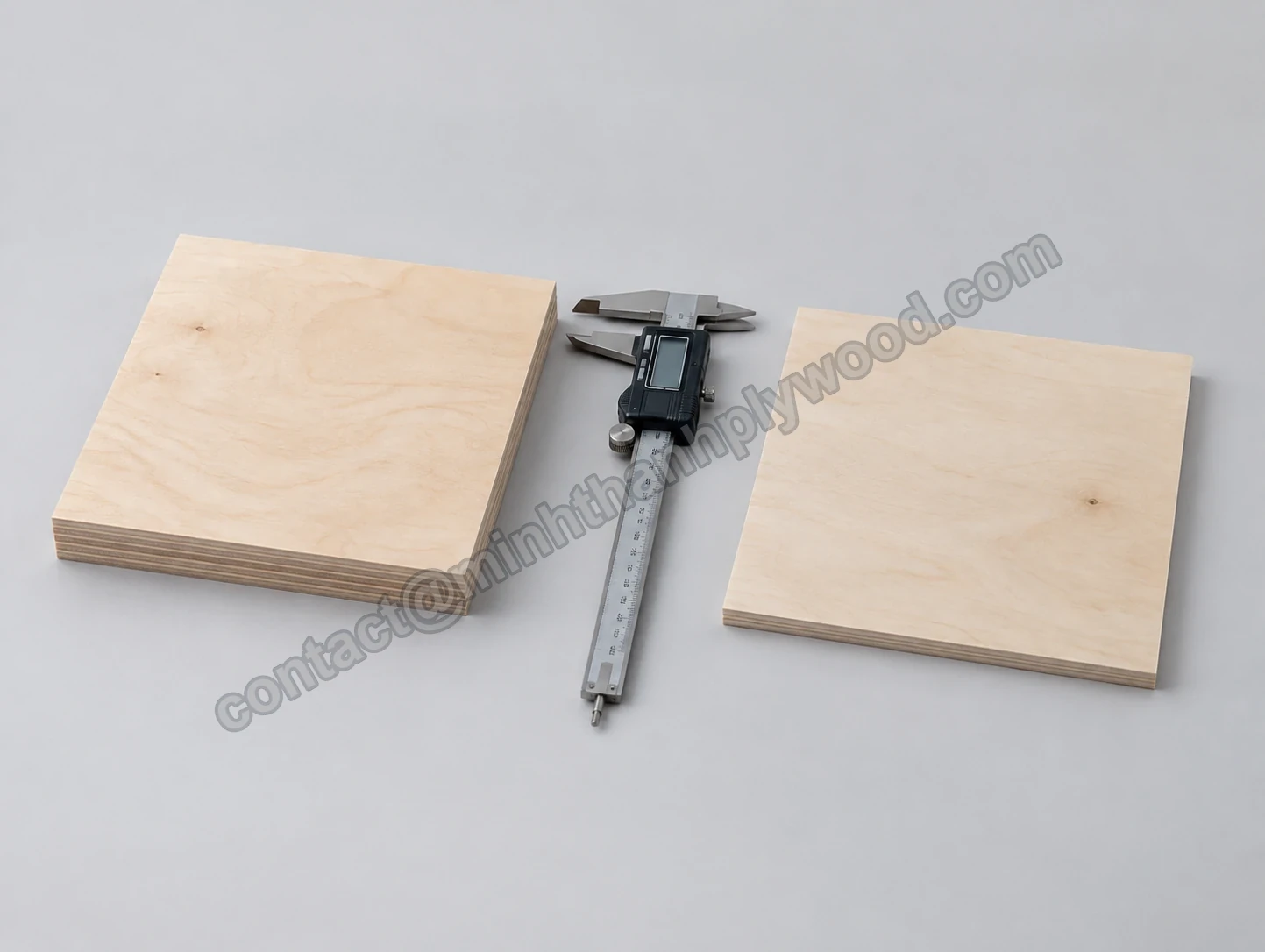
Price per cubic metre is the fair unit for the comparison. Price per sheet hides the thickness and the core: a sheet price can fall because the panel got thinner or lighter.
Red flags in a plywood quote
These signs tell you the quote is for a different panel from the one you asked for:
- A core line that disappears or turns vague: “hardwood core”, “combi”, “as standard”.
- Glue and emission merged into one word: “E1 glue”, “E0 glue”, with no resin type and no certificate.
- No tolerance, or a tolerance much wider than the line you asked for.
- A grade written as one letter instead of a face/back pair.
- No sheet count, or a sheet count per container that is too high for the core’s weight.
- A price far below the others for the same lines, with no line changed. Ask which line moved.
- Documents promised but not attached, or attached for another company.
- No sample offered before production.
Most of these are not dishonesty. They are what happens when a mill fills a gap in the request with its cheapest standard. A complete request removes the gaps.
How to buy plywood from Vietnam, step by step
How to buy plywood from a Vietnamese mill comes down to five steps, and the request is the first:
- Send the ten lines and your drawings.
- Receive the quotation that repeats them, with price per cubic metre, sheet counts and lead time.
- Approve the free samples.
- Pay the 30% deposit; production starts.
- Receive the loading photos and video, pay the 70% balance against the scanned bill of lading, and the documents follow the ship.
Where to send your request
Send the ten lines to Minh Thanh Plywood by the contact form, which accepts up to 3 drawings or specification files, or by email to contact@minhthanhplywood.com. For a quick question on a line, WhatsApp +84 988 586 601 (Lisa). We reply within hours, Monday to Friday, 08:00–17:00 Vietnam time (UTC+7).
What you receive: a quotation that repeats your lines, a price per cubic metre for each specification, sheet counts, lead time, the compliance files your market needs, and an offer of free samples. Minh Thanh is a Vietnamese manufacturer of high-grade furniture and interior plywood in Ha Hoa, Phu Tho, with a capacity of 50,000+ m³ per year; we also make commercial, packing and film-faced plywood for buyers who want them in the same container.
Indicative starting prices, October 2026: commercial plywood from US$250/m³, furniture and interior plywood from US$350/m³. Your ten lines turn those starting points into the price of your panel. The plywood price guide explains how each line moves it, and the trade terms page sets out payment, lead time and documents in full.
Buyer questions, answered
What is a plywood quotation format?
It is the list of specification lines a buyer sends so a mill can price one exact panel: application, face species and grade, core, glue and emission class, thickness and tolerance, size, surface finish, packing, quantity, and destination port with Incoterm and documents.
What information does a plywood factory need to give a price?
The ten lines above. Face, core, glue and thickness move the price most; size, tolerance, packing, quantity and delivery term finish it. A request without the core or the glue gets a guess, and two mills will guess differently.
How long does it take to get a plywood quotation from Vietnam?
Minh Thanh replies within hours on working days, Monday to Friday, 08:00–17:00 Vietnam time. A complete request gets a priced answer in that reply; an incomplete one gets questions first.
Should I ask for a price per sheet or per cubic metre?
Ask for per cubic metre to compare mills and thicknesses, and ask for the sheet count per container to plan sales. Minh Thanh quotes per m³ and states the sheets per 40HC for each line.
What is the minimum order for a plywood quotation?
One 40HC. Mixed specifications in one container are possible by agreement, usually one or two and up to six when the volumes allow.
Can I send drawings with a plywood RFQ?
Yes. The contact form on our site accepts up to 3 drawings or specification files and sends them with your request to contact@minhthanhplywood.com.
Do I get samples before ordering?
Yes, samples are free. The approved sample becomes the reference for face, grade, colour and thickness for the whole order.
Which Incoterms do Vietnamese plywood mills quote?
Minh Thanh quotes FOB Hai Phong, CFR or CIF. With CIF the insurance certificate is part of the documents.
What payment terms are normal for plywood orders from Vietnam?
30% deposit, then 70% against the scanned bill of lading, or an irrevocable L/C at sight. Production takes 15–45 days after the deposit.
Which documents should I list in the RFQ?
Commercial invoice, packing list, bill of lading, certificate of origin (EUR.1 for the EU), phytosanitary and fumigation certificates, insurance for CIF, plus the CARB P2 / TSCA files, test reports, EUDR dossier or PPWR report your market needs.
How do I compare two plywood quotations?
Put them side by side line by line. If any line differs, such as core species, glue, emission class, tolerance or packing, the prices are for two different panels; ask both mills to quote your exact line before comparing.
Is the cheapest plywood quote a good sign?
Not when it is well below the others for the same line. Check which line moved: a different core, a lower glue class, a thinner face or a wider tolerance usually explains the gap.
Do you publish a plywood price list?
No. Prices follow the specification. Indicative starting prices, October 2026, are US$250/m³ for commercial plywood and US$350/m³ for furniture and interior plywood.