
Plywood is not inherently waterproof. Water-resistant bonds keep veneers joined, while the wood still needs suitable surface, edge and installation protection. For indoor furniture, choose the required face, core and emission specification; for repeated wetting, specify an exterior bond and a complete exposure plan. Minh Thanh Plywood makes furniture panels and supplies exterior and film-faced options for their intended uses.
Is plywood waterproof, and what does waterproof plywood mean?
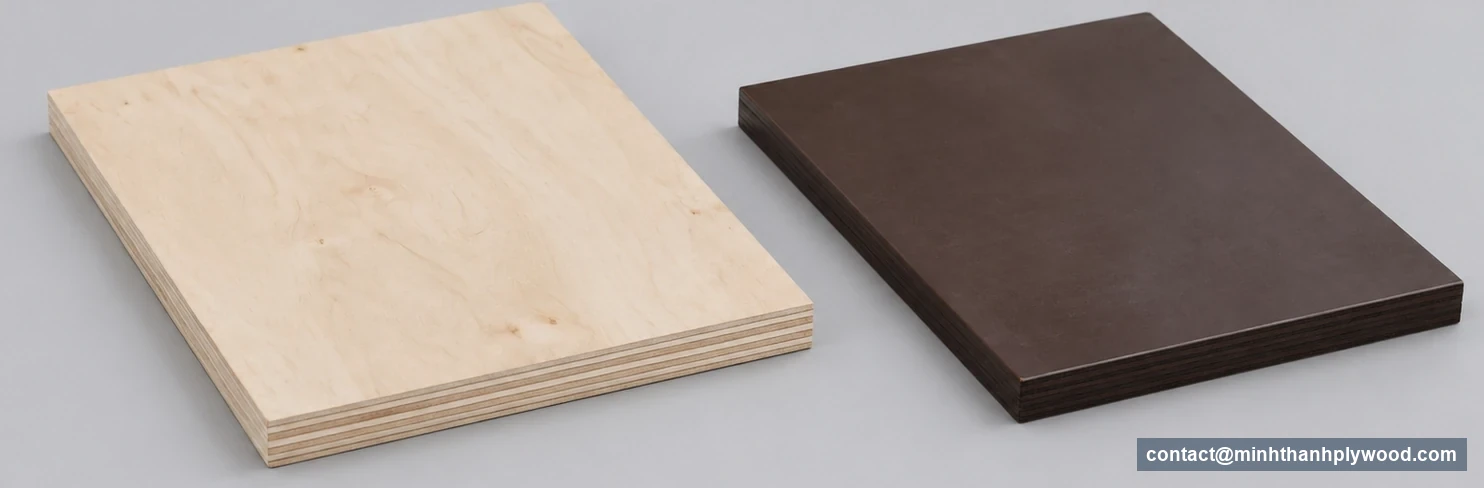
Plywood is a wood panel whose moisture performance comes from several separate decisions: the adhesive bond, the veneers, the protective surface and the finished assembly. A water-resistant bond helps the layers remain joined under its specified exposure. It does not turn every exposed wood fibre into a barrier to water. Buy the exposure performance your component needs instead of relying on the word waterproof alone.
The distinction matters for an importer comparing offers. A natural-veneer furniture panel, an exterior panel and a film-faced formwork panel can have the same nominal thickness while doing different jobs. One offer may describe a resin, another a bond classification and another a coated face. Put those descriptions into separate quotation fields so an attractive surface does not carry an unstated promise about the core.
For Minh Thanh furniture production, the specification starts with the required face and back, Styrax or Eucalyptus core, finished size and tolerance. UF glue at E0 emission is the standard furniture/interior specification. A buyer requiring a different bond for moisture exposure writes that requirement separately. Our furniture panel range and exterior plywood option lead to different buying decisions.
A useful question is: will this part experience room humidity, occasional cleaning, repeated splashes, weather, contact with wet supports or sustained immersion? Describe where water enters and how the part dries. That description lets the factory, finishing contractor and buyer agree a workable panel system. No fixed lifetime is attached to an unspecified wet environment.
What happens when water reaches the face, core and edge?
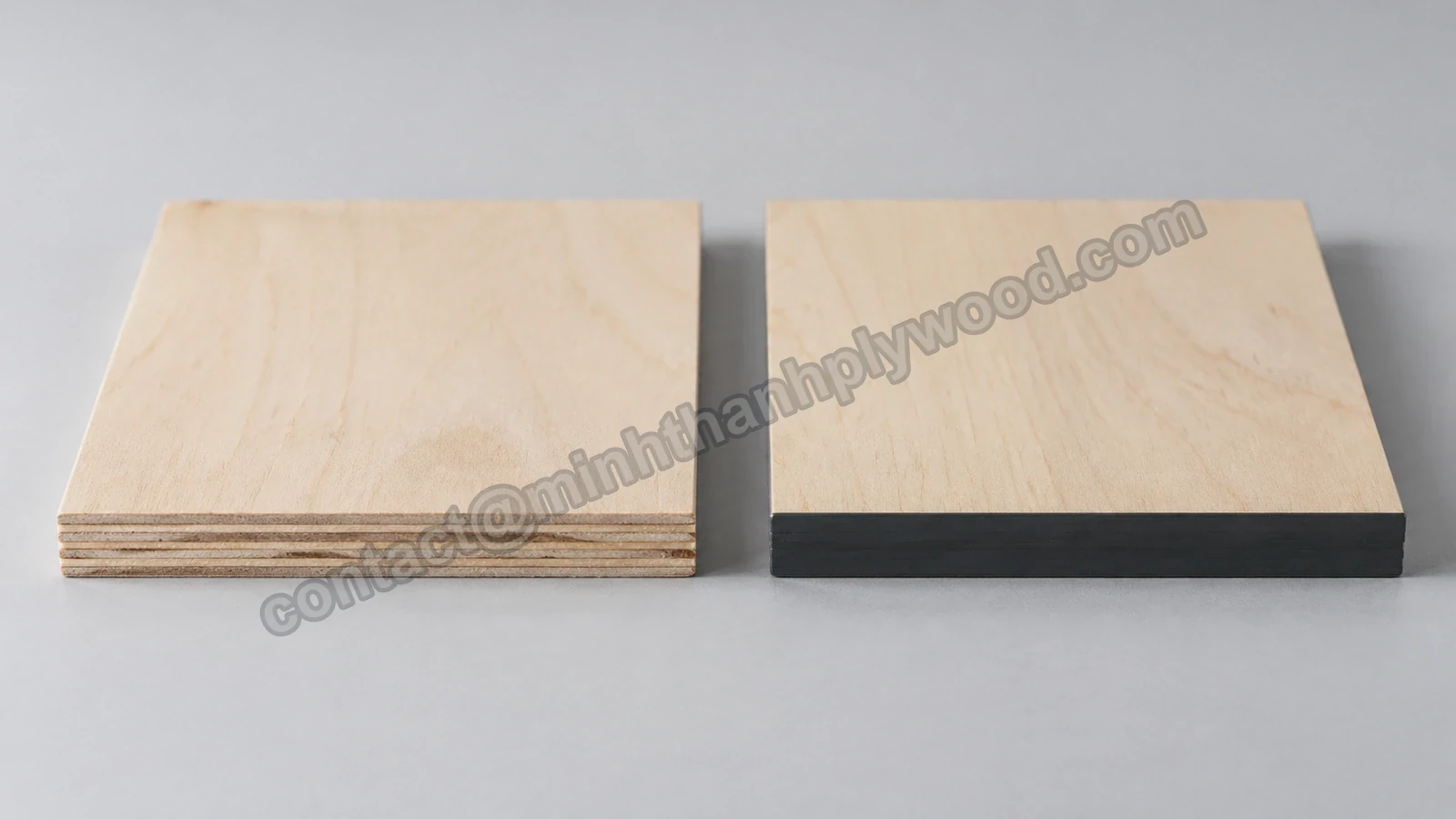
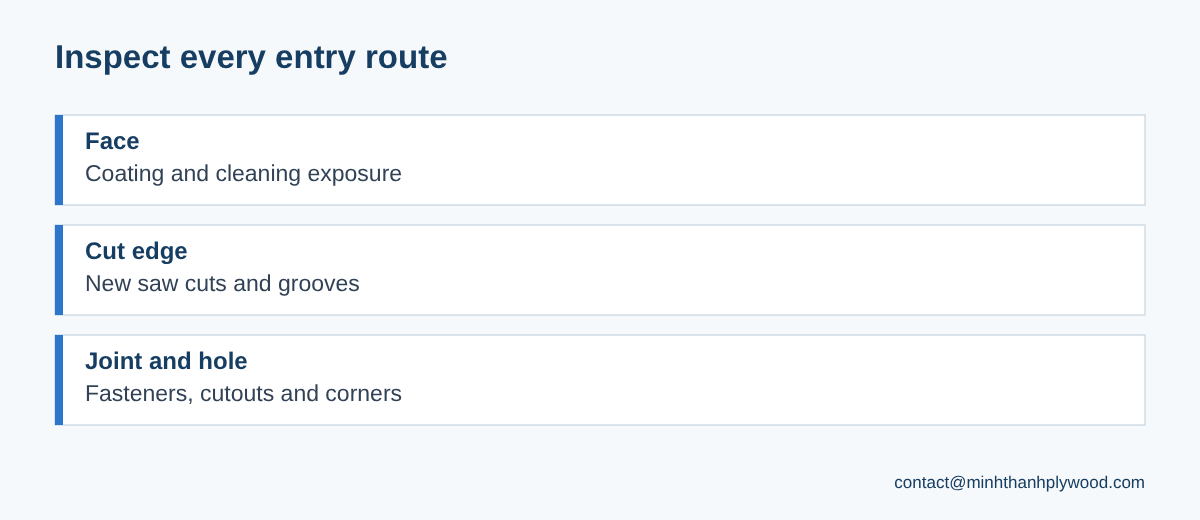
Moisture can reach wood through the broad face, the layered edge, a joint or a drilled opening. The face coating is only one entry route. A finished cabinet side can look protected while a concealed cutout leaves exposed wood beside a pipe or a floor. Review the assembled component as well as the sheet that arrived at the workshop.
Wood moisture changes can alter dimensions and appearance. The observations buyers should record include raised grain, a swollen edge, face checking, staining, distortion or separation between veneers. These observations have different causes and require different decisions. A surface mark after cleaning is not the same finding as a failed adhesive bond, and neither should be diagnosed from an unidentified close-up alone.
Use a component drawing to map exposed locations. Mark the top and bottom edge, screw holes, recesses, joints and any machining completed after the factory finish. A groove made during assembly exposes new material even if the original sheet arrived with sealed edges. Pass that drawing to the party applying the finish so the protection covers the finished geometry.
Minh Thanh’s dispatch moisture of 8–12% gives the buyer a defined factory condition. Record receiving measurements with the bundle and specification reference. Keep the measuring instrument, material setting and positions in the inspection file. A moisture reading helps document condition; it does not replace the specified bond test or identify a universal safe exposure duration.
Which plywood choice fits each moisture environment?
Choose a panel by its actual exposure and the finished component’s requirements. Dry indoor furniture needs an appropriate furniture construction and emission specification. Moisture-exposed work needs the agreed bond and protection details. Structural or marine work also needs the evidence required by its design or product specification.
| Environment and component | Buying priority | Protection and evidence to include |
|---|---|---|
| Dry interior cabinet side | Face/back grade, core, sanding and dimensional fit | Accepted finish sample and emission requirement |
| Kitchen cabinet near cleaning or plumbing | Defined wetting pattern and suitable bond | Cutout/edge treatment, leak access and wipe-clean finish |
| Bathroom vanity outside direct spray | Humidity and occasional splash exposure | Protected base, sealed machining and suitable finished-system trial |
| Covered external joinery | Exterior exposure requirement and appearance | Weather-suitable finish, drainage and maintenance access |
| Fully exposed exterior panel | Exterior bond and applicable design specification | Complete face/edge protection and fastening/installation plan |
| Formwork panel | Specified bond, film surface and handling | Edge repair after cutting, release-agent compatibility and handling plan |
| Boatbuilding or sustained immersion | Named marine/design specification | Complete panel evidence and the specified encapsulation/assembly system |
Select from this table before choosing a veneer species. A birch face is attractive for furniture, but a veneer name alone does not answer every environment in the table. Film is a surface treatment, and preservative treatment addresses another property again. The types guide explains how those classifications fit together.
For a purchasing team, keep the actual use on each order line. If the same project contains a dry wardrobe interior and a panel near a wet floor, the two components can require different constructions or finishes. An order labelled only “waterproof plywood for furniture” conceals that distinction. A component-based schedule makes sampling and receiving checks much more precise.
What do UF, MR, melamine and phenolic bonds mean?
Resin identity and bond performance belong in separate fields. UF means urea-formaldehyde resin. MR is commonly used as a moisture-resistant trade description. Melamine-fortified and phenolic systems provide options for specified moisture-exposure bonds. The ordered product still needs its stated test or classification rather than an unexplained abbreviation.
Minh Thanh’s standard furniture panels use UF glue at E0 emission. We make MR/melamine-fortified and phenolic bonds to the customer’s specification. State the intended exposure when requesting that construction. Keep the emission requirement on another line, so a change in bond does not silently erase the indoor-air requirement of the furniture programme.
A quotation should tell the buyer what is being supplied: the selected adhesive or bond specification, the panel construction and the agreed acceptance method. If an offer says WBP, ask the commercial document to name the required bond test or class. WBP is not a scientific resin name, and it does not identify the face quality or wood species inside the board.
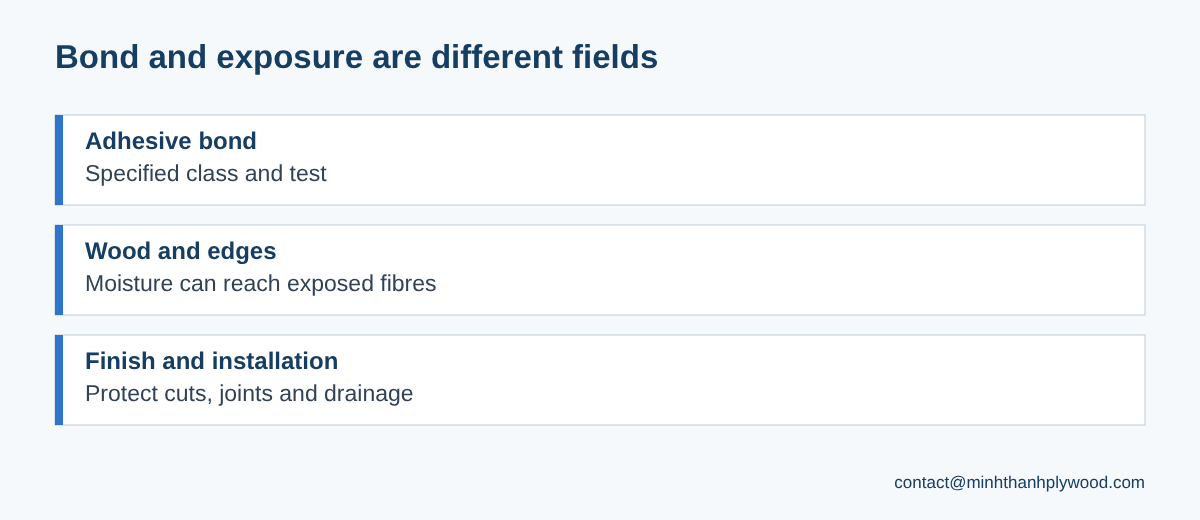
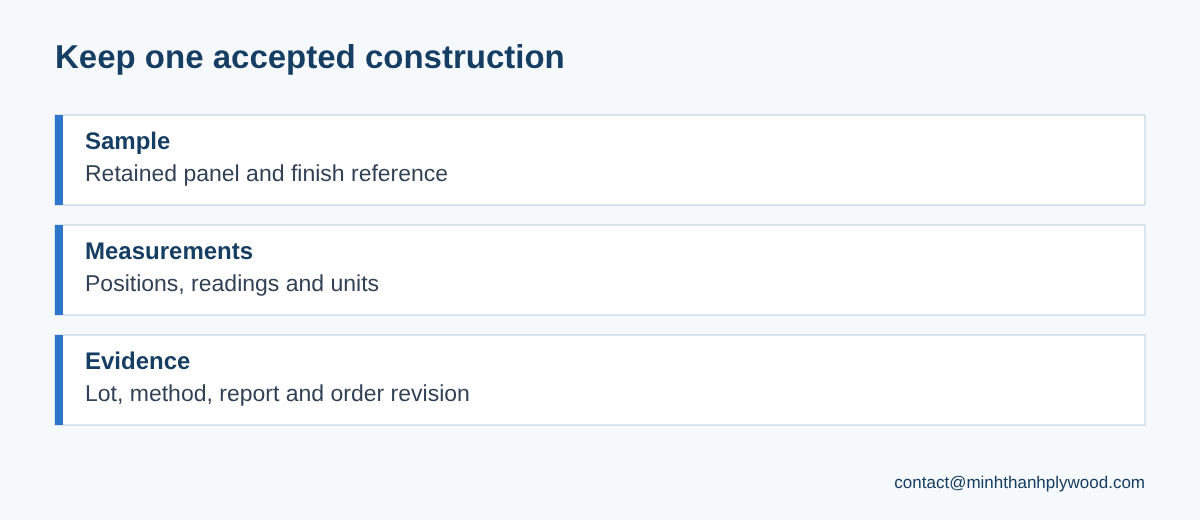
Check the sample using the correct question. Visual edge inspection identifies construction and workmanship. A surface finishing trial identifies appearance and coating compatibility. A laboratory bond test examines the specified bond behaviour. Each result should identify the same intended construction. Retaining those separate records gives the buyer a useful technical file rather than a collection of unrelated labels.
How are exterior bonds different from Exposure 1 and CDX?
An Exterior bond classification and an Exposure 1 classification describe different service exposure scopes. Do not treat the letters CDX as a substitute for the panel’s actual marking or specification. This distinction is particularly useful when an overseas buyer is comparing US trade descriptions with metric furniture panels.
NIST’s PS 1-22 Structural Plywood standard, consulted 7 October 2026, separates Exterior and Exposure 1 bond classifications and explains that bond classification concerns adhesive moisture resistance, rather than physical or biological resistance. Read the named standard and product marking for a structural purchase. A furniture-grade panel has a different buying contract.
APA’s Rated Sheathing guidance, checked on the same date, specifically warns that Exposure 1 plywood commonly called CDX is sometimes mistaken for Exterior plywood. Exposure 1 is appropriate for limited exposure such as construction delays before protection. Exterior addresses repeated or longer weather/moisture exposure within its scope.
For an importer, write the actual requirement in the purchase order instead of relying on a familiar domestic nickname. A request for “CDX-type” material should identify whether the buyer wants a visual construction description or certified structural performance. Minh Thanh’s exterior page describes its offered construction; it does not convert our furniture range into an APA-certified structural product.
Does marine plywood eliminate the need for protection?
Marine plywood is a specified panel construction, not a promise that an unfinished wood assembly is immune to water. A marine purchase needs the named product or design standard, the required veneer/core quality and the applicable bond evidence. The finished component still has joints, fasteners and exposed machining that its protection system must address.
This matters when a buyer sees okoume, birch or another decorative species in both an interior catalogue and a marine catalogue. A matching face species does not establish matching cores, bond classification or certification. Minh Thanh’s okoume furniture plywood is an interior product; it is not sold as BS 1088 marine plywood. Its selected appearance serves furniture applications.
Marine and exterior are also separate from pressure-preservative treatment. A preservative specification concerns biological durability for its stated use. It does not describe a veneer grade, make a cut edge waterproof or replace the required structural data. Keep a treatment requirement separate from the panel and finish requirements if the application calls for one.
For a demanding water-exposed component, assemble the technical file around the complete requirement: panel identity, recognised specification, permitted exposure, required finish, fastening and inspection. Select another documented construction when that requirement is outside the offered furniture range. This gives the buyer a clear material decision without extending an indoor product claim into a marine installation.
Is birch, poplar or a dense core automatically more water resistant?
A veneer species or a higher planning density does not determine the panel’s bond classification. Compare the complete construction. Birch-faced plywood can be made over different cores and with different adhesive systems; a board called poplar plywood can describe its face or a particular core construction in another supplier’s range.
At Minh Thanh, the face and the core are quoted separately. Styrax is the lighter furniture-core option, with a planning density of 500 kg/m³. Eucalyptus reference density is 650–750 kg/m³. Those values help estimate handling and transport mass. They are not water-absorption measurements or guarantees of bond performance.
For a nominal 1220 × 2440 × 18 mm sheet, volume is 0.0535824 m³. At those densities, estimated sheet mass is 26.8 kg for Styrax and 34.8–40.2 kg for Eucalyptus. A buyer can use that comparison for lifting and container planning while still specifying the same required exposure bond independently.
Choose the face for the intended appearance and finish, the core for the component’s functional requirements, and the bond for exposure. This separates three purchase decisions that are often compressed into one material name. If screw holding, stiffness or machining determines the component, evaluate the selected construction using the actual hardware or part; do not invent a performance ratio from density alone.
What does a film face protect, and where does it stop?
A film face provides a protective working surface on the supplied panel. It does not cover a new saw cut, a drill hole or a damaged corner. A buyer comparing a film-faced panel with natural-veneer furniture plywood should therefore specify the surface and the internal bond separately, then include the preparation performed after delivery.
For formwork, the receiving team needs to understand the ordered film surface, edge coating and bond requirement. Inspect film damage and edge condition before the panels enter use. Keep handling, cleaning and the specified release-agent practice with the formwork plan. No fixed number of reuses is promised for an unspecified construction and handling cycle.
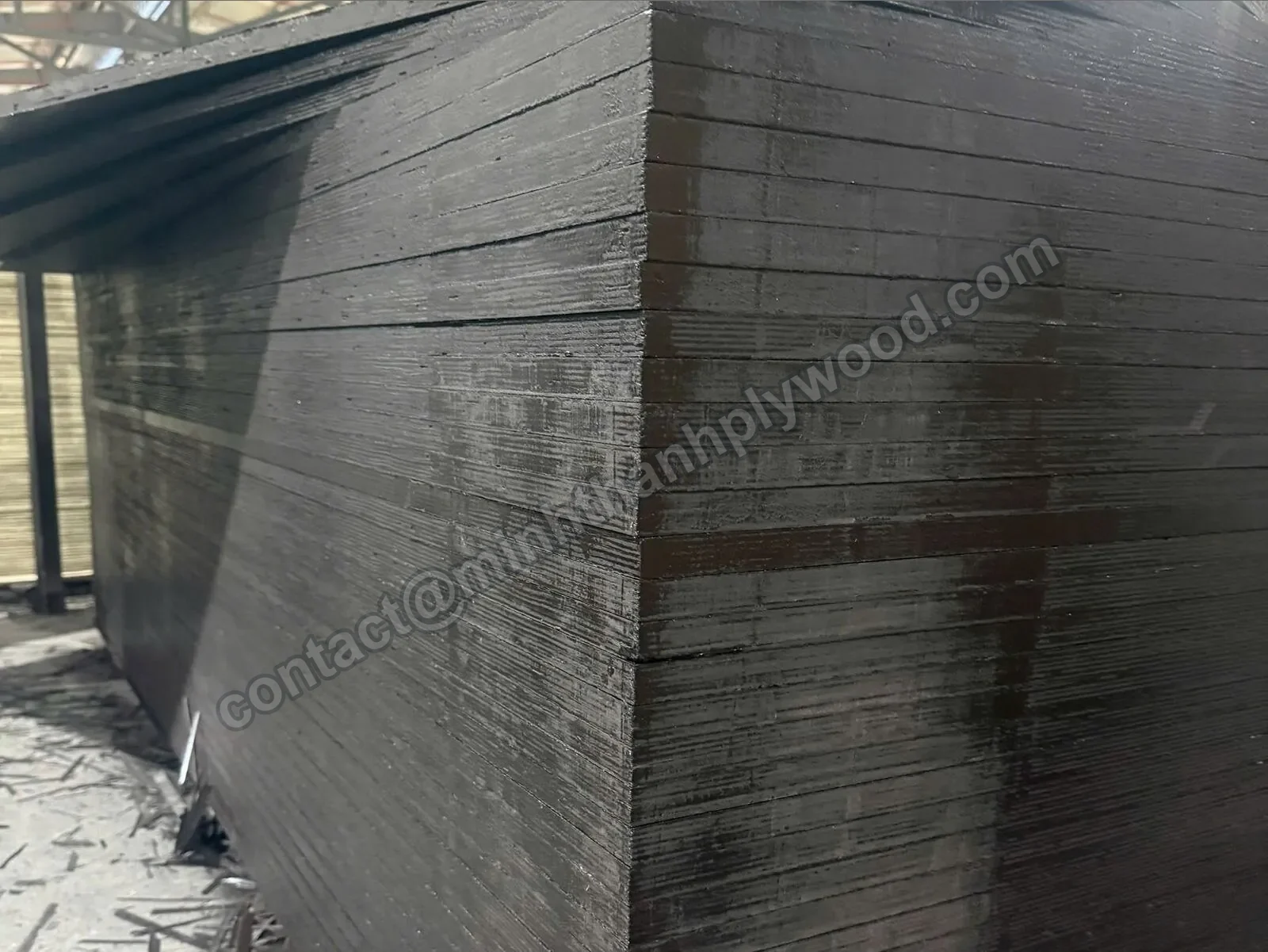
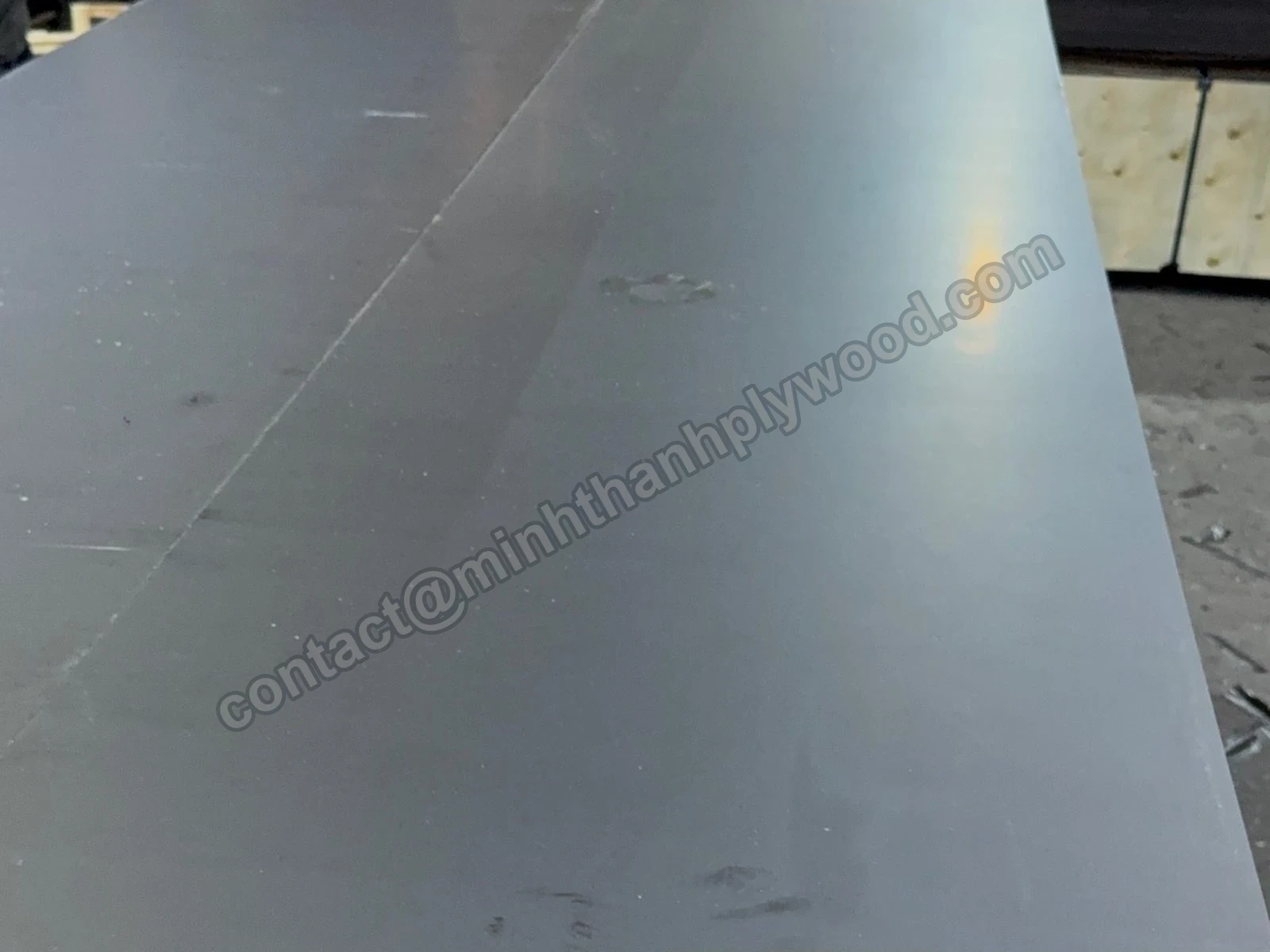
After cutting, cover newly exposed edges with the agreed compatible coating before the component enters its intended exposure. Where holes or fasteners interrupt the surface, the installation detail must address them as well. Record the product and procedure used by the party completing that work, so a repeat order can retain the same finished system.
A film-faced construction panel is also different from a UV-ready furniture face. Minh Thanh prepares furniture panels for the customer’s UV coating process; we do not apply that UV coating. A coating description should identify who applies it and what the buyer expects it to do. The film-faced product is a separate offered panel for its own applications.
How should edges, cutouts and fasteners be protected?
Protect every location where cutting or fastening exposes wood, using a coating and assembly method specified for the application. Complete the protection after final machining wherever machining removes the original finish. The joint drawing should identify where water can collect and whether the coating remains accessible for maintenance.
- Identify all finished edges, grooves, rebates, cutouts and drilled holes on the part drawing.
- Complete the intended machining and remove dust without damaging the veneer.
- Apply the chosen face and edge system according to its manufacturer’s preparation and curing instructions.
- Check compatibility with edge banding, adhesives, fasteners and the intended cleaning method.
- Assemble with the specified drainage, separation and protection details.
- Inspect and retain a finished reference component before releasing the full production programme.
An edge band and a protective coating are different operations. Edge banding covers appearance and the edge detail of many furniture components, but the completed bond and corners must still suit the exposure. A visually neat edge can have an open joint around a hinge recess. Include that joint in the sample evaluation rather than treating the broad face as the whole component.
Use product-specific coating instructions for layer thickness, number of coats, drying and cure. Choose the coating schedule for the specified resin, substrate and exposure. The supplier of the chosen finish provides those application values. The factory provides the accepted panel surface and construction against which the finishing trial was made.
Which coating system should you evaluate?
| System to discuss with the finishing supplier | Suitable selection question | Detail to retain in the trial |
|---|---|---|
| Epoxy barrier coat plus compatible paint/varnish | Does the assembly need an encapsulated moisture barrier? | All surfaces/cuts covered; sunlight-resistant finish and compatibility checked |
| Exterior polyurethane or an exterior wood-finish system | Is appearance and weather exposure within the product’s stated scope? | Substrate preparation, recoating/cure instructions and maintenance route |
| Specified edge treatment with the chosen face coating | Where do cutouts, grooves and fasteners expose wood? | Treat the final geometry, including hidden corners and drilled holes |
WEST SYSTEM’s barrier-coating guidance describes an epoxy moisture barrier; its finish-coating guidance explains the compatible sunlight-protective finish and recommends a trial panel. References checked 7 October 2026. A coating choice is an assembly decision, not a change to the panel’s internal bond classification.
Can plywood work in kitchens, bathrooms and humid interiors?
Plywood suits furniture components in kitchens and humid interiors when the specified construction and finished assembly match the exposure. Separate everyday humidity and cleaning from direct spray, prolonged leakage or immersion. A cabinet carcass outside a wet zone has a different requirement from a shower surface or a panel resting in standing water.
For a kitchen cabinet, identify the bottom, sides, back, shelves and doors separately. Show-face quality matters on an exposed end; a concealed back needs its own grade and thickness. Where a sink or plumbing cutout exposes edges, include the treatment and inspection access in the drawing. A removable liner can aid cleaning and inspection without becoming the only protection against leakage.
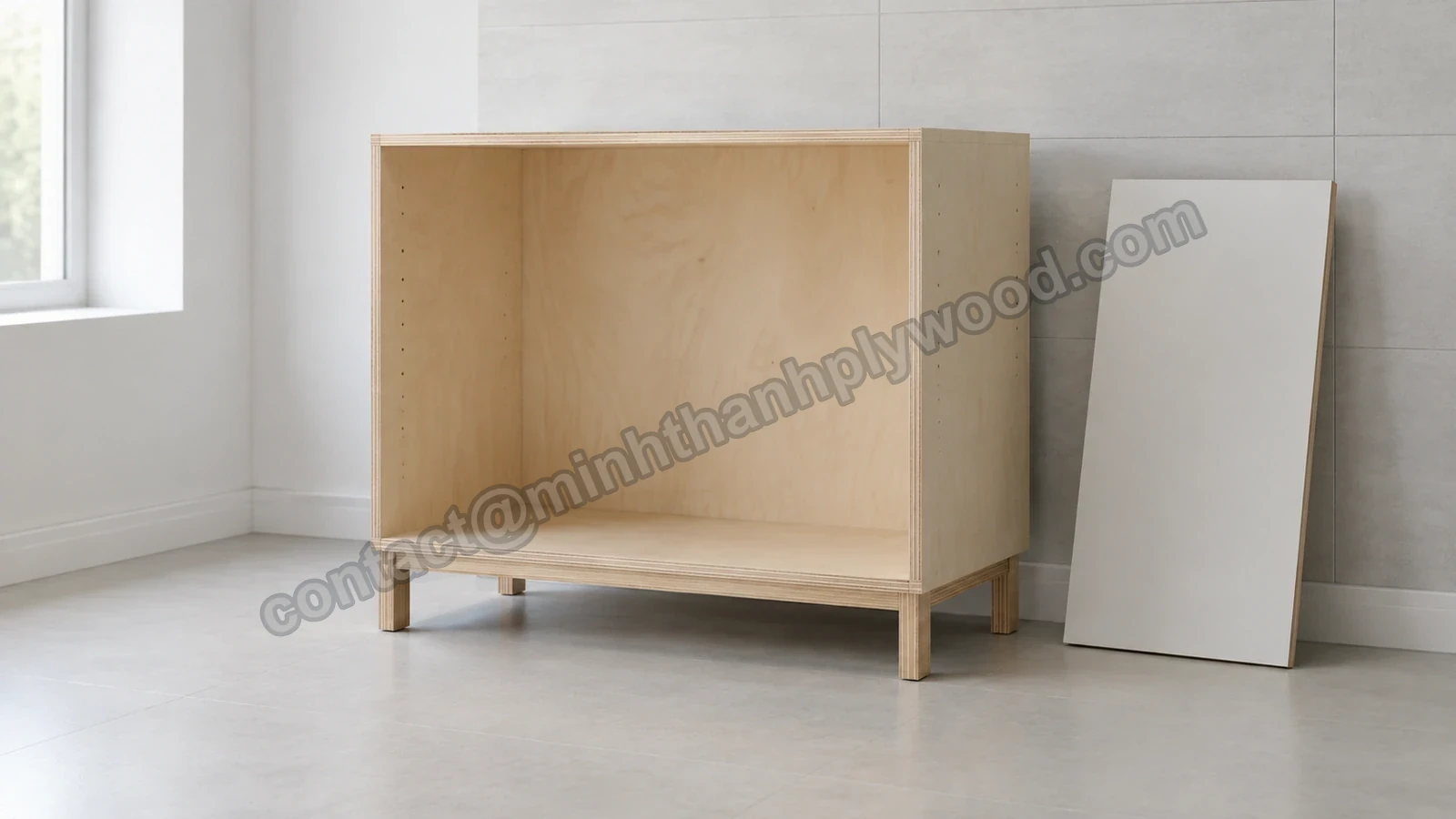
Minh Thanh furniture panels use stitched core layers and double pressing as standard. The core board is pressed and calibrated before the face and back are applied. This prepares the surface and dimensional fit needed for furniture fabrication. It is separate from the bond requirement chosen for moisture exposure, and separate again from the customer’s coating and installation.
Review a complete trial component with the intended finish and hardware. Check fit, exposed edges, cleaning access and the appearance after the intended process. Retain the accepted panel specification and the finishing procedure together. The furniture buying guide develops those choices for cabinet sides, shelves, backs and visible furniture surfaces.
Does coating indoor plywood make it an outdoor panel?
A coating protects the wood surface; it does not change the adhesive bond or supply missing product certification. Choose the required exterior construction before selecting a coating. Outdoor exposure also needs installation details that keep joints and cut edges from holding water and allow the assembly to dry.
WISA’s technical product guidance, consulted 7 October 2026, gives exterior gluing as a specific product attribute and directs technical-property users to product-related Declarations of Performance. That is the useful purchasing pattern: a named product carries a named specification and evidence. A generic veneer species carries no equivalent certificate.
For an exposed furniture component or exterior lining, list weather, sunlight, fastening, edge treatment and the maintenance route in the brief. The intended finish must address that environment rather than simply improve the look of an indoor sample. Preserve the panel manufacturer’s requirements and the finish manufacturer’s instructions in the installation file.
Direct soil contact and sustained wet exposure need their own documented design and material choices. Do not solve them by increasing thickness or adding an unspecified coat of paint. For indoor furniture that meets the project requirement, keep the indoor construction; for an outdoor requirement, select the appropriate offered exterior panel and required evidence from the beginning.
Should you choose rated plywood or rated OSB?
Rated plywood and oriented strand board (OSB) can both serve specified building applications with the appropriate protection. Plywood uses cross-laid veneers; OSB uses oriented wood strands. Compare the product’s bond classification, design rating, edge conditions and weather protection rather than declaring that every plywood is superior to every OSB.
APA’s OSB guidance, checked 7 October 2026, distinguishes Exterior from Exposure 1 and separates adhesive exposure performance from strength, stiffness and decay resistance. When protected sheathing is the task, select a rated product for that design and installation. Decorative furniture uses a different selection process, where veneer appearance, component edges and finish can make plywood the appropriate choice.
What should a moisture-exposure sample trial measure?
A useful sample trial identifies the panel, the finishing system, the exposure and the observations. It answers the buyer’s actual component question. A demonstration with water poured on a coated face does not settle the adhesive bond, the cut-edge condition or the behaviour of a fitted cabinet joint.
| Trial item | Record | Buying decision |
|---|---|---|
| Panel identity | Face/back, core, thickness, bond and sample reference | Trial represents the intended purchase |
| Finished preparation | Machining, edge banding, coating and curing instructions used | Finished system can be repeated |
| Exposure | Contact route, wetting/drying sequence and applicable test method | Result has a defined scope |
| Dimensions and condition | Identified measurement positions and before/after observations | Part remains acceptable for its assembly |
| Face and edge appearance | Raised grain, staining, opening or coating damage | Finish and maintenance plan fit the use |
| Bond evidence | Named method, sample preparation and report reference | Required bond performance is documented |
Set acceptance requirements before testing. A buyer concerned about a drawer component can define the fit of that actual part; a buyer concerned about a specified bond class uses the relevant method and report. Those questions should not be collapsed into one informal “passed water test” message.
Retain a dry reference as well as the tested sample, with the order revision. If the bond, core, face coating or thickness changes, record which test needs to be repeated. The accepted object and the purchase specification should describe the same construction. Free samples allow the material discussion to begin before the full container order is confirmed.
What factory checks support the ordered construction?
Factory checks connect the finished panel to the accepted order: veneer selection and core preparation, pressing, calibration, surface preparation, final measurements and packing. For moisture-exposed work, the agreed bond specification and any required test file are part of that same product identity.
Minh Thanh’s sanded furniture thickness tolerance is ±0.2–0.3 mm, with tight specifications down to ±0.2 mm. A nominal 18 mm panel specified at ±0.2 mm has a finished acceptance interval of 17.8–18.2 mm. Write the selected tolerance on the quotation and inspection sheet rather than assuming the tightest value applies to every product family.
For appearance, compare the finished face and back with the retained reference. For core construction, inspect identified edges and the sample preparation agreed for the order. Record the panels and locations used for moisture and dimensional readings. A neat photograph supports those records; it cannot replace the measurements or the laboratory method needed for a bond requirement.
The quality-control process explains how checks fit the factory sequence. Third-party inspection can review the finished lot against the buyer’s agreed scope. Keep a progress visit, visual examination, dimensional inspection and laboratory test identified by their actual scope, so the buyer knows what was checked before loading.
Are emission classes and indoor-use rules separate from water resistance?
Emission requirements and moisture-exposure bonds are separate specifications. A water-resistant construction still needs the indoor-air requirement of the intended furniture market. Likewise, an E0 emission description does not identify an exterior bond. Put both requirements on the order and keep their supporting reports identified by method and sample.
Minh Thanh holds CARB P2 / TSCA Title VI certification, ICTT mill no. 23024. Six third-party ASTM D6007 sample tests on 9, 15 and 18 mm panels, from April 2025 to June 2026, averaged 0.014–0.032 ppm against the 0.05 ppm CARB Phase 2 limit. Three reports are from Shanghai Hongjun and three from ICTT Vietnam. See the emission records for the report scope.
For EU furniture and wood-based articles, Regulation 2023/1464, REACH entry 77 sets 0.062 mg/m³ under Appendix 14 conditions after 6 August 2026, with defined exemptions including exclusively outdoor articles. Reference checked 7 October 2026. Keep the required test conditions and units; do not convert an ASTM ppm result into a claimed Appendix 14 result.
For regulated US composite-wood products, EPA’s formaldehyde rule includes certification, labelling, records and import requirements. Its product scope is separate from an exterior exposure description. SGS testing to the buyer’s required method is arranged on request. A purchasing file should make the indoor-use and moisture requirements independently understandable.
How should panels be packed, received and stored?
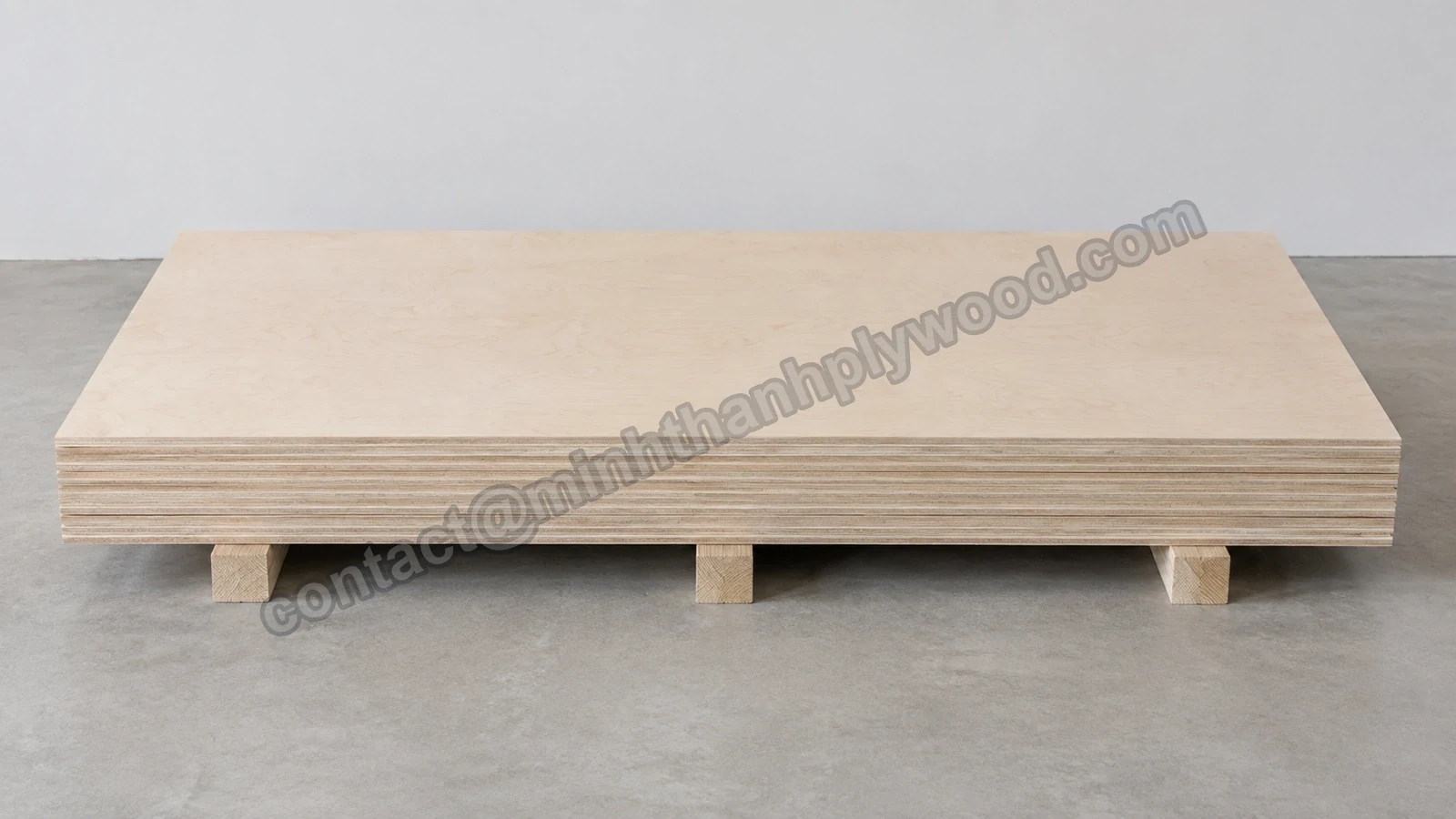
Protect the accepted panels during transport and keep their condition traceable at receiving. Specify bundle identification, face/edge protection, support and unloading needs before loading. Packing serves the purchased construction; an interior natural-veneer panel deserves protection suited to its decorative face as well as its mass.
For receiving, record the container and accessible bundle condition before dispersing the goods. Reconcile the final packing list by specification and retain bundle IDs with stock. Store panels flat on suitable supports, off a wet floor and away from leaks or direct weather. Follow the receiving workshop’s conditioning procedure before machining the components.
If wetting is discovered, isolate the affected packages and document the actual finding: moisture readings, location, visible face/edge condition and the order/bundle reference. Compare against loading records and the retained sample. Drying a panel until it looks normal is separate from accepting its dimensional fit, bond or appearance for production.
Before cutting stock, decide whether the identified panels still meet the accepted requirements. A laboratory or technical assessment is appropriate where the specified bond or structural property is in question. Do not rely on an unsupported repair promise for a delaminated or damaged component. The receiving record should show the decision on the affected material and keep unchanged stock separate.
What should your water resistant plywood enquiry include?
Send the exposure description and complete panel specification together. Tell the factory what the component does, where water reaches it, which faces remain visible and which party applies the final protection. That brief makes the quotation actionable and lets the accepted sample represent the final assembly.
| Enquiry field | Example of the information to supply |
|---|---|
| Application | Cabinet side, protected vanity, exterior lining or formwork panel |
| Exposure | Indoor humidity, cleaning/splash, sheltered weather or fully exposed service |
| Construction | Face/back grade, core species and required bond specification |
| Dimensions | Finished length × width × thickness, tolerance and grain direction |
| Surface and edges | Natural veneer/film, coating responsibility, cutouts and edge preparation |
| Emission and evidence | Required class/method, destination market and agreed inspection/test file |
| Quantity and delivery | Sheets per line, order mix, packing, named port and delivery basis |
Our October 2026 starting prices are commercial plywood from US$250/m³ and furniture/interior plywood from US$350/m³. The quote identifies the actual construction and delivery scope. Compare accepted output and finishing work for that component rather than assuming that a water-resistance label supplies a fixed premium or saving.
Minh Thanh’s standard MOQ is one 40HC container. Production is 15–45 days after deposit, separate from sea transit and delivery. Standard terms are 30% deposit and 70% against the scanned B/L, with irrevocable L/C at sight also available. Those commercial inputs belong beside the agreed technical specification, sample reference and inspection scope.
Send the brief and relevant drawings through Contact. For a furniture programme, start with the furniture selection guide; for different materials, compare plywood and MDF. The next step is a defined construction, an accepted sample and a quotation for the panel your workshop can use.
Buyer questions, answered
Is plywood waterproof without a coating?
No. An exterior or water-resistant adhesive bond can withstand its specified moisture exposure, but the wood faces and exposed edges still absorb moisture. Select the bond, protective finish and installation details for the actual exposure.
What is the difference between water resistant plywood and waterproof plywood?
Water resistant plywood describes performance under defined moisture conditions. Waterproof plywood is often a trade description for a water-resistant bond or protected surface; it does not by itself identify a test method, a marine grade or an immersion-rated assembly.
Can I use ordinary furniture plywood outside if I paint it?
Paint protects the surface but does not change the adhesive bond inside the panel. For outdoor use, specify the required exterior bond, protect faces and every newly cut edge, and design the assembly to drain and dry.
Is WBP a glue type?
WBP is a trade description of water-and-boil bond performance, not the name of one resin. State the resin or agreed bond specification and the test method separately from the emission requirement; Minh Thanh offers melamine-fortified or phenolic bonds to the ordered specification.
Does E0 mean a panel is waterproof?
No. E0 describes an emission specification, while water resistance concerns the adhesive bond and the complete panel system. Minh Thanh furniture panels use UF glue at E0 emission as standard; a moisture-exposed application needs its own bond requirement.
Is CDX suitable for permanent outdoor exposure?
Read the panel's actual bond classification. Exposure 1 plywood commonly called CDX is intended for limited exposure rather than permanent weathering; an Exterior classification addresses a different exposure scope. The letters alone do not describe the complete installation.
Is marine plywood the same as exterior plywood?
No. Marine specifications address the panel's veneer quality and construction as well as bond requirements. Exterior bond performance alone does not establish compliance with a named marine standard, and marine panels still need protection in their finished assembly.
Is birch or okoume plywood automatically marine grade?
No. Birch and okoume are veneer species, not marine certifications. Minh Thanh's birch-faced and okoume-faced furniture panels use their stated furniture construction; select the complete product and evidence for the intended application.
Does film-faced plywood need edge sealing?
Yes. A protective film covers the supplied faces, while cut edges, drilled holes and damaged coating can expose the wood. Protect those locations using the specified system and keep fastener penetrations and joints out of standing water.
What moisture and thickness tolerances do Minh Thanh furniture panels use?
Dispatch moisture is 8–12%. Sanded furniture thickness tolerance is ±0.2–0.3 mm, with tight specifications down to ±0.2 mm; these are manufacturing acceptance values, separate from a wet-exposure bond test.
What should I send for a moisture-exposed plywood quotation?
Send the application, wetting pattern, face/back grade, core, dimensions, thickness, bond requirement, emission requirement and quantity. Add the coating and edge plan, destination, required test method and named delivery basis.
Can I get samples before a container order?
Yes, Minh Thanh provides free samples. Use the intended construction for machining and finishing trials, and arrange the specified bond or emission test when it is part of the purchase; retain the accepted sample against the order revision.