
01
Method and laboratory
The report names the method and laboratory. Our record includes Shanghai Hongjun and ICTT Vietnam reports using the small-chamber method.
Quality · Formaldehyde emission
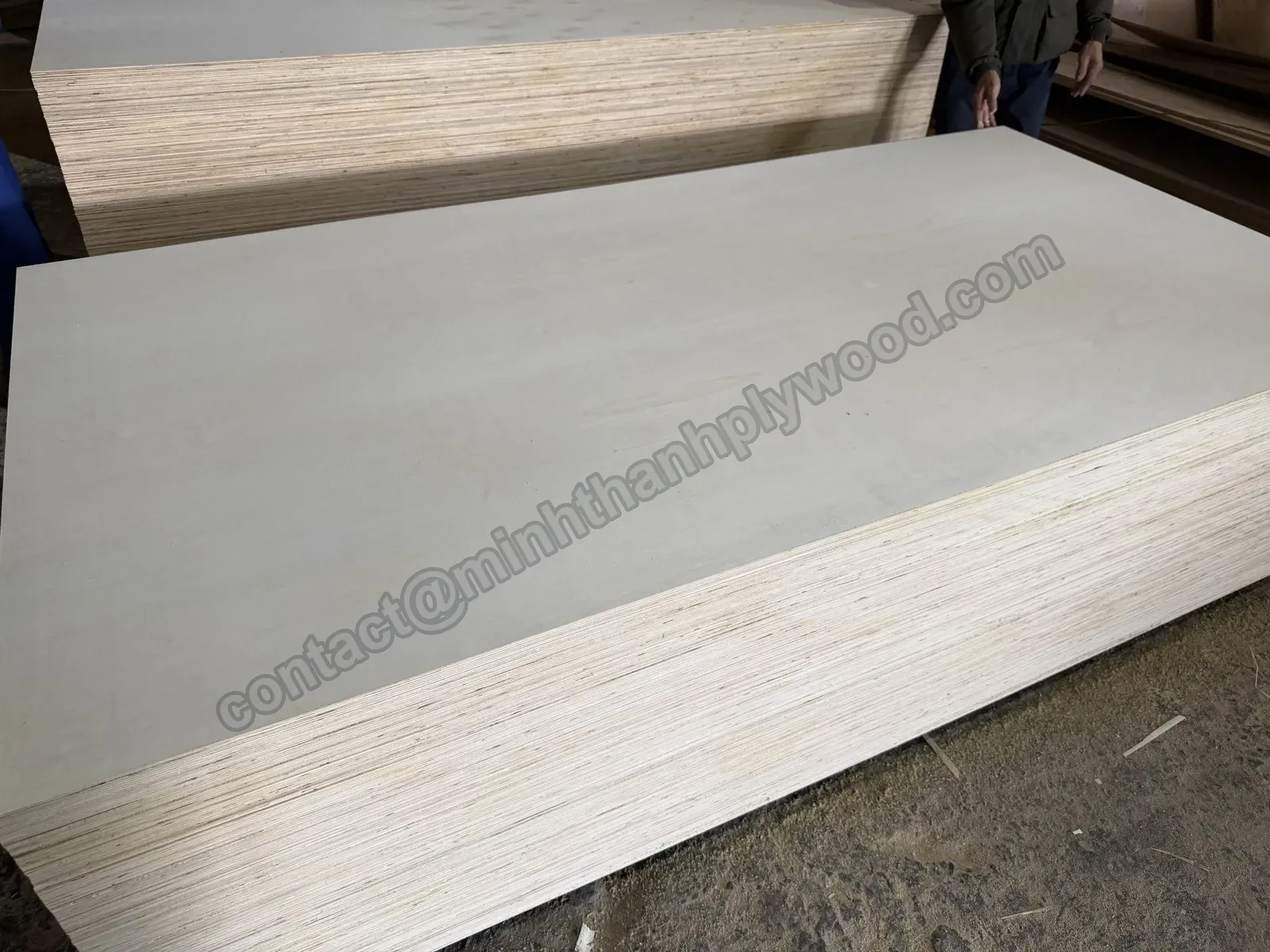
Minh Thanh Plywood supplies E0 plywood for furniture and interiors, using UF glue at E0 emission as standard. Six third-party chamber reports on 9, 15 and 18 mm panels give means of 0.014–0.032 ppm. E1 plywood is made to order, and SGS testing to your specified method is available.
Watch the film
The film explains our chamber results, the E1 comparison, glue bond and the documents to request with your quotation.
The short answer
E0 plywood has a formaldehyde limit of ≤ 0.050 mg/m³ under China’s GB/T 39600-2021 chamber classification, or ≤ 0.5 mg/L under the Australia/New Zealand desiccator classification. These are different methods and units. Our six ASTM D6007 chamber reports give sample means of 0.014–0.032 ppm.
Our panels use UF glue at E0 emission, as named in the test records. The six reports below provide the specimen dimensions, readings and means so you can select the evidence for your panel order.
Does it meet the European standard? Yes. Our E0 panels meet the emission requirements European furniture buyers ask for, and SGS tests them to EN 717-1 or your own method on request.
E0 plywood is low-emitting, not formaldehyde-free. Panels with no added formaldehyde (NAF) or ultra-low-emitting resin (ULEF) are separate categories.
As issued
Shown as issued. Tap a page to read it in full; the PDFs go out by email with your quotation.
Report register
The report register identifies the laboratory records behind the measured values below. Full reports are supplied directly with your order enquiry.
Shanghai Hongjun · HJ-QAT
HJ-QAT-250597, HJ-QAT-251303 and HJ-QAT-261036; issued April 2025, June 2025 and June 2026.
ICTT Vietnam · ICTTVN-QAT
ICTTVN-QAT-250841, ICTTVN-QAT-251173 and ICTTVN-QAT-260272; issued August 2025, November 2025 and April 2026.
ASTM D6007 small chamber
Each report records three specimens and their mean, with the tested thickness, plies and resin description.
Chamber results
Six third-party reports on our E0 panels, tested to ASTM D6007 between April 2025 and June 2026. Each bar is the mean of three specimens; the dashed line is the 0.05 ppm limit.
Results for the sample panels tested. Margins are each mean divided by 0.05 ppm.
Specimen by specimen
Each report lists three specimen readings and their mean. Across these six reports, the highest individual reading is 0.037 ppm.
| Report | Laboratory | Issued | Panel | Specimens (ppm) | Mean (ppm) |
|---|---|---|---|---|---|
| HJ-QAT-250597 | Shanghai Hongjun | 15 April 2025 | 18 mm, 11-ply | 0.019 / 0.016 / 0.016 | 0.017 |
| HJ-QAT-251303 | Shanghai Hongjun | 18 June 2025 | 18 mm, 11-ply | 0.032 / 0.022 / 0.027 | 0.027 |
| ICTTVN-QAT-250841 | ICTT Vietnam | 20 August 2025 | 18 mm, 11-ply | 0.014 / 0.014 / 0.014 | 0.014 |
| ICTTVN-QAT-251173 | ICTT Vietnam | 21 November 2025 | 18 mm, 11-ply | 0.019 / 0.020 / 0.023 | 0.021 |
| ICTTVN-QAT-260272 | ICTT Vietnam | 3 April 2026 | 15 mm, 9-ply | 0.037 / 0.027 / 0.033 | 0.032 |
| HJ-QAT-261036 | Shanghai Hongjun | 10 June 2026 | 9 mm, 5-ply | 0.016 / 0.016 / 0.022 | 0.018 |
Specimens are conditioned at 24 °C and 50 % relative humidity, then tested in a 0.2 m³ chamber at 25 °C. Results are corrected to standard conditions.
Low emission by design
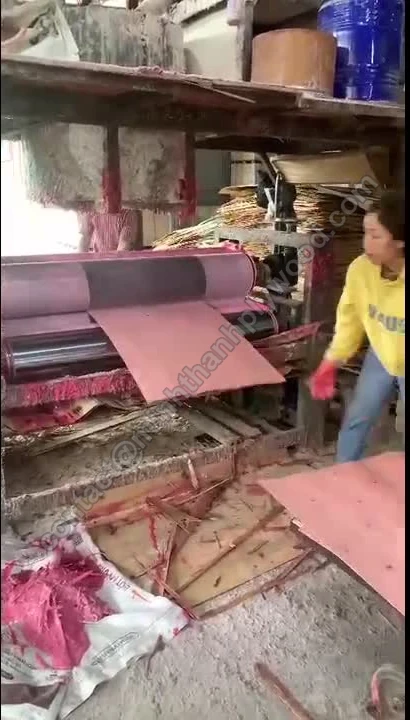
Resin selection, glue application and controlled pressing work together to keep panel emissions low. Our furniture panels use UF glue at E0 emission, and the core board is pressed and calibrated before face and back veneers are applied.
Each pressing runs at a set temperature and time so the resin cures fully. Panels then rest and cool in stacks before sanding, grading and packing.
UF glue at E0 emission is standard; E1 emission and other bond requirements are made to order.
Core pressing and face pressing follow the specified cure schedule.
Panels picked from production and tested every three months to ASTM D6007.
E0 vs E1 vs E2
E0 and E1 identify emission requirements; the method makes the comparison meaningful. Our furniture panels use UF glue at E0 emission as standard, while E1 is available for a specified order.
| Class | Where it is defined | Limit and method | What we supply |
|---|---|---|---|
| US hardwood plywood limit | CARB P2 / TSCA Title VI (ICTT mill no. 23024) | 0.05 ppm, ASTM E1333 or correlated D6007 | Certificate and reports supplied |
| E0 · China | GB/T 39600-2021 | ≤ 0.050 mg/m³, 1 m³ chamber under GB/T 17657 | Tested to order through SGS |
| E0 · Australia/New Zealand | AS/NZS plywood emission classification | ≤ 0.5 mg/L, AS/NZS 2098.11 desiccator | Tested to order through SGS |
| E1 | EN 13986 for construction panels in Europe | 0.1 ppm, EN 717-1 chamber | Made to order with UF glue at E1 emission |
| F★★★★ | Japanese JIS and JAS grading | Desiccator method, JIS A 1460 | Tested to JIS A 1460 on request |
E1 in the AS/NZS desiccator classification is ≤ 1.0 mg/L; European E1 uses ≤ 0.1 ppm by EN 717-1. E2 denotes emission above the European E1 class. Compare each number with its own method and unit. Checked 6 October 2026.
Test methods
For formaldehyde emission plywood enquiries, name the test method with the required limit. Each method uses its own conditions and units, so compare results within that method.
| Method | How it works | Result unit | Used for |
|---|---|---|---|
| EN 717-1 | Large chamber, steady-state air concentration | mg/m³ or ppm | European E1 chamber classification |
| EN 717-2 | Gas analysis of a heated specimen | mg/(m²·h) | Factory control in Europe |
| EN 120 | Perforator extraction | mg/100 g | Formaldehyde content in wood-based panels; not directly comparable with chamber emission |
| JIS A 1460 | Desiccator, 24 hours | mg/L | Japanese F★★★★ |
| ASTM E1333 | Large chamber | ppm | US large-chamber reference |
| ASTM D6007 | Small chamber, correlated to E1333 | ppm | Our six quarterly reports |
Glue vs emission
Emission class says how much formaldehyde the panel releases. Bond class says how the glue line handles moisture. They are two separate lines on a purchase order.
| Glue | Bond use | Emission | Our standard use |
|---|---|---|---|
| UF glue at E0 emission | Interior, dry rooms | Finished panel tested to the specified emission method | Standard for furniture and interior panels |
| UF glue at E1 emission | Interior, dry rooms | E1 class | To order |
| MR / melamine-fortified | Moisture-resistant bond as specified | Tested to your method | To order |
| Phenolic (WBP) | Exterior and wet use | Measured on the finished panel | Exterior panels to order |
Rules by market
Destination rules identify the product scope, method and limit. State the end use with the market so the test request matches the finished article.
| Market | Rule | Limit | Our position |
|---|---|---|---|
| European Union, furniture | REACH Annex XVII entry 77, from 6 August 2026 | 0.062 mg/m³ for furniture and wood-based articles | Meets: E0 panels tested 0.014–0.032 ppm (ASTM D6007) |
| European Union, construction | EN 13986 with EN 717-1 | E1, 0.1 ppm | E0 standard; E1 available to the specified order |
| United States | TSCA Title VI | 0.05 ppm (hardwood plywood) | Certified, CARB P2 / TSCA Title VI, ICTT mill no. 23024 |
| California | California Phase 2 | 0.05 ppm (hardwood plywood) | Certificate supplied with the test records |
| Canada | SOR/2021-148 | 0.05 ppm (hardwood plywood) | Same 0.05 ppm limit as our TSCA Title VI certificate |
| Japan | JAS F★★★★ grading | Desiccator method | Tested to order |
| China | GB/T 39600-2021; GB 18580-2025 applies from 1 June 2026 | E0: ≤ 0.050 mg/m³, chamber method | Tested to order; state the panel or finished-product scope |
| Australia / New Zealand | AS/NZS 2269 plywood class; AS/NZS 2098.11 desiccator | E0: ≤ 0.5 mg/L; E1: ≤ 1.0 mg/L | Tested to order through SGS |
Checked 6 October 2026. A finished article and a panel can have different test configurations; include coatings and assembly details in the test request.
Europe
Since 6 August 2026, REACH Annex XVII entry 77 limits formaldehyde from furniture and wood-based articles sold in the EU to 0.062 mg/m³, measured in a chamber under set conditions. Furniture makers now ask their panel suppliers for emission evidence before they buy.
Our E0 panels meet the emission requirements European furniture buyers ask for. SGS testing to EN 717-1 or the conditions specified for the intended article is arranged with the order. Send the intended use and coating or lamination details when requesting a European test.
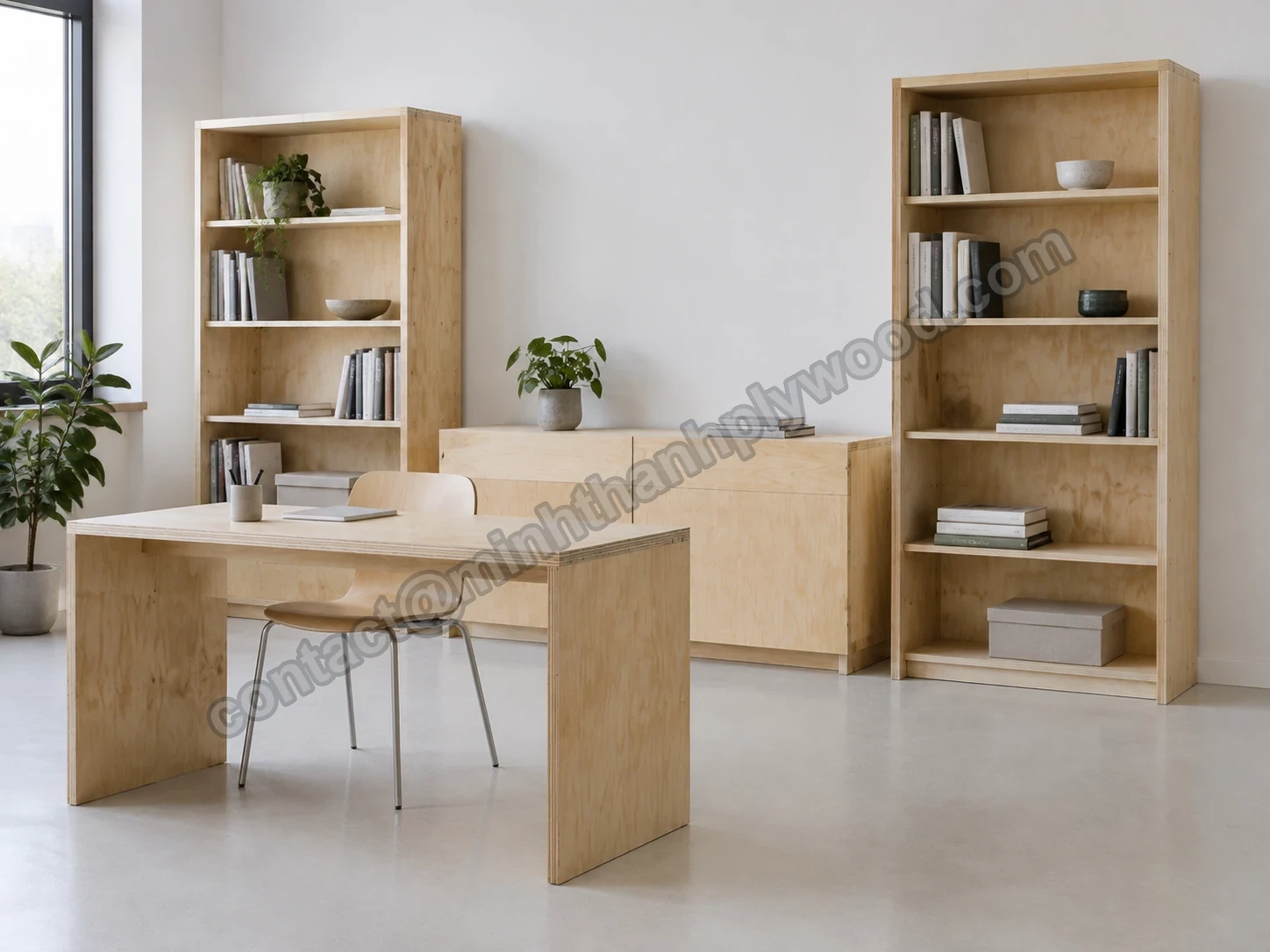
Our standard for cabinets, wardrobes, shelving and children's furniture.
Name the product standard, emission class and interior or exterior use; the quote records each requirement.
Products
Every furniture and interior panel leaves the mill with UF glue at E0 emission unless your order names another glue.
| Panel | Standard glue | Other glues to order |
|---|---|---|
| Birch plywood | UF glue at E0 emission | UF at E1; melamine-fortified (MR) |
| Poplar plywood | UF glue at E0 emission | UF at E1; melamine-fortified (MR) |
| EV plywood | UF glue at E0 emission | UF at E1; melamine-fortified (MR) |
| Okoume plywood | UF glue at E0 emission | UF at E1; melamine-fortified (MR) |
| Pine plywood | UF glue at E0 emission | UF at E1; melamine-fortified (MR) |
| Thin plywood 3–6 mm | UF glue at E0 emission | E1 |
| Exterior and film-faced plywood | Phenolic (WBP) or melamine-fortified | As specified |
Where it matters
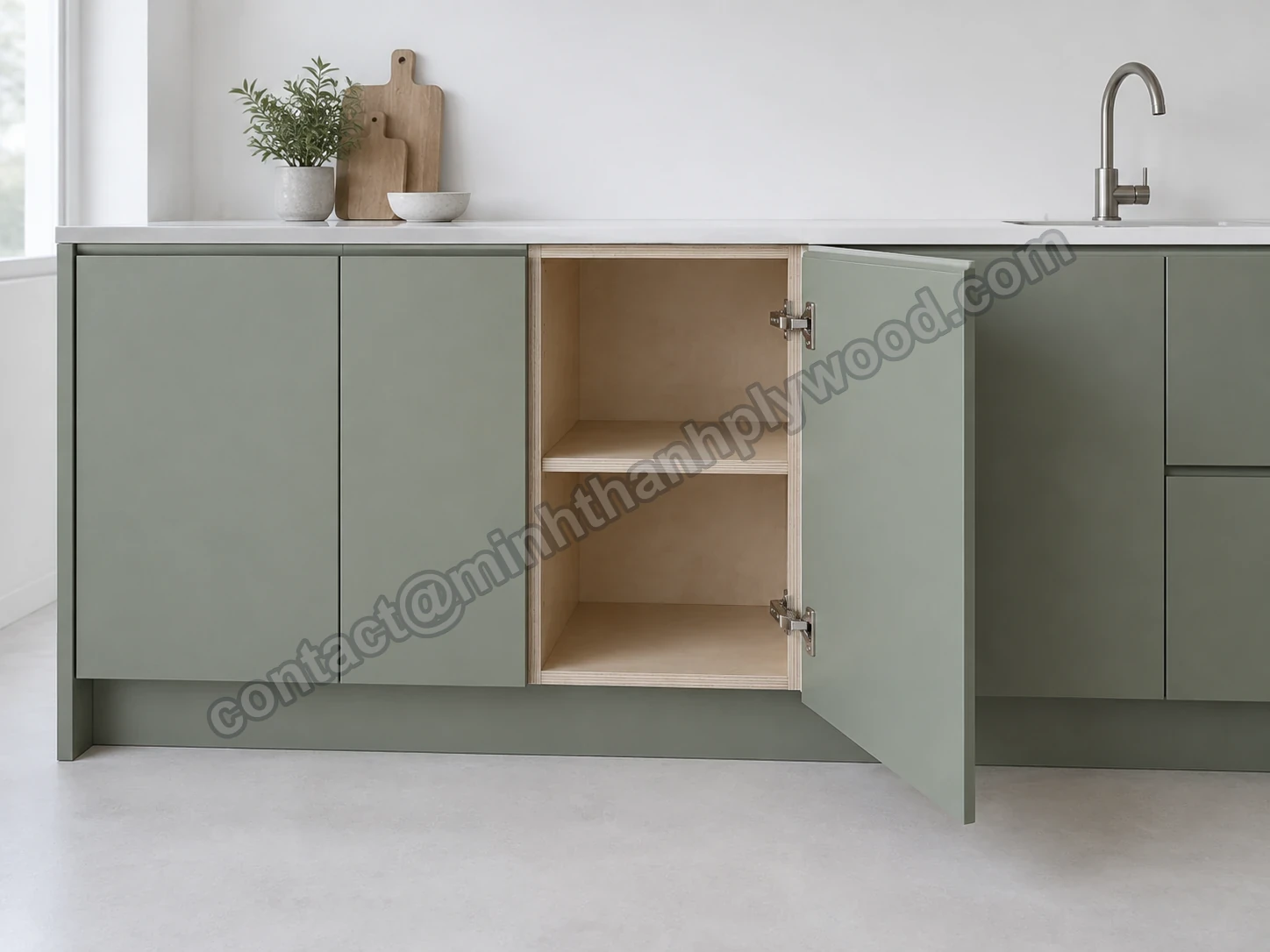
Furniture made for bedrooms, kitchens, shelving and closed displays uses large panel surfaces in occupied interiors. Buyers specify low-emission panels together with the coating, edge treatment and finished construction.
Choose the emission requirement and the moisture-resistant bond independently. A kitchen carcass near steam needs the specified bond performance as well as the low-emission requirement. State whether the panel will be laminated, painted, clear coated or left exposed.
Documents
Emission documents go out with the quotation; the rest follow with each container.
Latest chamber report
The most recent third-party ASTM D6007 report on our E0 panels.
CARB P2 / TSCA Title VI certificate
Issued by ICTT Corporation, mill no. 23024, with the covered panel scope; sent with the chamber reports.
SGS report to your method
EN 717-1, the REACH entry 77 method or another method you name, arranged on request.
Specification sheet
Glue, emission class and bond class written as separate lines, with face, core and thickness.
US shipment label
Producer, lot, third-party body number and required compliance statement identify the panel or bundle.
Shipment photos and video
Every container photographed and filmed before it is sealed.
Verify us
Four checks, each one on the report itself or a public register.
The report names the method and laboratory. Our record includes Shanghai Hongjun and ICTT Vietnam reports using the small-chamber method.
Check thickness, plies and resin against your order, and the conditioning before the test. Our reports name UF glue at E0 emission.
Read the mean of the specimens against the limit of your market, in the same unit and method.
ICTT mill no. 23024 identifies our mill in the certificate. Check the certifier against the official EPA list and read the certificate on the linked quality page.
CARB P2 / TSCA Title VI details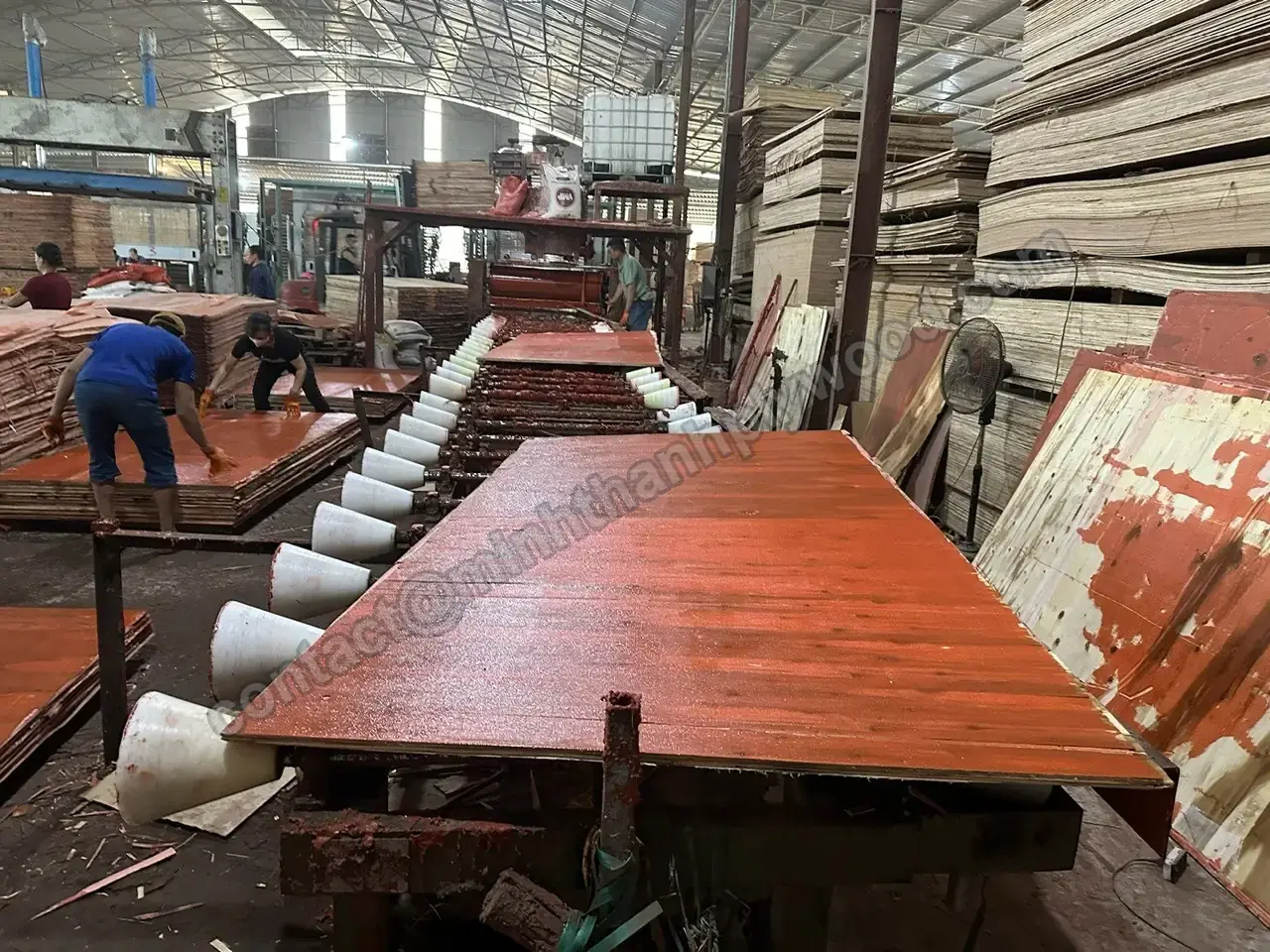
Panel and article specification
Send the panel construction, coating or lamination, intended article and required test method together. We use those details to prepare the laboratory request and match the report to the quoted panel.
Before you order
Write emission the way a laboratory reads it. Six lines prevent most disputes.
Write the class, governing standard and test limit together. For example, E1 under EN 717-1 with a 0.1 ppm chamber limit. An E0 purchasing requirement also needs its named method and limit.
UF glue at E0 emission for dry interiors; MR or phenolic when the panel faces humidity or weather.
State the destination and application, including EU furniture, construction panels or US hardwood plywood.
A dated third-party report on the same panel type, with the specimen values.
SGS tests to EN 717-1 or your method; we arrange it with the order.
For standard furniture orders production takes 15–45 days after deposit. Schedule any additional laboratory test with the order so sampling and reporting fit the shipment date.
FAQ
Reports go out with the quote
Send the panel specification and destination. Our export team returns the matching chamber reports with the quotation.
Request the test reportE0 means ≤ 0.050 mg/m³ in China’s GB/T 39600-2021 chamber classification, or ≤ 0.5 mg/L in the AS/NZS plywood desiccator classification. Our panels use UF glue at E0 emission; six ASTM D6007 reports show sample means of 0.014–0.032 ppm.
In the AS/NZS desiccator classification, E0 is ≤ 0.5 mg/L and E1 is ≤ 1.0 mg/L. China’s chamber E0 is ≤ 0.050 mg/m³; European E1 is ≤ 0.1 ppm by EN 717-1. Each threshold belongs to its own method. We make E1 panels to order.
No. E0 is an emission class; CARB P2 / TSCA Title VI sets a 0.05 ppm limit for hardwood plywood with third-party mill oversight. We hold both: E0 panels tested at 0.014–0.032 ppm and CARB P2 / TSCA Title VI certification, ICTT mill no. 23024. The certificate ships with the chamber reports.
Yes. Our E0 panels meet the emission requirements European furniture buyers ask for. We arrange SGS testing to EN 717-1 or the specified article test conditions, with coating and construction details included in the request.
No. E0 plywood is low-emitting and uses a formaldehyde-based resin. No-added-formaldehyde and ultra-low-emitting resin programmes have separate definitions and requirements.
UF glue at E0 emission, a urea-formaldehyde resin made for low emission. It is our standard glue for furniture and interior panels.
Yes for kitchen cabinets and bathroom furniture in normal indoor conditions. For panels that face steam or splashes, order MR or phenolic glue as a separate bond line on the order.
Every three months. Panels are taken from production and tested in a chamber to ASTM D6007 by a third-party laboratory.
Yes. SGS tests our panels to EN 717-1, the REACH entry 77 chamber method or any method you name, and we send you the report.
UF glue at E0 emission costs a little more than UF glue at E1 emission. For furniture panels E0 is already our standard, so it is in the price we quote.
Face, core, thickness, glue and destination. MOQ 1×40HC, free samples. Replies within hours by email or WhatsApp +84 988 586 601.