
In short, the packing plywood price Vietnam mills quote is a rate per m³ for a defined panel: face, core, glue, thickness and tolerance. At Minh Thanh Plywood packing panels sit in the commercial and packing group, which starts from US$250/m³ (October 2026, FOB Hai Phong). Compare offers per accepted crate, not per sheet.
What does a packing plywood quotation actually buy?
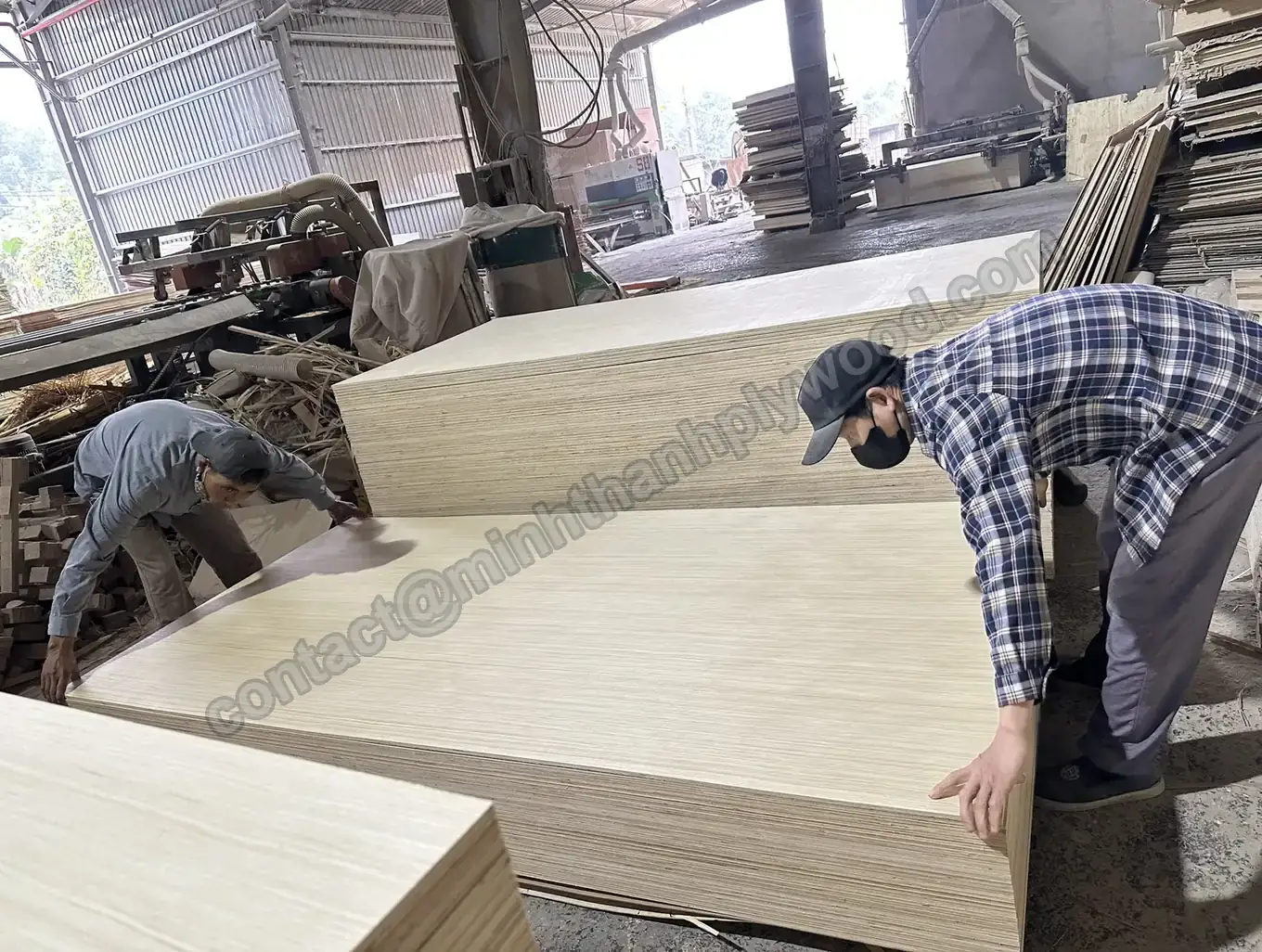
A packing plywood quotation buys a defined sheet construction for a defined delivery scope. Price becomes comparable when the crate application, dimensions, core, face/back acceptance and bond are written on every offer. A line reading only “packing plywood” leaves the material needed by the workshop unresolved.
Start from the crate bill of materials. Identify walls, lids, dividers and pallet decks separately. A visible export equipment case and a hidden protective divider can have different face requirements even within the same shipment. Buying one appearance grade for every component can spend money where it adds no customer value.
The packing plywood product page describes Minh Thanh’s application range. The factory makes packing, commercial and furniture plywood, but a starting reference for another range does not establish a packing quotation. Ask for the construction needed for the crate rather than carrying a furniture rate into a packaging budget.
Keep the quoted item tied to a drawing revision and approved sample. If the dimensions or bond change after the purchasing comparison, recalculate the crate cost before issuing the order. The material description should follow the panel from supplier selection through receiving, cutting and assembly.
Why is packing plywood cost lower in Vietnam?
Packing plywood cost is lower in Vietnam because the cores come from plantation Eucalyptus, Acacia and Styrax grown close to the mills, and packing panels use utility faces rather than selected veneers. Short log transport and fast-growing plantation timber keep the core, which is most of the panel volume, cost-effective.
Minh Thanh manufactures in Ha Hoa, Phu Tho, inside one of northern Vietnam’s plantation regions. Core veneer is peeled, dried and laid up close to where the trees are grown. For packing grades we leave out the furniture steps a crate does not need, such as selected faces and the second calibrating press, and keep the steps that matter: closed core joints, a sound glue line and thickness inside ±0.5–1.0 mm.
The saving that matters to the buyer is per crate. A 40HC from Hai Phong spends about 25–35 days at sea to the Mediterranean and 30–40 to Northern Europe, so freight is part of the comparison with a local mill. When the panel price gap per m³ is larger than freight and duty, importing wins.
What is the starting packing plywood price per m³?
Minh Thanh quotes packing plywood inside its commercial and packing group, which starts from US$250/m³ in October 2026, FOB Hai Phong. Core species, glue, thickness, tolerance, sheet size, quantity and delivery term move the final rate from that floor.
| Price driver | Lower cost choice | Higher cost choice |
|---|---|---|
| Core | Eucalyptus, Acacia or Styrax plantation core, standard joints | Selected Eucalyptus or Styrax core, stitched and calibrated |
| Glue | UF glue for dry packing | Melamine-fortified (MR) or phenolic (WBP) |
| Face | Utility face, open defects filled | Plain sanded face for printing or branding |
| Thickness tolerance | ±0.5–1.0 mm | Tighter, sanded |
| Size | 1220 × 2440 mm full sheet | Cut-to-size pieces |
| Quantity | Full 40HC, one or two specifications | Small mixed lines |
A 12 mm 1220 × 2440 mm sheet holds 0.0357 m³, so its sheet price is your quoted US$/m³ × 0.0357. Ask for the rate per m³ and the sheet count on every line, then compare both. The Vietnam plywood price guide explains the same conversion for furniture and commercial panels.
Which fields must match before you compare prices?
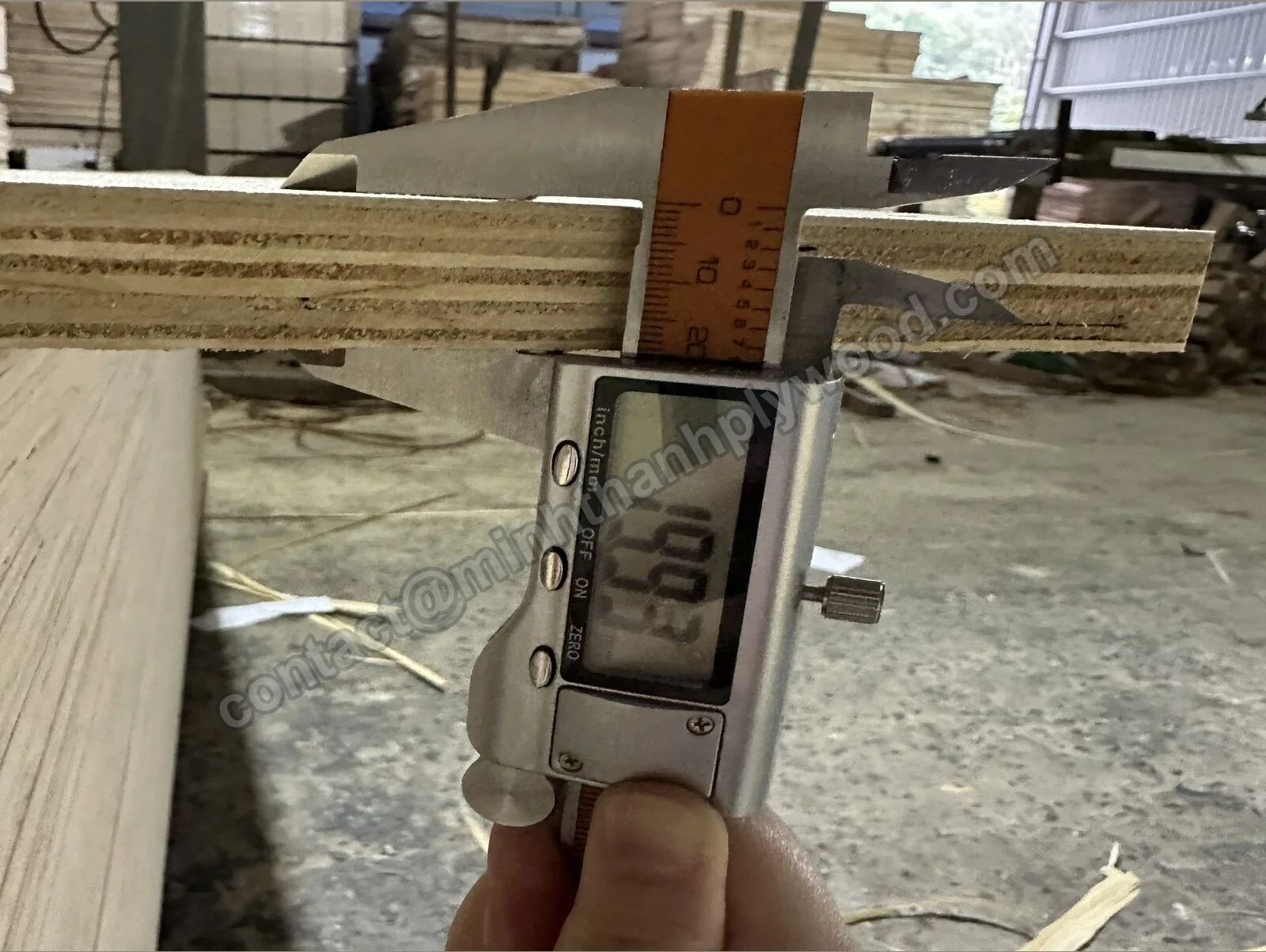
Match the product construction and delivery scope before ranking packing plywood offers. Write supplier deviations in a separate column so production can decide whether an alternative is acceptable. A missing requirement should trigger a clarified offer rather than an optimistic reading of the cheapest line.
| Field | Write into the quotation request | Buying implication |
|---|---|---|
| Application | Crate wall, lid, divider or deck; drawing reference | Defines the panel’s job and acceptance |
| Face/back | Plain or veneered surfaces; permitted defects | Controls usable surface and repairs |
| Core | Species and required internal construction | Affects mass, cut edges and fixing zones |
| Bond | Intended exposure and specified evidence | Connects the panel with handling conditions |
| Dimensions | Actual width, length, thickness and tolerance | Sets panel volume and component fit |
| Processing | Full sheets or finished cut pieces | Defines work remaining in the workshop |
| Shipment | Quantity, pack protection and delivery point | Defines order value and transport allocation |
Keep appearance and structural requirements separate. A face knot accepted on a covered wall is different from a defect at a fixing zone. Show the fastener positions and critical edges on the drawing so the mill understands where internal construction affects your use.
Use a single quotation request for all candidates. When a supplier proposes a different sheet format or bond, preserve your original line and add the alternative alongside it. That makes the price effect visible without losing the technical reference.
How do you convert price per m³ into price per sheet?
Multiply the quoted price per m³ by the sheet’s length, width and thickness in metres. For a 1220 × 2440 mm sheet, area is 1.220 × 2.440 = 2.9768 m². At 12 mm, volume is 2.9768 × 0.012 = 0.0357216 m³. For a written rate R per m³, the sheet price is 0.0357216 × R in that rate’s currency.
For area pricing, divide the sheet price by the sheet area and keep thickness beside the result; an area rate for a thin divider and one for a pallet deck carry different volumes. The sheet-size guide connects formats to a cutting schedule. Keep full precision until the order total, then reconcile sheet count and volume with the packing list before loading.
Which construction changes the crate cost?
Core construction, bond and face acceptance change the cost of material entering crate production. Choose those fields for the component’s job. A decorative face can be unnecessary on a hidden divider, while a weak fixing zone can create a costly assembly problem on a crate wall.
Inspect a sawn sample at the fixing positions used in the drawing. Look for voids or separations that remove support behind the selected fastener. A full-sheet face photograph cannot show how the edge behaves when it is cut into a narrow strip or drilled close to the boundary.
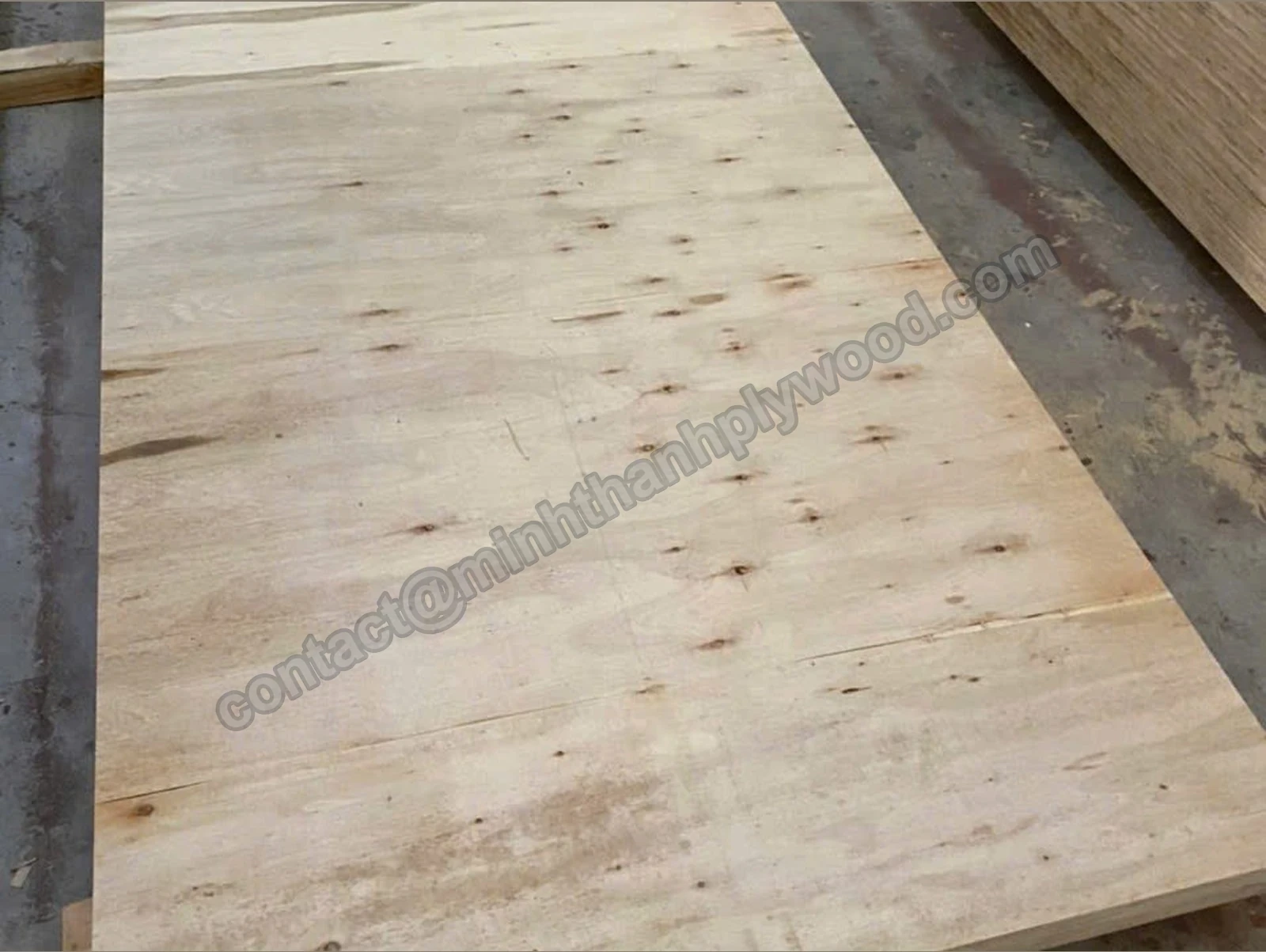
Packing panels skip the furniture steps a crate does not need: no selected face and no second calibrating press. That is where the packing price saving comes from, while closed core joints and a sound glue line stay in the specification.
Consider panel mass alongside performance. Heavier wall panels affect manual handling and finished-package weight. A mass reduction earns value only if the revised crate still protects its contents and meets the agreed handling conditions. Decide from the assembly test rather than a core nickname.
Which packing thicknesses and cut sizes give the lowest crate cost?
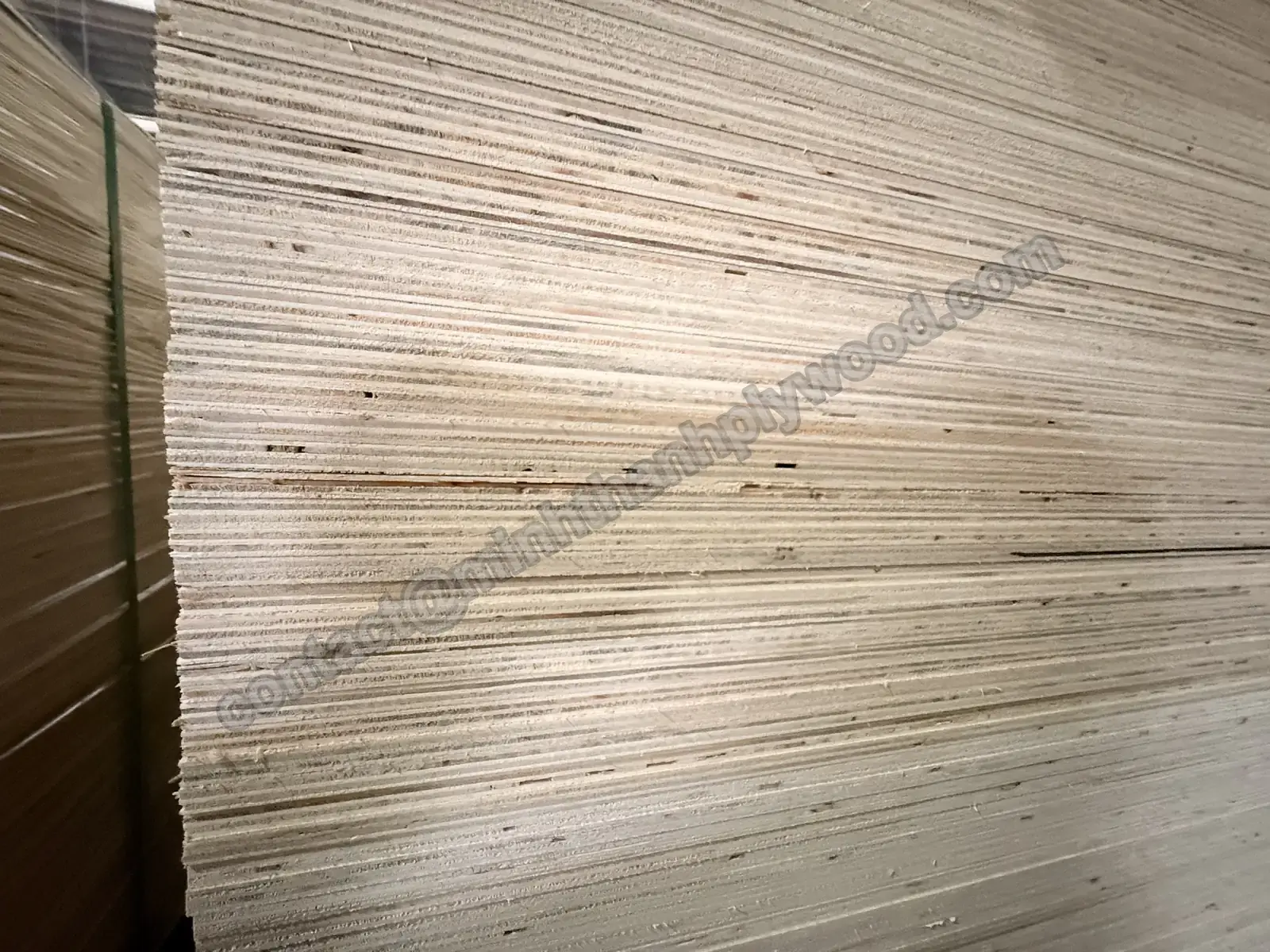
Most crate walls, lids and dividers use 9, 12, 15 or 18 mm packing plywood at ±0.5–1.0 mm thickness tolerance. Thinner sheets load more pieces per container, so freight per sheet falls with thickness. Our 40HC plan for 1220 × 2440 mm packing panels at 28,000 kg payload:
| Thickness | Styrax core | Acacia core | Eucalyptus core |
|---|---|---|---|
| 9 mm | 1,998 sheets | 1,776 sheets | 1,605 sheets |
| 12 mm | 1,494 sheets | 1,328 sheets | 1,200 sheets |
| 15 mm | 1,188 sheets | 1,056 sheets | 960 sheets |
| 18 mm | 990 sheets | 880 sheets | 795 sheets |
Styrax is the lightest core, so it carries the most sheets; Eucalyptus is the densest and stiffest. The package drawing sets the thickness: span, supports and the fastener pattern decide it together, and a thicker wall does not replace a missing base bearer under heavy equipment. The thickness guide gives panel context.
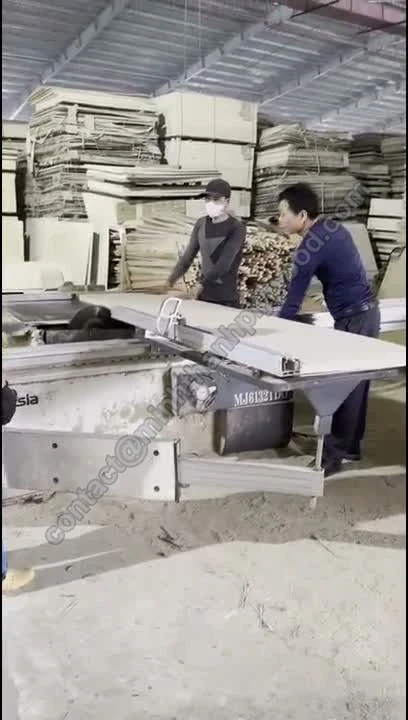
Cutting layout decides how many accepted parts come out of each sheet. Minh Thanh supplies cut-to-size plywood: a 1220 × 2440 mm sheet cuts into 4, 6 or 8 equal pieces, or into your own component list with piece identification on every pack. Cut pieces remove sawing, sorting and offcut storage from your workshop, which often wins on cost per crate even when the price per m³ is the same.
What does a plywood crate cost, and which bond fits storage?
Accepted crate cost = (plywood + framing + fittings + cutting and assembly labour) ÷ accepted crates. Plywood is one line. A worked example: a crate uses six 1200 × 800 mm panels in 12 mm. One 1220 × 2440 mm sheet yields three such panels, so each crate takes two sheets, or 0.0714 m³. The plywood line per crate is 0.0714 × R, where R is your quoted rate per m³. Add your framing, fittings and recorded assembly time to finish the crate cost.
Measure labour in a trial assembly. Extra pre-drilling or edge repair on one panel belongs in its result; a cutting step removed by cut-to-size pieces comes out at its recorded cost. Freight for importing the panels and freight for shipping the finished crate are separate lines.
The bond follows the crate’s exposure:
| Exposure | Bond | Typical use |
|---|---|---|
| Dry indoor packing and short transit | UF glue | Dividers, inner cases, domestic crates |
| Humid warehouses, condensation in containers | MR (melamine-fortified UF) | Export crates on long sea routes |
| Open-yard storage, rain during handling | Phenolic WBP | Outdoor-stored crates, pallet decks |
Bond and formaldehyde emission are separate specifications; state any destination emission requirement next to the exposure requirement. For the US, the limit for hardwood plywood with a veneer core is 0.05 ppm of formaldehyde under 40 CFR 770.10. The quality page shows Minh Thanh’s plywood documents and tests.
Does processed plywood packaging need ISPM 15 treatment?
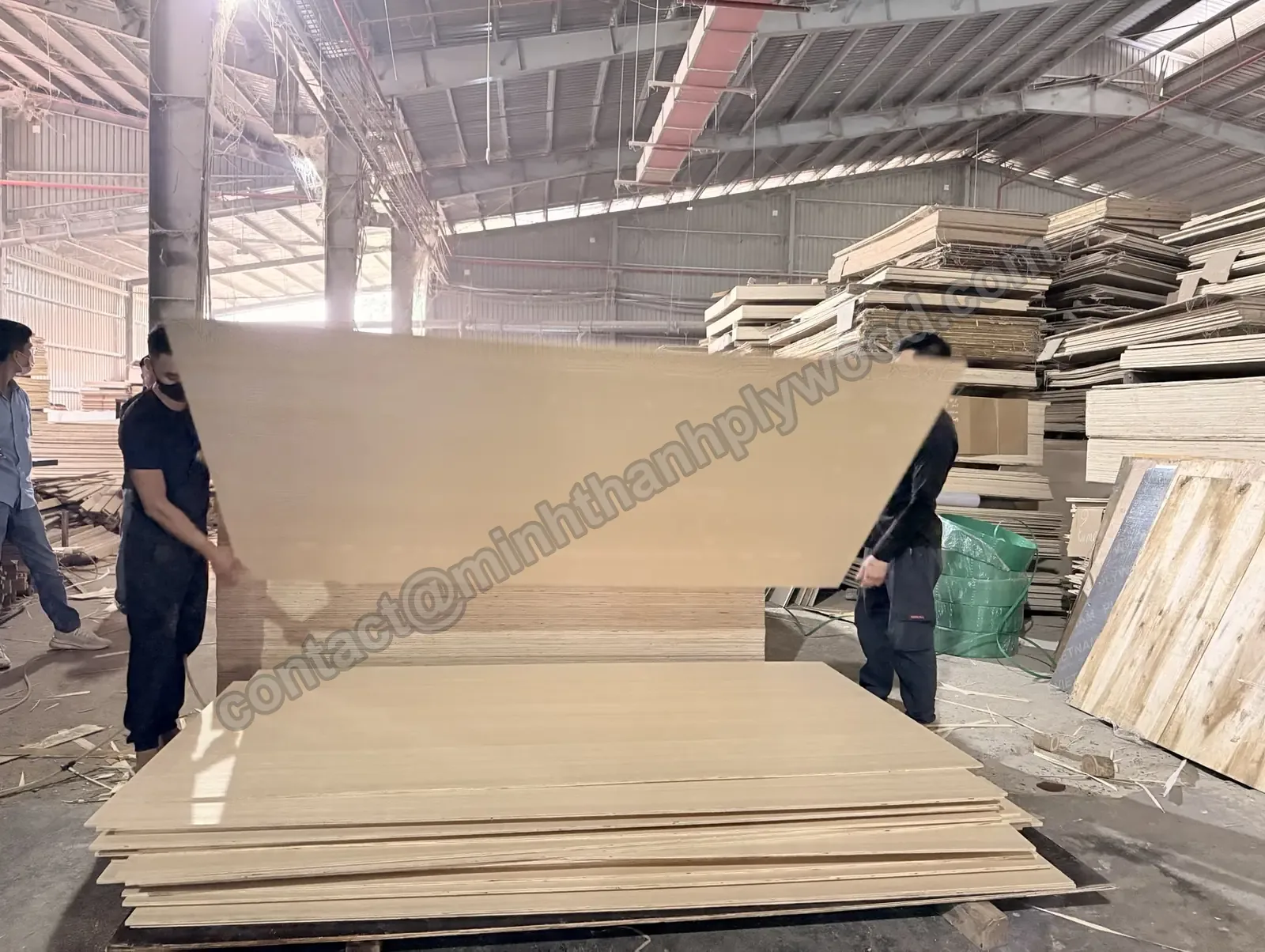
ISPM 15 exempts packaging made wholly of processed wood such as plywood created using glue, heat or pressure. Solid-wood framing, bearers and dunnage need a separate check. A plywood wall does not make every other material in the completed crate exempt.
The IPPC’s ISPM 15 standard, section 2.1, consulted 8 October 2026, states the processed-wood exemption. UK government guidance on wood packaging material says its rules “do not apply to processed, non solid WPM like plywood”. Review the entire assembly with the destination’s requirements, including repairs or added supports introduced after initial manufacture.
Identify which supplier provides each packing material and its required treatment or marking. Keep that responsibility in the crate specification. A receiving team should be able to identify solid-wood supports before the finished package is closed and ready to ship.
Budget only the treatment and documents needed for the actual assembly. Plywood-only components need no ISPM 15 treatment; solid-wood bearers and dunnage do.
Distinguish the crate carrying goods from plywood panels imported as goods themselves. Import documentation and phytosanitary requirements for a panel shipment follow the destination’s rules and the shipment description. The packaging exemption addresses the packaging use covered by the standard.
How do FOB, CFR and CIF change the price comparison?
FOB, CFR and CIF place different transport costs inside the seller’s quotation. Write the named port and Incoterms® 2020 rule beside each price. Compare the offers after extending them to the same receiving point.
| Basis | Seller’s main transport scope | Additional budget fields |
|---|---|---|
| FOB Hai Phong | Agreed delivery on board at origin | Ocean freight, insurance, destination and inland costs |
| CFR named port | Main ocean freight included | Insurance, destination and inland costs |
| CIF named port | Main ocean freight and seller-arranged insurance included | Destination and inland costs; insurance scope review |
The ICC Incoterms® 2020 framework, consulted 8 October 2026, separates costs from delivery and risk obligations. For these sea rules, risk transfers on board at origin. A CIF price is not the same as delivery risk continuing to the buyer’s warehouse.
Use written freight and destination charges for the actual shipment window. List what is already in the seller’s price so terminal or origin costs do not enter the budget twice.
Import duties and taxes need the shipment’s correct classification, origin and destination. Put the broker’s assessment into the worksheet and keep recoverable tax separate from permanent inventory cost. Payment at clearance affects cash planning even when accounting later recovers part of that amount.
How do panel mass and packing affect freight per sheet?
Panel mass and pack layout determine the quantity over which container freight is allocated. Use a weighed packing plan rather than an assumed maximum sheet count. Packaging, dunnage and the booking’s permitted cargo weight belong in the load calculation.
Sheet mass = panel volume × measured or specified density. Add the mass of every sheet line, then add pack protection and loading materials. Compare the total with the permitted cargo mass and check the physical arrangement. A geometric volume ceiling is not a promise of a shippable quantity.
Ask for the pack count and sheet count on each line. The packing list should reconcile with the quotation and proposed load plan. Mixed thicknesses or dimensions can create unused spaces and different handling arrangements from a single-specification load.
Review receiving equipment as well as ocean loading. Pack size and weight should fit the workshop’s forklift and storage plan. Cutting down an oversized pack at arrival consumes time and can damage exposed edges, reducing the value of a nominal freight saving.
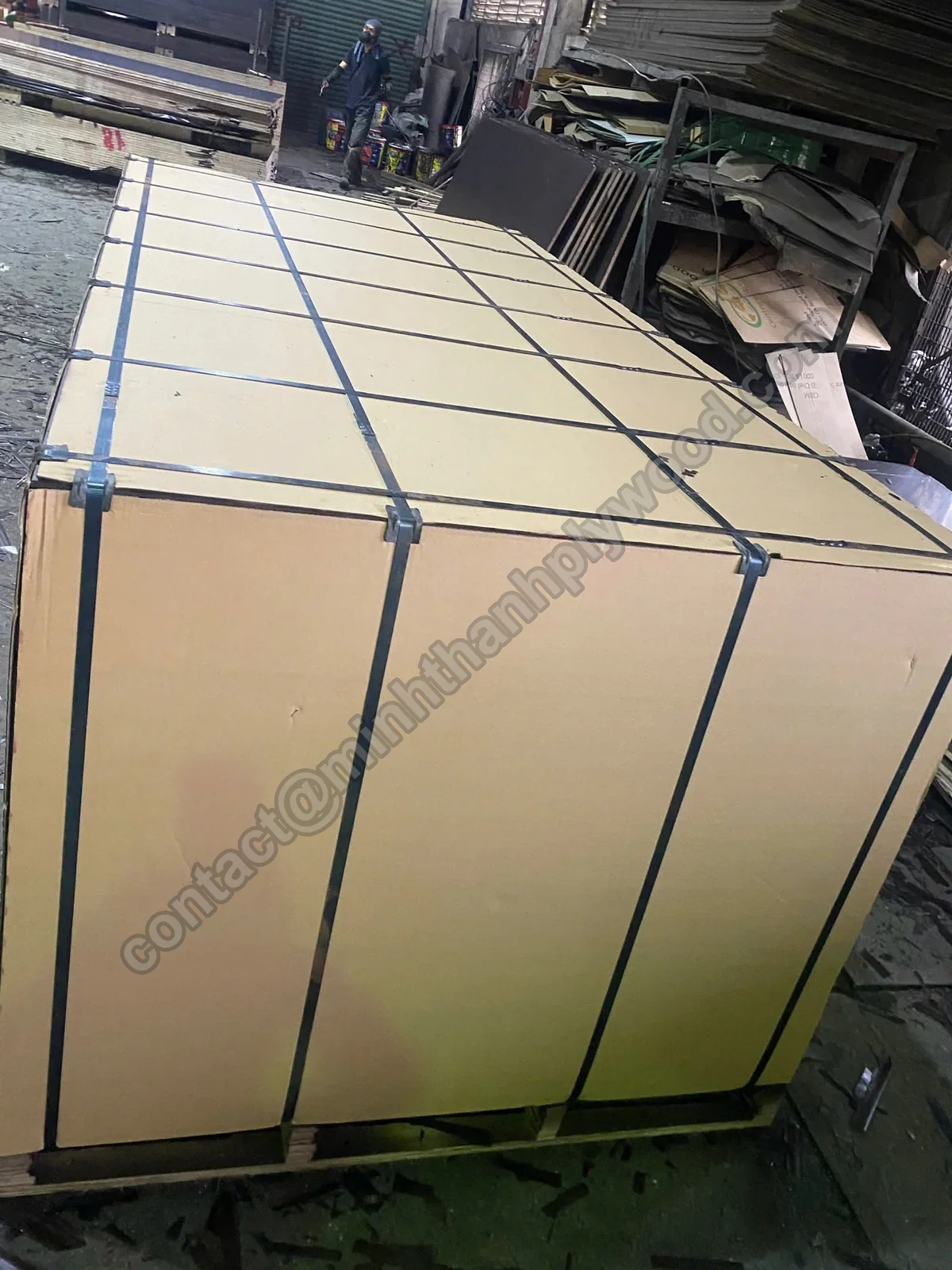
Minh Thanh photographs and films shipments before loading. Use those records to review pack protection and identify the planned goods. The export-packing page and packing calculator provide the next step for organising the shipment schedule.
How should buyers approve samples and receiving quality?
Approve packing plywood through the cutting and assembly operations the order will use. Minh Thanh provides free samples. Select representative pieces and use the crate drawing to define the trial instead of judging the material only by a clean face photograph.
- Measure sheet thickness and dimensions against the ordered tolerance.
- Cut the actual wall, lid or divider sizes and inspect critical fixing zones.
- Assemble the specified fasteners and joints using the workshop’s tools.
- Check fit, squareness and the protective materials required by the design.
- Test the complete package for its agreed handling and exposure conditions.
- Record accepted construction and drawing revision for production and receiving.
At receiving, photograph pack condition before opening and count sheets or cut pieces against the packing list. Identify transit damage separately from product deviations. Keep affected goods traceable so the supplier can connect the issue with the relevant shipment record.
A repeat order should retain the approved panel and crate specification. Intentional changes belong on a revised line, with the effect on price and assembly visible. Consistent purchasing lets the buyer investigate genuine price movements without repeatedly changing the material being compared.
How do you get a packing plywood price Vietnam quote?
Send the crate drawing and a complete sheet or component schedule. The factory can then price the panel your workshop will use and propose relevant alternatives. A target price becomes useful when it sits beside the requirements that must remain intact.
Include application, face/back acceptance, core, bond and emission requirements, dimensions, tolerance, sheet or piece quantities, packing and named destination. Mark fastener zones, panel spans and any moisture exposure that affects material selection. Attach the cutting schedule if accepted component yield drives the decision.
Minh Thanh’s MOQ is 1 × 40HC. Production takes 15–45 days after deposit; add transit and clearance to the stock plan. The factory quotes FOB Hai Phong, CFR or CIF and accepts T/T or irrevocable L/C at sight. Under standard T/T terms, payment is 30% deposit and 70% against scanned B/L.
Send the schedule through Contact or email contact@minhthanhplywood.com. Ask for free samples and a quotation for the same construction. Compare the accepted crate result with the delivered material cost, then place the order against the drawing and specification your team has approved.
Buyer questions, answered
What is the packing plywood price in Vietnam?
At Minh Thanh, packing plywood is quoted in the commercial and packing group, which starts from US$250/m³ in October 2026, FOB Hai Phong. The final rate depends on core, glue, thickness, tolerance, size, quantity and delivery term.
Is Vietnamese packing plywood always the lowest-cost option?
Vietnamese packing plywood is cost-effective because plantation cores grow close to the mills. It wins on landed cost when the panel price gap per m³ is larger than freight and duty to your port.
Can I price a crate by the plywood sheet cost alone?
A completed crate also consumes timber or other framing, fasteners, cutting time, assembly labour and protection. Allocate those costs across accepted crates and compare the same handling performance. Rejected components and rework belong in the calculation.
How do I convert a cubic-metre quotation to sheet price?
Multiply the quoted rate per m³ by length, width and thickness expressed in metres. Keep the quoted physical dimensions beside the calculation and round money after calculating the order total. Use the same unit basis for every supplier.
Does thicker packing plywood always make a better crate?
Thickness must suit the panel span, framing, fastener layout and handling loads. A crate design can use framing and smaller spans to achieve the required performance without unnecessary panel volume. Approve the complete assembly for its intended use.
Does plywood packaging require ISPM 15 treatment?
ISPM 15 exempts packaging made wholly of processed wood such as plywood manufactured using glue, heat or pressure. Solid-wood bearers, framing and dunnage have their own requirements. Check the complete packaging assembly and the destination's implementation.
Is an interior bond suitable for export crates?
Choose the bond for the crate's actual exposure, including outdoor handling, warehouse conditions and transit. Describe expected moisture contact and the required evidence in the order specification. The packing product name alone does not establish a wet-service bond.
What does a CIF packing plywood quotation include?
CIF to a named destination port includes seller-arranged main freight and insurance alongside the goods. Import clearance, destination costs and inland delivery still need a budget. Shipment risk transfers on board at origin under the rule.
Can I buy cut-to-size packing panels?
Minh Thanh supplies cut-to-size plywood. Send the component schedule with finished dimensions, tolerances and quantities, and compare the quoted pieces with the cost of cutting full sheets in your workshop. Keep the pack plan tied to the component count.
What should I send to Minh Thanh for a packing plywood quote?
Send crate use or drawings, face/back acceptance, core, bond and emission requirements, width × length × thickness, tolerance, sheets or pieces per line, packing and destination. Minh Thanh's MOQ is 1 × 40HC, with FOB Hai Phong, CFR or CIF quotations and free samples.