
LVL vs plywood in plain terms: LVL is a strong, straight beam or rail, with every veneer running along its length. Plywood is a flat sheet with veneers crossed, so it is strong in both directions. Order LVL for frame rails, headers and crate bearers; order plywood for cabinet sides, shelves, backs and crate skins. Mixing them up costs a rejected part or a repeat order. Minh Thanh Plywood makes both in Vietnam.
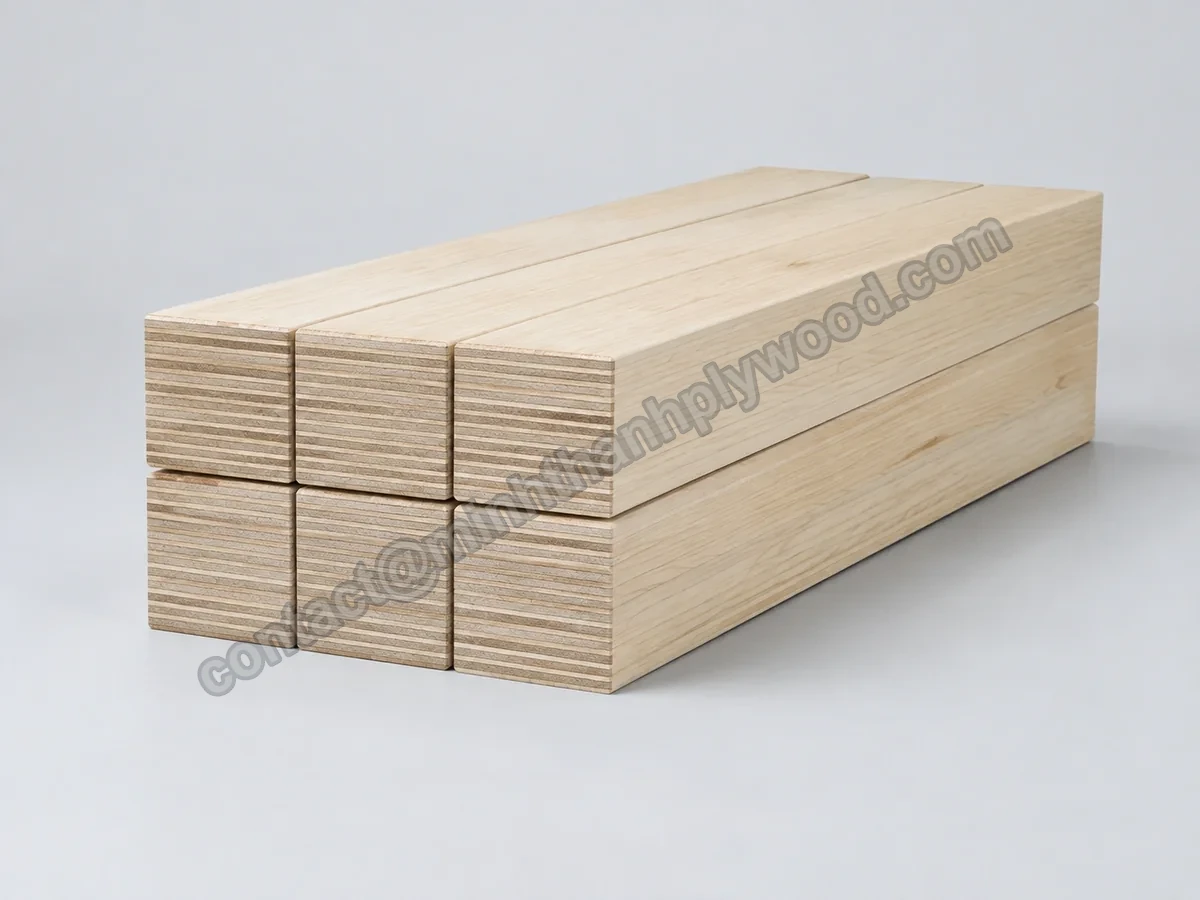
LVL vs plywood: which material fits the part?
Use LVL for specified member functions and plywood for specified panel functions. A beam, furniture rail, cabinet side and crate wall ask different things of their veneer construction. LVL carries load along its length because its veneers run parallel; plywood resists load in both directions because its layers cross.
| Buying metric | Minh Thanh LVL | Minh Thanh plywood |
|---|---|---|
| Grain arrangement | Veneers run mainly along the member | Veneers alternate at 90° layer by layer |
| Veneer species | Acacia or Eucalyptus plantation veneer | Styrax or Eucalyptus core; birch, poplar, EV, okoume or pine faces |
| Density | Acacia about 580 kg/m³; Eucalyptus 650–750 kg/m³ | Styrax about 500 kg/m³; Eucalyptus 650–750 kg/m³ |
| Supplied form | Billets of 1220 × 2440 or 1250 × 2500 mm, cut to member sections | Sheets of 1220 × 2440 or 1250 × 2500 mm, 3–40 mm thick, or cut-to-size |
| Strongest direction | Along the member length | Similar in both sheet directions |
| Dimensional movement | Very stable along the length; moves across the width | Stable in both in-plane directions |
| Glue options | UF glue at E0 emission; MR or phenolic WBP | UF glue at E0 emission; MR or phenolic WBP |
| Typical thickness and width | Industry range about 12–75 mm thick, built up beyond; widths about 200–1,200 mm | 3–40 mm sheets in 1220 × 2440 or 1250 × 2500 mm |
| Typical length | Minh Thanh billets 2440 or 2500 mm, cut to member sections (industry LVL runs to 12 m or more on long presses) | Sheet length 2440 or 2500 as above, cut-to-size on request |
| Typical parts | Frame rails, door stiles, bed slats, packing runners | Cabinet sides, shelves, backs, crate skins and decks |
| Cost unit to compare | Cost per accepted member | Cost per accepted panel part |
The first line of an enquiry should name the part and what it does. “LVL wood” leaves open whether the buyer wants an upholstery frame rail, an export-packing bearer or a building header. “Plywood” leaves open whether the buyer wants a painted cabinet back, exterior panel or structural sheathing.
At Minh Thanh, the LVL range sits alongside furniture and packing plywood. Buyers can therefore start from the component rather than force the entire order into one material category. Building applications require their own identified structural product and design evidence.
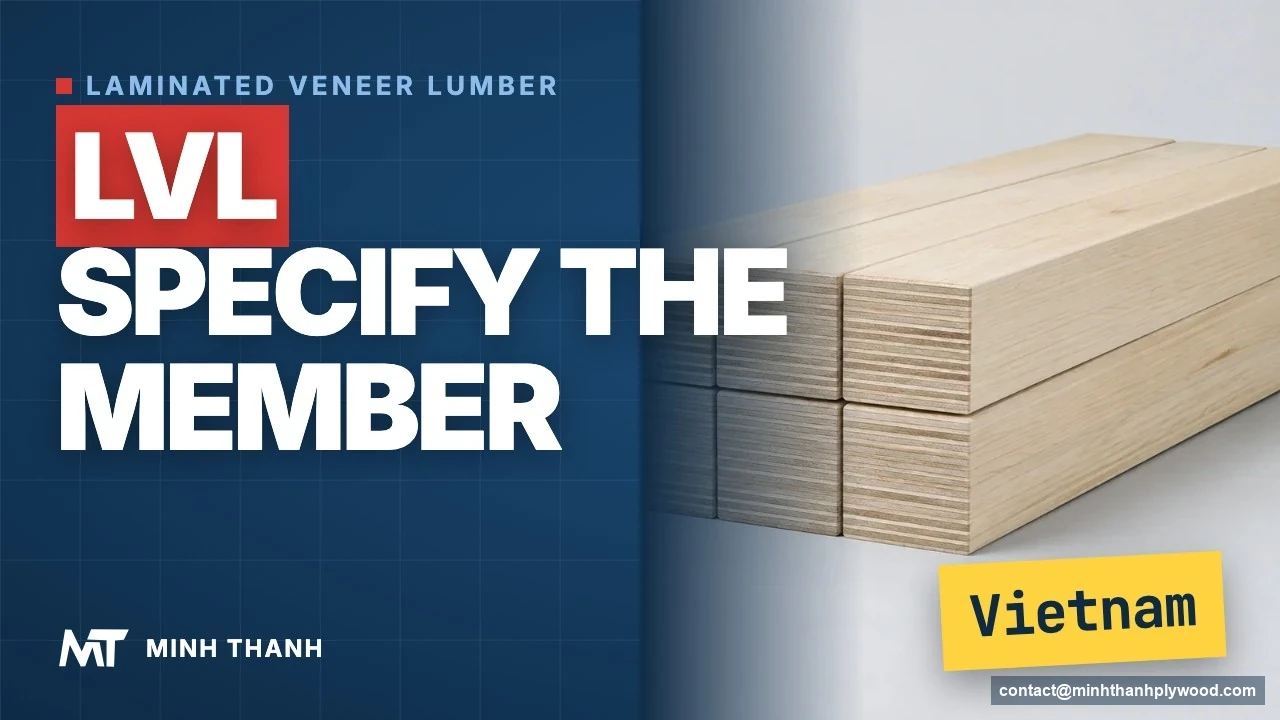 The LVL members from our product film: every veneer runs along the length.
How do the veneer arrangements differ?
LVL preserves predominantly longitudinal grain through the member, while plywood distributes veneer directions through the panel. The exact sequence matters more than the number of glue lines visible at one edge.
For a member, aligning much of the veneer along its length gives a useful longitudinal construction. For a panel, cross veneers help resist movement and provide properties across the sheet. Neither arrangement produces identical properties in every direction, and neither removes the need to identify the product grade.
The APA description of structural composite lumber, consulted 8 October 2026, describes LVL as primarily longitudinal veneers with qualified properties. Its plywood overview describes cross-laminated panels and strength-axis-dependent properties. These are product-family distinctions; a purchase specification still needs the actual construction.
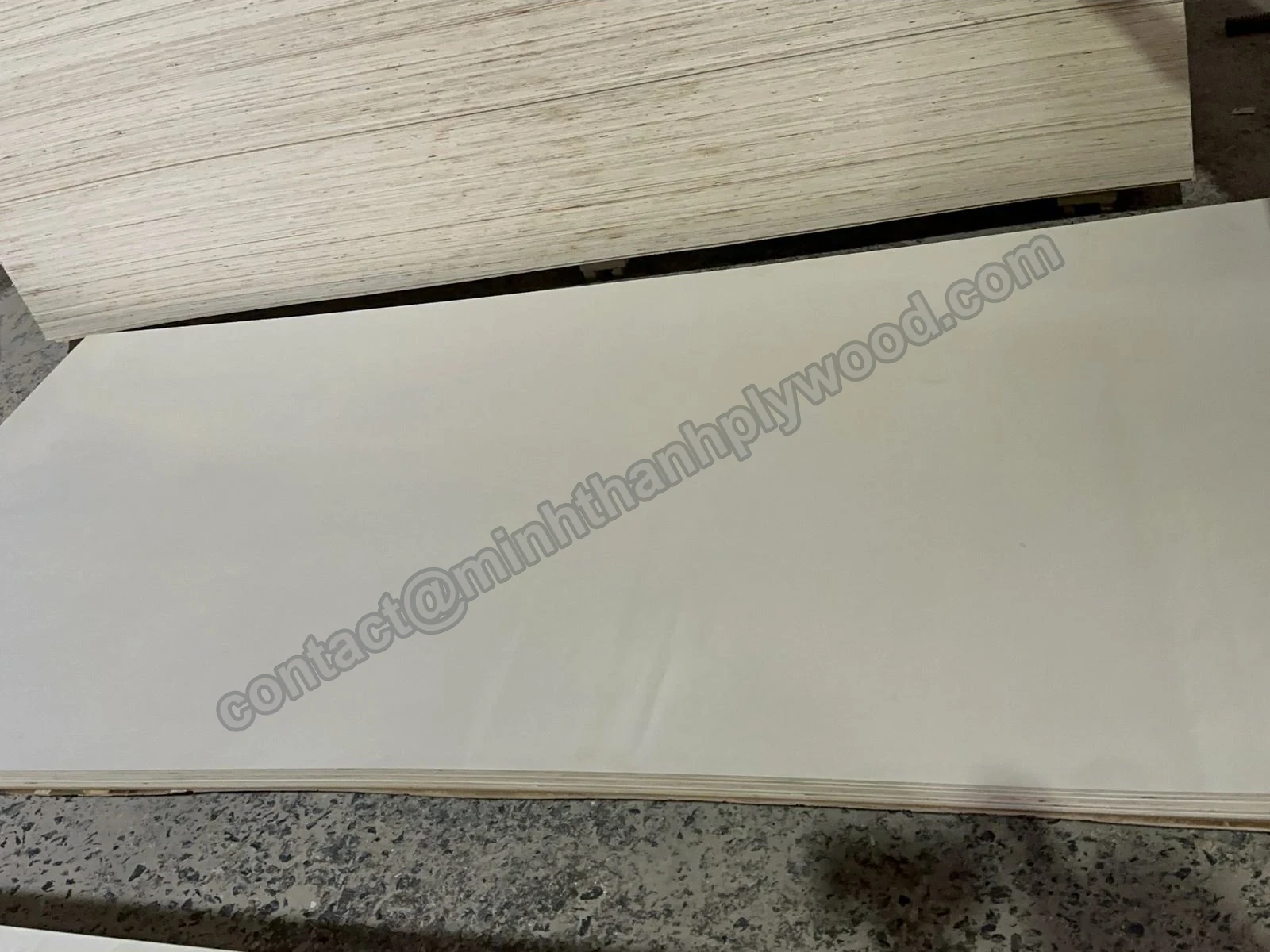
Plywood sheet edges reveal veneer layers. The order should separately describe the layer directions and core construction.
When checking samples, use a labelled section tied to the specification. A photograph of an edge shows visible layers but cannot fully identify internal grain direction, veneer species, adhesive durability or mechanical properties. Keep those items on the product sheet rather than infer them from colour.
Is all LVL the same, and what do LVB and LVD mean?
LVL products differ by layup, intended use and qualification, and supplier terms such as LVB or LVD should be translated into an explicit construction. An acronym is an incomplete specification.
Some supplier literature calls mixed-direction veneer boards LVB and conventional cross-grained plywood LVD. Usage is not sufficiently clear to buy by those letters alone. Request the layer sequence, veneer directions, core species, intended use and acceptance criteria. The approved drawing and material sheet should use the same terminology as the production order.
Cross veneers can also exist in identified structural LVL products. The Metsä Wood Kerto LVL technical table, consulted 8 October 2026, separates S-beam, Q-panel and T-stud with different properties. This shows why one statement about all-parallel veneers cannot describe every product sold within the LVL family.
Size ranges make the split concrete. Industry LVL runs about 12–75 mm thick, with built-up sections beyond that, widths of about 200–1,200 mm and lengths of 12 m or more depending on the press and transport. Veneer boards sold as LVB or LVD come as panels, usually 1220 × 2440 or 1250 × 2500 mm, in 12, 15, 18, 21, 25 and 32 mm and thicker (APAC, LVL, LVB and LVD, read 21 October 2026); another supplier gives 9 mm as the minimum for LVB (Yalong Wood, LVL, LVB and plywood, read 21 October 2026).
Along the member, LVL is the stronger and stiffer choice, because every veneer carries load in that direction. As a broad panel loaded across its face, or where dimensional stability in both directions matters, plywood’s cross layers win.
LVL vs plywood: how should strength be compared?
Compare strength for the same component geometry, load direction and service conditions. A single material label cannot supply a beam capacity, shelf load or crate payload.
One published number shows the scale for structural LVL: Metsä Wood’s Kerto S-beam, with all veneers parallel, carries a characteristic edgewise bending strength of 44 N/mm² at a 300 mm depth and a mean modulus of elasticity of 13,800 N/mm² along the grain (Metsä Wood, Kerto LVL S-beam data sheet, read 21 October 2026). Its cross-veneer Q-panel sibling is rated lower along the span, which is the price of strength across the panel. Plywood is rated from its own table by thickness and face direction, so compare the two numbers on the same axis.
The relevant checks can include bending, shear, compression, bearing, fastener performance and stability. Stiffness controls deformation and often decides a component before breaking strength does. A long rail and a supported panel need different checks because their shapes and load paths differ.
A buyer comparing test reports should keep the test method, conditioning, sample dimensions and direction with each result. Mean test values and characteristic values have different meanings. A design value under one national framework should not be ranked directly against a laboratory maximum under another method.
Density helps calculate mass but is not a strength grade. Minh Thanh’s core planning references describe furniture plywood: approximately 500 kg/m³ for white Styrax and 650–750 kg/m³ for Eucalyptus. They support a weight discussion for the specified panel. Structural LVL uses its own manufacturer-declared properties.
For repeat furniture parts, trial the whole jointed component with the production hardware. For structural building parts, use the approved design and specified structural grade. For cargo packaging, qualify the assembled package under its handling requirements. These routes produce an acceptance criterion the receiving team can use.
Can plywood replace LVL in a building beam?
A plywood strip cannot replace structural LVL solely because both products contain veneers. Any substitution must satisfy the approved building design with identified product properties.
Plywood keeps its cross-grained layers after cutting. LVL keeps the layup declared for its product. Cutting, bonding or fastening panel strips creates a different proposed member or assembly, which needs its own design and production controls. Outside dimensions alone do not establish equivalent strength, stiffness or connection behaviour.
Likewise, furniture or packing LVL should stay on its component schedule. A smooth, straight rail can be excellent for its specified industrial use without being the structural beam listed in a building design. Structural qualification belongs to the named grade and manufacturer, not to the appearance of an offcut.
An engineered I-joist shows how complementary materials work together: a designed flange and web each serve their part of the member. It is a qualified assembled product, not a licence to fabricate an equivalent beam from any plywood and rail. Procurement should retain the entire product specification.
At order release, include the approved product identity, cross-section, orientation, member length, supports, permitted machining and required documentation. The engineer’s approval of a substitution should precede a commercial release. Purchasing can compare supply options while preserving the design’s actual assumptions.
Plywood vs LVL for furniture: which fits frames and faces?
Component LVL suits specified straight furniture rails and frame parts; furniture plywood suits broad surfaces, carcasses and selected decorative faces. The part drawing and trial should decide which construction enters the bill of materials.
A sofa frame can contain narrow rails and broad panels. Rails need correct dimensions, joints and attachment details. Broad panels need the useful face area, surface preparation, core continuity and any edge appearance. Treating both as the same material requirement can increase finishing or assembly work.
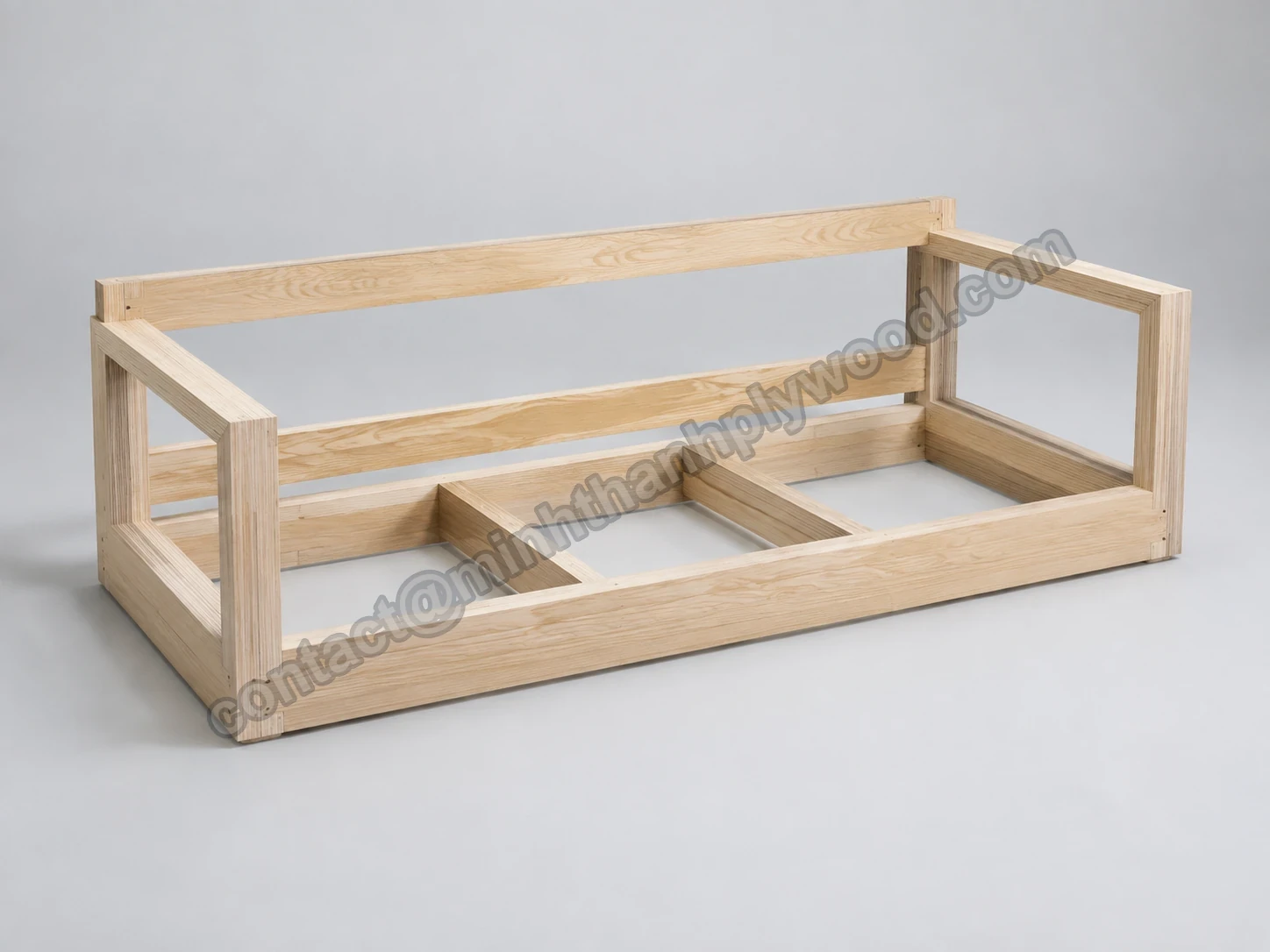
A sofa frame from LVL rails: long straight members joined at the corners.
Minh Thanh’s furniture plywood uses Styrax or Eucalyptus cores and decorative faces including birch, poplar and EV. The core is pressed and calibrated before the face and back are pressed onto it. This preparation serves furniture fit and finish; it should be evaluated on the machined part and final coating.
A birch face describes the outside veneer. It does not mean the panel has birch throughout. Specify the core separately and keep an approved face/back sample. For a hidden rail, a premium decorative face can add little useful value; for a visible door or cabinet side, face selection can decide whether the part is accepted.
How do drilling, routing and fasteners change the order?
Qualify the real machining and fixing arrangement on the selected construction. Grain direction, veneer joints and hole position affect the finished component and should appear on its drawing.
Run a trial with the intended cutter, feed direction and hardware. Inspect routed slots and drilled holes for breakout, gaps crossing a fixing and poor connector seating. A favourable screw-withdrawal result with another screw or direction cannot establish the performance of the production joint.
For panels, a fixing can enter through the face or edge, intersecting different layer regions. For narrow LVL members, the member orientation and distance from ends or edges also matter. Record the screw or connector model and hole dimensions so a later batch uses the same qualified arrangement.
APA’s structural composite lumber guidance, consulted 8 October 2026, explains that LVL design values, including connection details, come from qualification of the specific product. Use the selected producer’s guidance for a building connection.
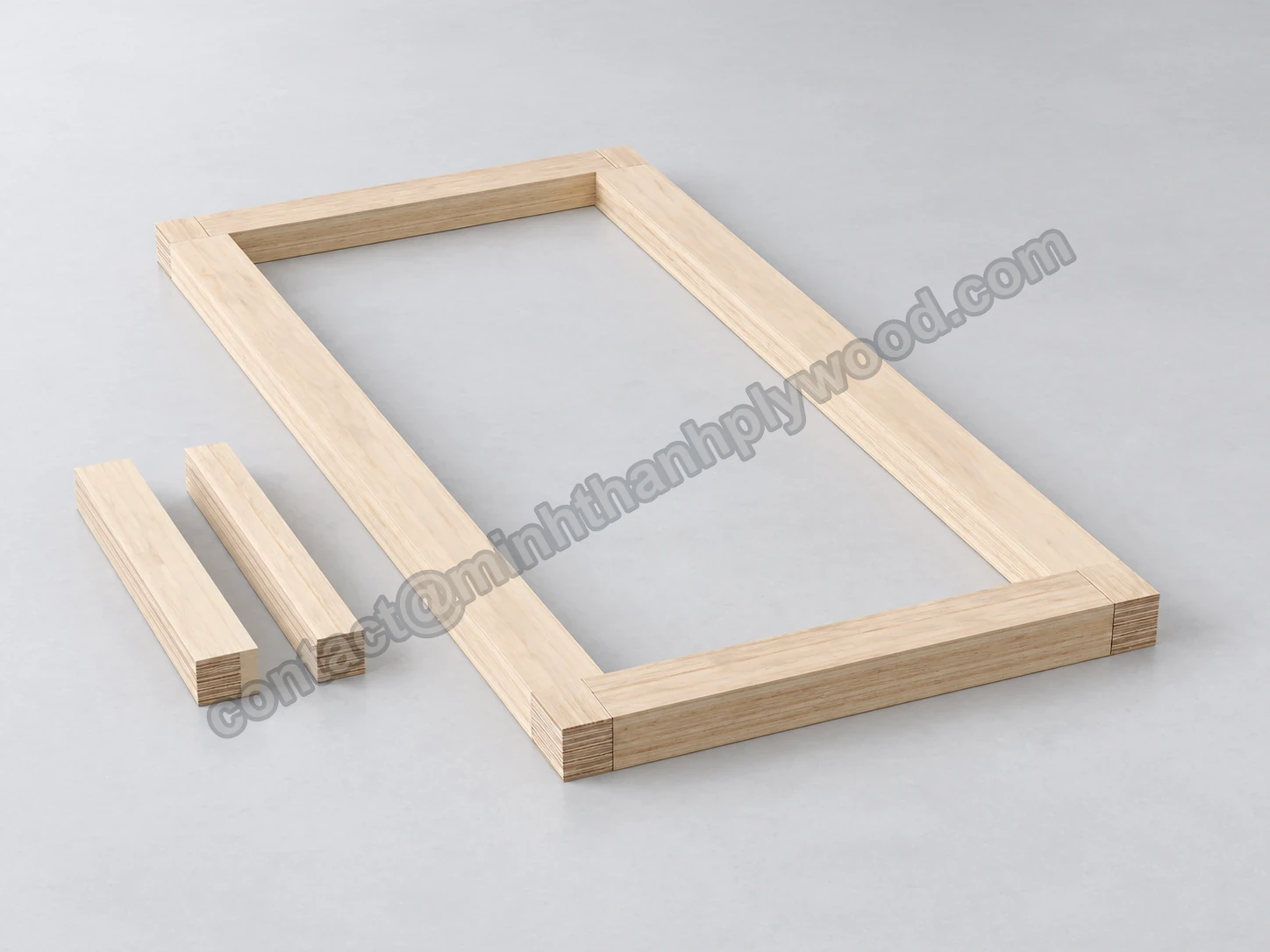
A door frame of LVL stiles and rails, veneer layers visible at the ends.
Keep structural service openings on an approved drawing. A material that machines readily still needs its engineered hole and notch restrictions. Furniture machining trials and structural beam opening checks are different qualification tasks.
Does plywood always move less than LVL?
Moisture movement depends on the construction, direction and service environment. Cross-grained panels and predominantly longitudinal members respond differently, so the fit requirement should identify the direction being measured.
Plywood’s cross layers help distribute movement across a panel, but a panel still needs appropriate conditioning and installation details. LVL also changes dimension with moisture; specialist cross-veneer constructions can address particular directional requirements. Do not buy either as “no movement” material.
Specify the accepted dimensions at the agreed inspection condition. A thickness reading during receiving and a fit check after conditioning can describe different states of the same component. Keep the measuring method and sampling locations clear, particularly where routed slots or hardware fit tightly.
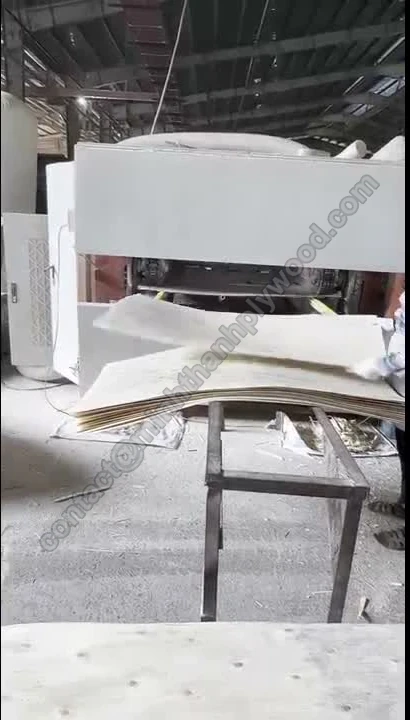
Calibration and surface preparation serve dimensional fit; service moisture remains part of the component specification.
Minh Thanh offers furniture plywood thickness tolerance down to ±0.2 mm. Apply that requirement to the agreed furniture construction and inspection plan. It is a panel dimensional specification, separate from an LVL beam’s structural grade and serviceability design.
Protect bundles from uneven wetting and support them appropriately during storage. Give the receiving team the approved route for conditioning before machining. This often prevents more assembly trouble than selecting a material from a generic stability ranking.
Is one material more water-resistant?
Water resistance follows the actual product’s bond, service grade and protective design. Veneer orientation alone does not establish whether LVL or plywood suits exterior exposure.
Specify bond durability independently from emissions. E0 and E1 describe emission requirements; they are not adhesive types. A low-emission interior panel does not acquire an exterior bond through its emission class. A durable structural adhesive also does not protect the wood against every decay environment.
Minh Thanh’s standard furniture panels use UF glue at E0 emission. Melamine-fortified or phenolic bond requirements are specified for other constructions. Keep the intended service and required tests on the order, then select the actual panel or member that meets them.
A packing component can experience weather during loading, condensation in transit or a spill at destination. Describe those exposures in the packaging brief. Water paths through ends, cut edges and fixing holes belong in the package design alongside the chosen adhesive.
The plywood water-resistance guide explains the panel distinction in more detail. For a structural LVL member, follow its product-specific moisture and exposure instructions. “Engineered”, “hardwood” and “phenolic” are useful descriptors, but none is a complete installed service specification.
How should you combine LVL and plywood in export packing?
Use each material for the role it is designed to serve, then qualify the complete crate, case or pallet. A package can have specified members, plywood skins and other components with different material requirements.
The cargo load enters through supports and fixings. Identify support points, lifting arrangement, forklift access, stacking, restraint and the route by which loads reach the base. A strong bearer cannot rescue a poorly supported deck or a joint that loosens during handling.
For plywood skins, define thickness, useful face condition, fastening and edge support. For LVL members, define dimensions, direction, joints and permitted defects. Check repeated opening and closure where the case is reusable. The order should describe the package function rather than label all panels heavy duty.
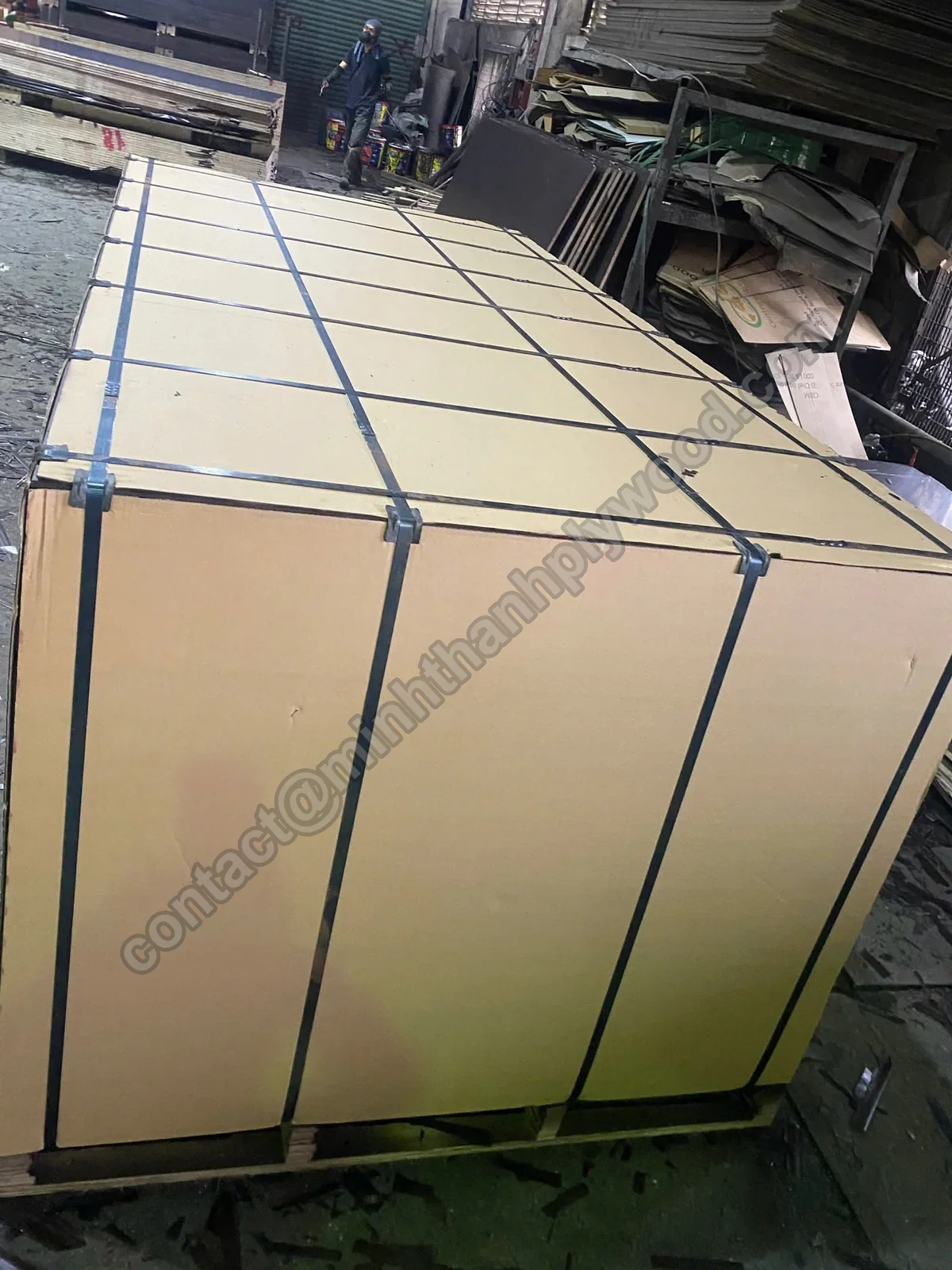
Protected panel packing shows why material protection and handling instructions belong in the shipping specification.
The packing plywood page supports this component-led enquiry. Send the package drawing, cargo and handling requirements so the material quote reflects the designed assembly. Any load rating should belong to the qualified package and its stated conditions.
Also identify solid-wood pieces separately in the package bill of materials. Destination packaging rules apply to the complete package composition. Processed panels and members should not obscure other wooden components requiring their own treatment or marking assessment.
What does inspection reveal, and what needs a document?
Inspection reveals dimensions, visible condition and machining quality; product documents establish the declared construction and qualification. Use both records and keep them tied to the delivery.
A receiving check can measure section or panel thickness, width, length and squareness. It can inspect faces, edges, glue-line opening, handling damage and component fit. A sampling plan should represent the bundle or pack, rather than use only its easiest exposed piece.
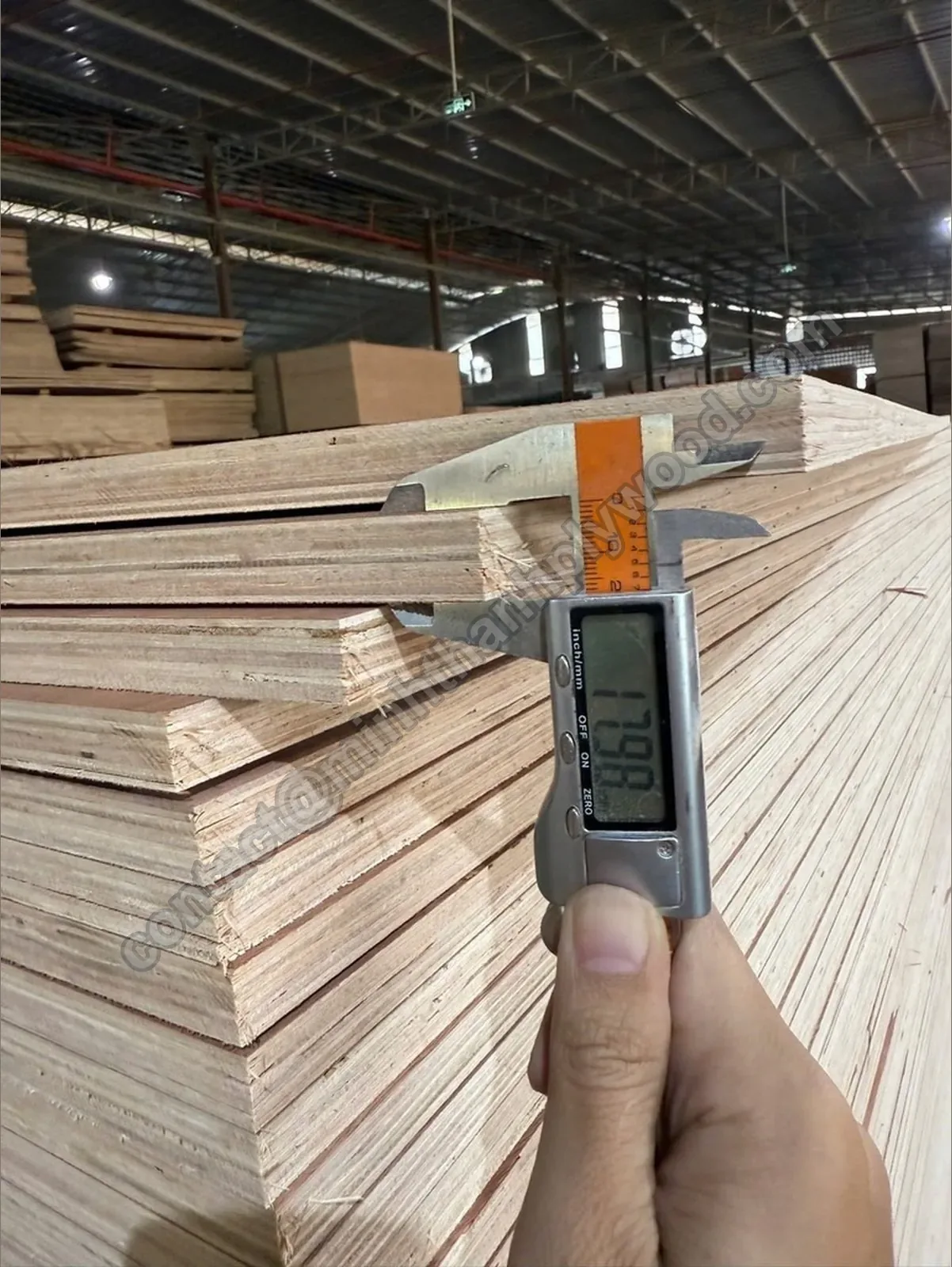
Dimensional inspection records a sampled plywood thickness. Product identity and performance requirements accompany the measurement.
For furniture plywood, check the decorative face/back sample and the core separately. Minh Thanh stitches core layers horizontally and vertically and double presses furniture panels. At component trial, inspect the actual routed and drilled areas where continuity matters to the joint.
For LVL, receive against the agreed product designation, dimensions, orientation and acceptance criteria. A structural delivery also needs the documentation specified by the project. A printed LVL label and a straight edge do not provide the complete engineering record.
Retain bundle IDs through cutting and assembly. If pieces are sorted into different production orders, transfer the controlled identification to their new bundles. That makes a rejected component traceable to its actual material specification and receipt, rather than to an unlabelled mixed offcut bin.
Which certificates and reports answer which question?
Separate emissions, structural performance, origin and quality-system records because they answer different buying questions. The relevant document should name the product covered by the order.
| Requirement | Useful record | What to identify on the order |
|---|---|---|
| Furniture emissions | Applicable certification, product label and test record | Product, destination and required emission method |
| Structural beam performance | Qualified product data and applicable evaluation | Grade, orientation, dimensions and design scope |
| Structural panel use | Identified panel grade and design documentation | Panel function, strength axis and exposure |
| Timber origin | Origin records and required dossier | Species/origin details for the supplied product |
| Manufacturing quality system | Quality-management certification | Factory activity covered by the certificate |
| Component acceptance | Drawing and approved trial/inspection criteria | Joint, dimensions, finish and test conditions |
The US emission limit for hardwood plywood with a veneer core is 0.05 ppm under 40 CFR 770.10. Minh Thanh holds CARB P2 / TSCA Title VI for its hardwood plywood range, ISO 9001:2015 for plywood manufacturing and veneer-faced plywood certification under TCVN 11902:2017. Its quality documentation supports the listed plywood products and their buyer requirements.
Structural LVL requires the designated structural product’s own documentation. General factory quality systems and furniture emission certificates cannot replace its mechanical values or applicable engineering scope. Keeping those records separate makes the enquiry clearer and helps the project reviewer locate the evidence quickly.
For the origin row, plywood imported into the EU falls under Regulation (EU) 2023/1115 on deforestation-free products. For the structural panel row, BSI lists BS EN 636 as covering plywood for structural and general-purpose use in dry, humid or exterior conditions.
For furniture orders, specify the destination requirement before testing or packing. US hardwood plywood labels and shipping documents use the required TSCA Title VI information. European customers can specify their required test method. The document package should follow the product supplied, with no borrowed certificate from a different construction.
How should you compare cost and cutting yield?
Compare cost per accepted component or complete package, using the actual cutting plan and machining scope. A narrow member and a decorative panel are different outputs from a cubic metre of material.
Write the required finished dimensions and grain direction before nesting parts. Include saw kerf, machining allowance and any surface areas that must be kept clear. An offcut has value only when it fits another real component in the schedule.
The LVL quotation should identify billet or member format, component count, cuts and finish. The plywood quotation should identify sheet format, face/back grade, core, cuts and finish. Add hardware, edging, coating, rejection criteria, packing and the agreed delivery term to both sides.
Minh Thanh offers standard plywood formats of 1220 × 2440 mm and 1250 × 2500 mm, with custom and cut-to-size options. Those formats influence furniture yield and packing. Keep them separate from any LVL member-length requirement so a sheet dimension does not become an assumed beam availability claim.
For repeated furniture production, a higher raw-material price can be offset by accepted yield or fewer finishing operations. Establish that through the actual trial and costed route. A generic percentage saying LVL is always more expensive cannot capture different grades, formats and component requirements.
How do you approve a substitution before repeating the order?
Approve the changed component or design with the new construction before buying a repeat batch. Substituting LVL for plywood changes more than the material name on the invoice.
- Identify the part’s function and the drawing revision.
- Record the proposed material’s actual layup, direction, grade and dimensions.
- Trial the cuts, joints, hardware and finish on the production geometry.
- Review exposure, emissions, packaging and any structural design requirements.
- Release a controlled specification and inspection plan for the accepted option.
Use one changed variable at a time where a component trial is meant to compare performance. Replacing panel construction and hardware simultaneously can hide which change caused an improvement or a failure. Once the accepted assembly is selected, record both in the final bill of materials.
A structural substitution follows the project engineering review. A furniture substitution follows the approved component and finish requirements. A packaging substitution follows the qualified assembled package. Each route has a clear acceptance record; a favourable catalogue description supplies none of them by itself.
What this means for your Minh Thanh order
Send the material function and component drawing with your enquiry so the quoted LVL or plywood fits the intended part. We quote Acacia or Eucalyptus LVL in 1220 × 2440 or 1250 × 2500 mm billets cut to your sections, and furniture plywood from 3 to 40 mm, in the same 40HC if needed.
For furniture panels, choose Styrax or Eucalyptus core, the face/back appearance, glue and emission requirement, thickness, format and machining. Double pressing and core calibration support the agreed furniture fit and finish. For component LVL, define member direction, section, length, joints and acceptance criteria. For structural use, attach the project-approved product and engineering documentation requirements.
Minh Thanh supplies free samples, and every shipment is photographed and filmed before loading. Use the sample for the actual cut, hardware and finish trial; use the loading record to match the packing and shipment schedule. The furniture selection guide and plywood-types topic help organise adjacent panel choices.
Send your RFQ through Contact with application, core, grain direction, glue/bond and emission requirements, face or finish, member or panel dimensions, drawing, packing, quantity and destination. The verdict is practical: buy the member or panel construction that your part requires, then approve and repeat that exact specification.
Buyer questions, answered
What is the difference between LVL and plywood?
LVL has thin veneers oriented predominantly along the member, while conventional plywood uses cross-grained veneer layers. This changes directional properties and the form of component each commonly serves. The actual grade, layup and application determine the final specification.
Is plywood a type of engineered wood?
Yes, veneer-core plywood is engineered wood made by bonding veneers into a panel. LVL is another veneer-based engineered product with a different layup and specification. Engineered wood is a product family rather than one competing panel grade.
Is LVL always stronger than plywood?
Along its length, yes. LVL's parallel veneers make it stiffer and stronger as a beam or rail than plywood of the same section. Across the width and as a broad panel, plywood's cross layers win.
Can I cut plywood into strips and use it as a structural LVL beam?
A cut plywood strip retains the plywood's layer construction and product qualification. It does not become structural LVL through cutting. Any load-bearing building member needs its own approved design and identified material properties.
Does all LVL have parallel veneers?
Many LVL products have predominantly longitudinal veneers, while some include cross veneers for specified properties or applications. Request the actual layup and orientation data. A common trade name does not identify every layer.
What are LVB and LVD plywood?
These terms appear in supplier literature for particular veneer-board constructions, but the label alone leaves the actual layer arrangement unclear. Write the veneer direction, species, layer sequence, grade and intended component into the specification. Avoid treating LVB as an automatic strength class between plywood and LVL.
Which is better for furniture, LVL or plywood?
Plywood suits broad decorative panels, carcasses and selected exposed faces; component LVL suits specified rails or frame members. The part drawing, joint, finish and component trial decide the choice. One furniture assembly can use both materials.
Should export crates use LVL or plywood?
A crate can combine specified members with plywood skins, decks or dividers. Select each part for its support, fastening, cargo and handling conditions, then qualify the complete packaging. Neither material name supplies a cargo load rating.
Is LVL waterproof because it is engineered?
The engineered construction does not define exterior durability by itself. Specify bond durability, service exposure and any necessary protection for the actual product. Emission class and moisture resistance are separate requirements.
Do CARB P2 documents establish structural LVL strength?
CARB P2 and TSCA Title VI address covered composite-wood emissions and product records. Structural LVL needs its own mechanical qualification and applicable design documentation. Keep each document tied to the product and requirement it covers.
Can LVL be used outdoors?
Only with a bond rated for the exposure and a detail that sheds water. Standard LVL is made for dry, covered use; for damp or exposed positions ask for a water-resistant bond such as phenolic (WBP) and keep the end grain sealed.
Which adhesives are used in LVL and why do they matter?
Interior LVL commonly uses UF glue at E0 emission, damp-area LVL uses MR or melamine-fortified glue, and exposure-rated LVL uses phenolic (WBP). The glue sets moisture resistance and formaldehyde class, so name it on the order.
How should LVL be stored on site?
Stack it flat on level bearers off the ground, under cover, with spacers between packs for airflow and the ends wrapped. Keep the wrapping on until installation, because wet edges and ends swell.
Which costs less, LVL or plywood?
Compare the cost per accepted component or completed assembly using current quotes and the same delivery scope. Include cutting yield, machining, fasteners, finishing and packing. Price per cubic metre alone cannot compare a narrow member with a finished broad panel.
What should I send Minh Thanh for an LVL or plywood quotation?
Send the application, drawing, core requirement, grain direction, bond and emission requirements, face or finish, dimensions, packing and quantity. Add the approved structural product requirements for building applications. The factory can then quote the specified component or panel rather than a generic material name.