
Birch plywood vs pine plywood, in short: choose birch for a pale, even face under clear or paint finishes, pine for warm figured faces in rustic furniture and panelling. For building work, choose the specified rated panel. Minh Thanh Plywood makes birch-faced and pine-faced furniture plywood with separately specified Styrax or Eucalyptus cores. Compare complete constructions, finishing yield and hardware results before selecting by species name.
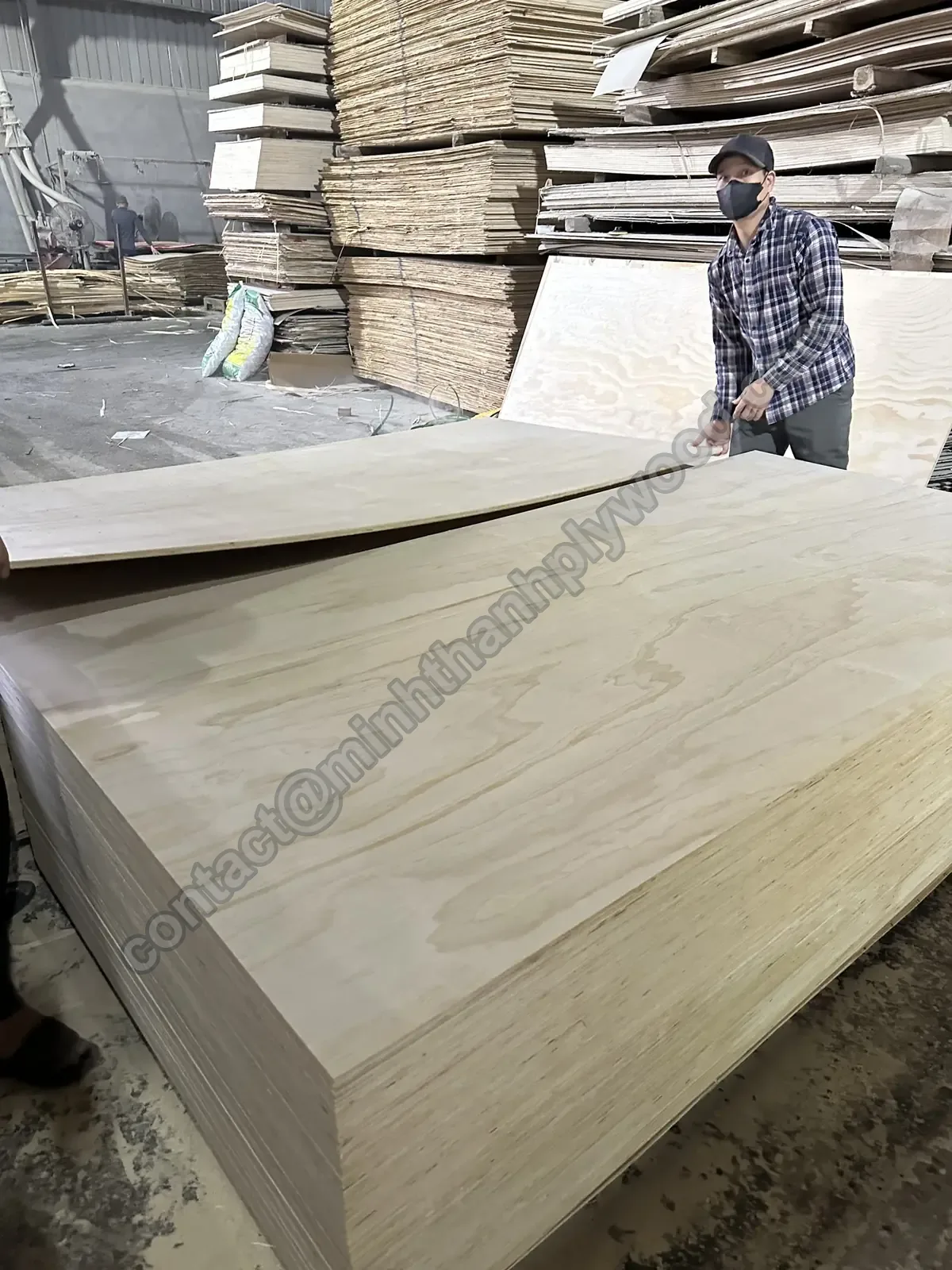
Birch plywood vs pine plywood: what is the useful verdict?
Birch and pine are useful furniture face choices when their appearance matches the product; rated construction panels are selected for the building requirement. Choose birch for a pale, even face under clear or paint finishes, and pine for warm figured faces in rustic furniture. Keep those decisions separate from the core comparison.
A pale fine-grained birch face suits a product whose approved sample uses that appearance. Pine suits an approved softwood figure, whether the specification selects a clearer surface or permits knots. Painted parts require a finishing trial for either candidate. The species name supplies the visual starting point, while the trial establishes the finished result.
From our product range, Minh Thanh offers both birch-faced plywood and pine-faced furniture plywood with named core construction. Standard furniture cores are white Styrax or Eucalyptus. Selecting a pine face does not automatically turn that furniture panel into all-pine structural sheathing.
Define the application before comparing quotes. A cabinet end, warehouse shelf and roof deck each require different evidence. This guide shows where the comparison changes, then sets out the order lines and sample checks that let a buyer evaluate the actual panels being offered.
Are you comparing furniture faces or structural plywood?
A furniture-face comparison evaluates appearance and conversion yield; a structural-panel comparison evaluates the specified product performance and service. An order should identify which panel family it needs.
Furniture panels use a selected decorative face, prepared substrate and component tolerances. The hidden core can use a different species from the surface. Structural sheathing uses its own standard, rating and marking. Some softwood panels combine suitable appearance with structural evidence, but neither attribute should be inferred from the word pine.
The APA plywood selection guidance, consulted on 8 October 2026, treats veneer grade, exposure classification and rating as separate selection criteria. Use the specified product mark and design data for a roof, wall or floor. A sanded furniture face does not establish a span rating.
For the Minh Thanh furniture comparison, state birch or pine face plus Styrax or Eucalyptus core. For a construction quote, list the required product standard and performance along with the bond and dimensions. The CDX, ACX and BCX grade guide explains why a familiar surface abbreviation also needs a complete purchase description.
Which purchase lines should you compare side by side?
Compare the actual face, back, core and service requirement before judging price or performance. Keep the component and acceptance criteria the same.
| Comparison line | Birch-faced furniture plywood | Pine-faced furniture plywood |
|---|---|---|
| Face look | Pale cream, fine even grain, little figure | Honey to pale yellow, cathedral figure, knots by grade |
| Face/back grades | D+, D, E; D+/D close to B/BB, D/D close to BB/BB | A/A, A/B, B/B; B/C for utility parts |
| Core options | Styrax about 500 kg/m³ or Eucalyptus 650–750 kg/m³ | Styrax about 500 kg/m³ or Eucalyptus 650–750 kg/m³ |
| 1220 × 2440 × 18 mm sheet | About 26.8 kg on Styrax; 34.8 kg on Eucalyptus | About 26.8 kg on Styrax; 34.8 kg on Eucalyptus |
| Sanded thickness tolerance | ±0.2–0.3 mm, down to ±0.2 mm | ±0.2–0.3 mm, down to ±0.2 mm |
| Paint | Fine grain, smooth with standard primer | Knots and resin need a knot-sealing primer first |
| Clear finish | Even, light, modern look | Warm, figured, rustic look |
| 40HC at 18 mm | 990 sheets on Styrax; 795 on Eucalyptus | 990 sheets on Styrax; 795 on Eucalyptus |
| Typical parts | Visible cabinet fronts, shop fitting, children’s furniture | Rustic furniture, shelving, wall panelling |
| Glue | UF glue at E0 emission; MR or phenolic WBP on order | UF glue at E0 emission; MR or phenolic WBP on order |
On the same core the two panels weigh the same, machine the same and load the same; the face decides the look and the finishing work. If one quotation covers all-pine structural plywood and another covers birch-faced Styrax furniture plywood, they answer different purchasing questions, so request matching constructions first.
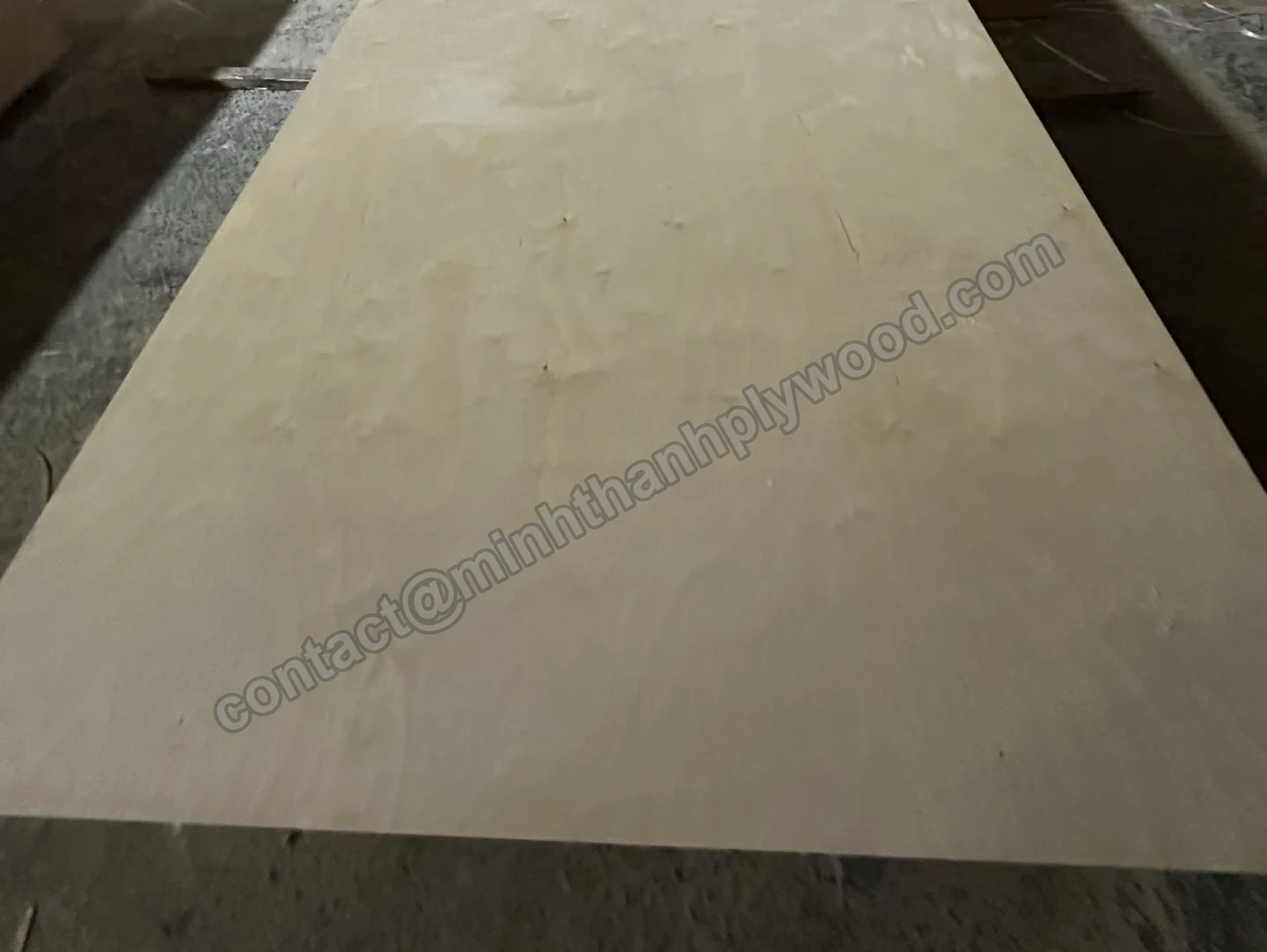
The face reference answers appearance; a cut coupon and specification answer the internal construction.
Pine plywood vs birch: how do knots and grain finish?
Pine appearance should be specified by the accepted grain, colour and knot range. A furniture pine face is a selected visual surface, with its grade pair matched to the component.
A clear-looking door front and a deliberately knotty wall panel use different acceptance criteria. Show where a knot may appear and whether repairs are acceptable under the intended finish. Keep the back requirement in the pair: a shelf seen from both sides uses its reverse appearance, while a wall-mounted end panel has another need.
Minh Thanh quotes pine A/A, A/B and B/B face/back pairs, with B/C for utility parts. The agreed sample sets the practical visual range.
Arrange trial parts in their finished orientation. Long-grain figure changes the visual layout of a door or wall lining, and nesting software can rotate parts for yield. Mark grain direction on the cutting list where the design needs it. Birch requires the same discipline when broad figure or colour must line up across neighbouring components.
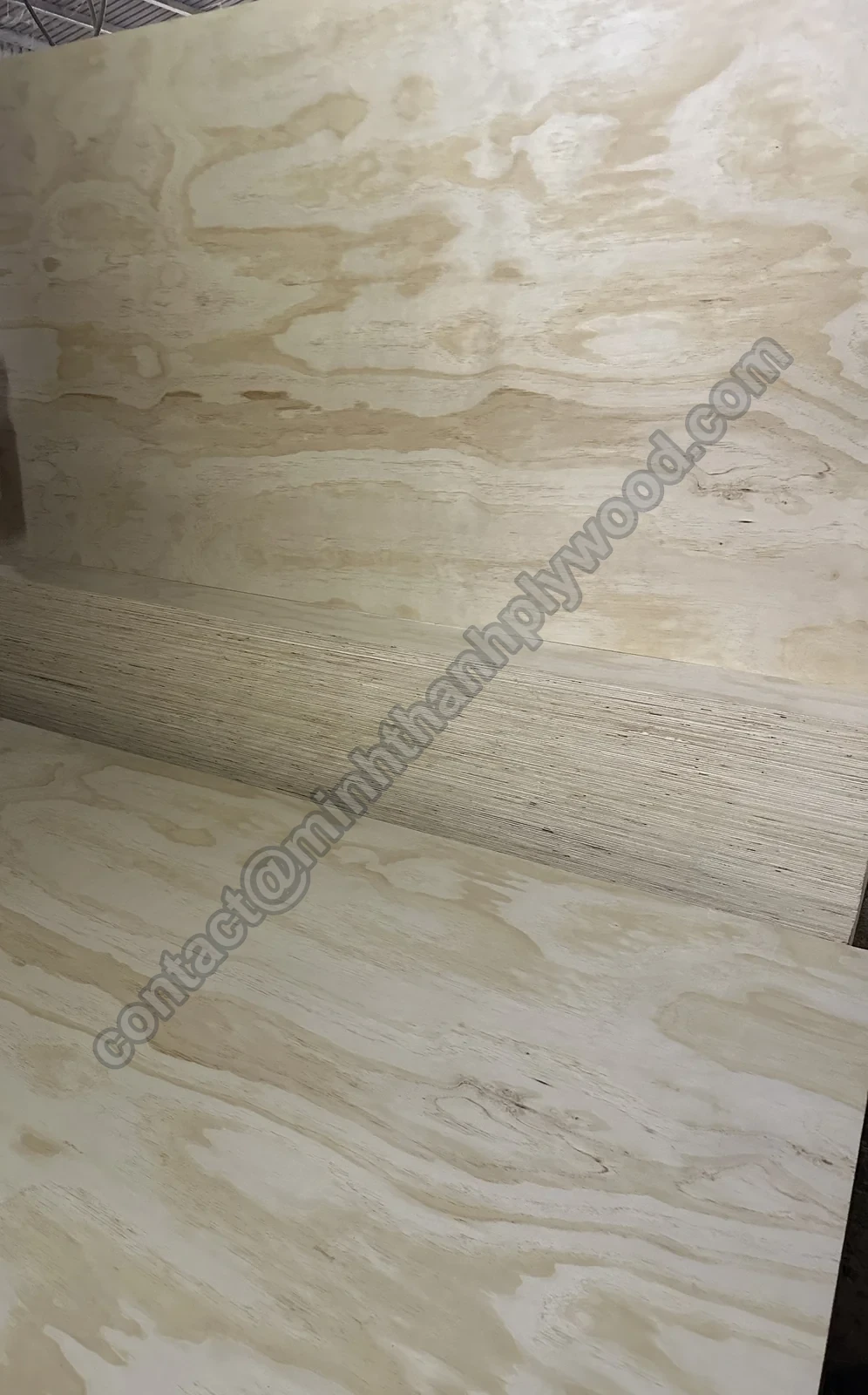
Use the full-face pattern to define orientation and appearance selection for visible parts.
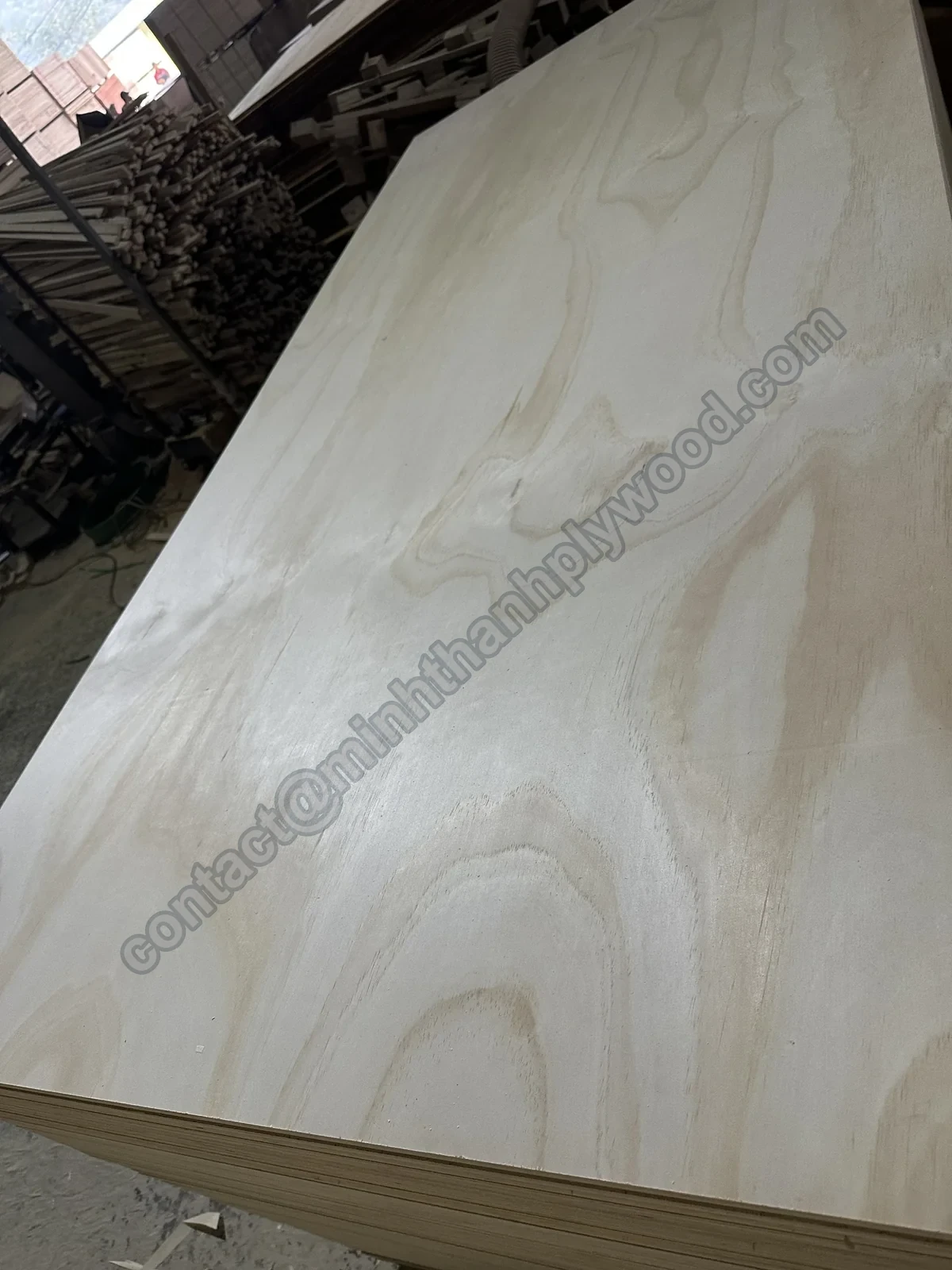 A pale pine face with strong figure; the grade pair sets the knots allowed.
Which panel gives the better painted surface?
The better painted surface is the one that reaches the approved cured result with acceptable preparation and rework. Test the selected pine face and birch face on the production coating line.
For pine, include permitted knots, repairs and visible grain changes in the trial. Ask the coating supplier to select the compatible preparation and primer for that surface, including any stain-blocking requirement. For birch, include veneer joints, repairs and routed edges. Judge both after curing, under the same light and viewing angle.
Record filling and sanding operations as well as coating use. A hand-finished sample can conceal extra labour that would make a production substitution expensive. Put the target surface texture into the inspection instruction so operators know whether the product should show its wood figure or present a smooth filled finish.
Minh Thanh presses furniture panels twice, calibrating the core before the separate face press. This gives the finishing line a prepared substrate. Compare the offered preparation on each candidate instead of assuming a smooth face photograph describes the entire panel. Our furniture plywood guide covers the component-based selection in more detail.
Is birch plywood harder than pine plywood?
In birch vs pine plywood, all-birch plywood is the harder, stronger and heavier panel: the Finnish wood information service Puuinfo, consulted 8 October 2026, gives birch plywood about 680 kg/m³ and conifer plywood 460–520 kg/m³. Birch-faced and pine-faced furniture plywood is different: both carry the same core, so strength and weight come from that core.
Minh Thanh’s planning core densities are about 500 kg/m³ for Styrax and 650 kg/m³ for Eucalyptus, giving 26.8 kg and 34.8 kg per 1220 × 2440 × 18 mm sheet whichever face is pressed on.
For mass, compare same-size full sheets or calculate from the offered panel density and dimensions. Keep packaging in the shipment plan and use the booked payload. A sheet count derived only from container volume can exceed the load permitted on the route. Core selection also affects the mass carried by drawer runners, hinges and wall fittings.
For a shelf, trial the actual span and load on the chosen core. Our load and span guide explains the inputs needed for a meaningful load question.
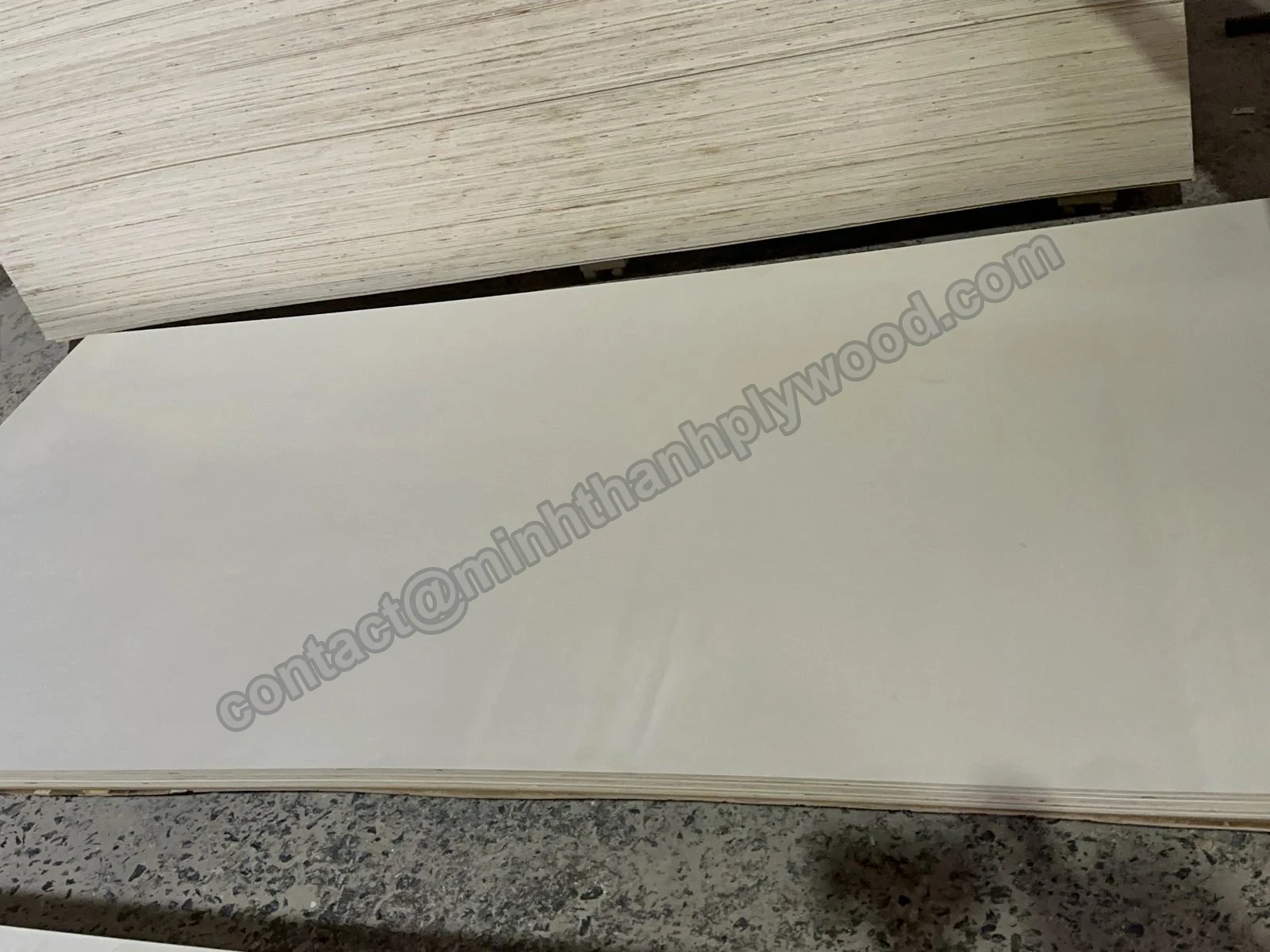
The selected core remains central to the mass, machining and hardware comparison.
What changes when the quote specifically says radiata pine plywood?
Radiata identifies a pine species, while the complete quotation still needs the product construction and intended use. Request the specified grade, bond and rating for the offered panel.
For structural radiata panels, the product mark and design evidence come with the panel. For furniture, we put the offered face and core species on separate lines.
For a furniture conversion trial, compare the radiata-faced sample with the chosen birch-faced construction at the same dimensions and acceptance criteria. Check finish and component yield directly. For building work, begin with the required rated construction and assess substitutions through the project specification.
Minh Thanh’s pine product page presents a furniture-facing range with its own grade and core choices. Use that product description for an interior order. A supplier’s structural pine catalogue should be evaluated against the structural requirement rather than used as a shortcut for selecting a decorative furniture face.
How do you trial both panels and compare finished-part cost?
Run both faces over the same core through one trial and count accepted parts:
- Finish: the same sanding, stain or clear coat on both; birch stays pale and even, pine keeps its figure under any stain. The US Forest Service finishing chapter (2021) covers indoor finish choice.
- Thickness and flatness: both are sanded to ±0.2–0.3 mm, down to ±0.2 mm, and dispatched at 8–12% moisture; measure with one caliper procedure before and after machining.
- Machining: route the pockets and fit the hardware you use; on the same core both faces hold screws the same.
- Grades: birch D+/D compares with B/BB and D/D with BB/BB; pine uses A/A, A/B or B/B against the sample.
- Cost per part: add yield, finishing and rework to the delivered price and divide by accepted parts; the cheaper face for hidden parts is usually the lower grade.
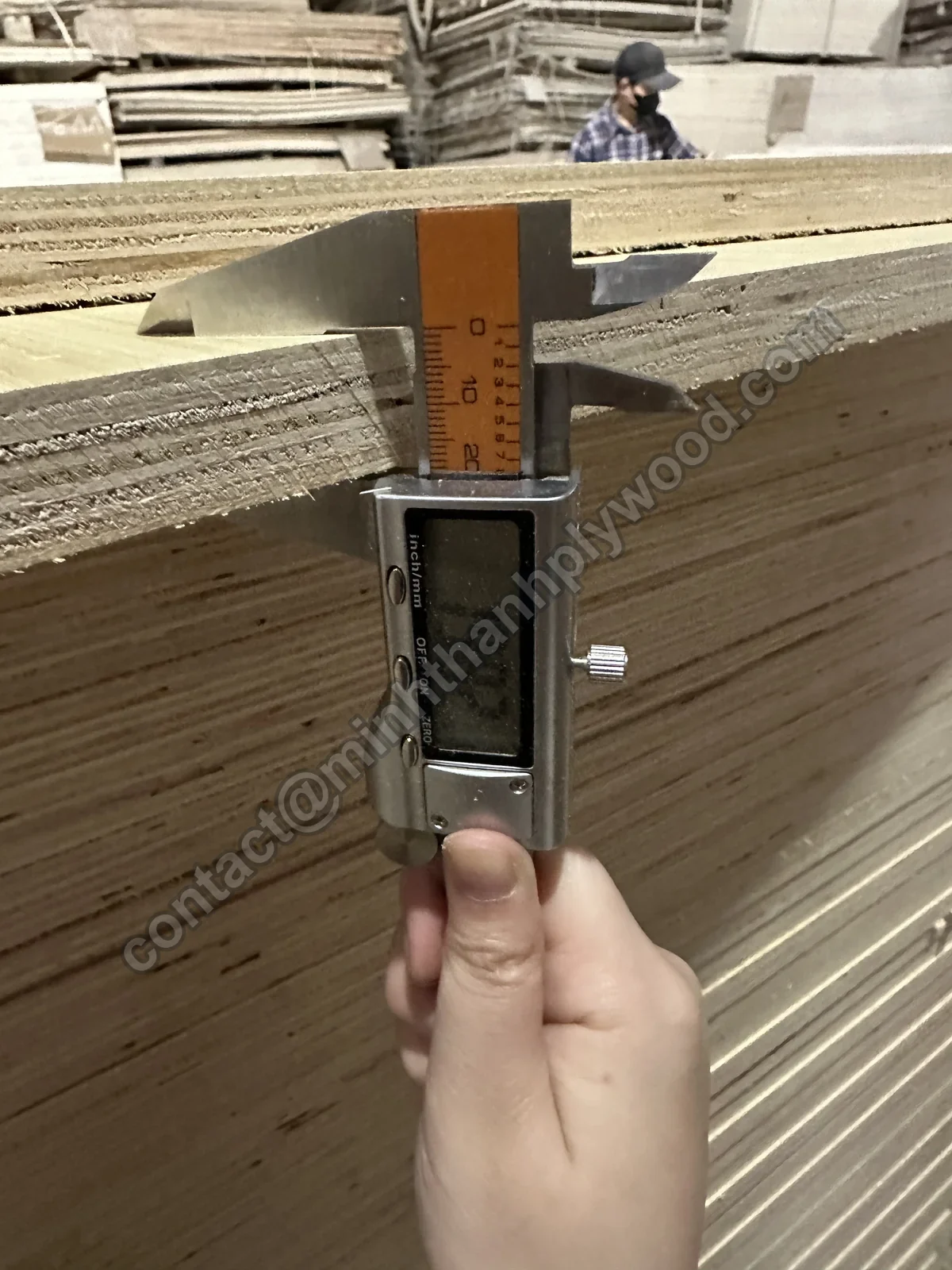
One caliper procedure for both candidates keeps the comparison fair.
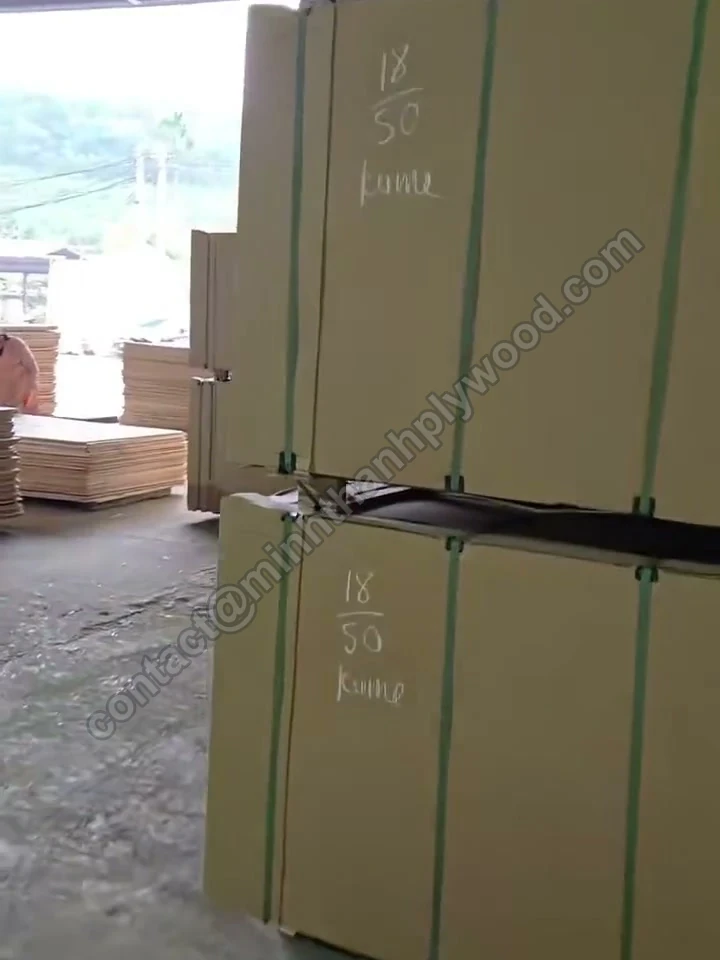
Both faces ship in the same strapped, protected packs; 990 sheets of 18 mm on Styrax per 40HC.
Does pine or birch give better moisture performance?
Select moisture performance through the ordered bond and finished assembly, with the service conditions written explicitly. Neither face name makes a panel waterproof.
The APA Help Desk, consulted on 8 October 2026, distinguishes Exposure 1 from Exterior; commonly sold CDX Exposure 1 is intended for construction moisture followed by protection. Continuing weather exposure requires the appropriate classification. This distinction applies to the specified product rather than to a broad pine-versus-birch label.
For furniture, a sink-base part needs its bond, cut edges, penetrations and coating assessed for that service. A dry interior partition has another exposure requirement. Put those conditions on the part drawing and purchase order so both quotes cover the same use.
Minh Thanh’s furniture offer uses UF glue at E0 emission for the ordered interior construction. Its exterior/CDX-type range uses separately specified water-resistant melamine-fortified or phenolic bonding. The waterproof plywood guide explains the panel and assembly distinction. Keep the emission requirement on another line: bond service and emission are different properties.
What should you send for a side-by-side birch and pine quotation?
Send the component drawing and finishing requirement so Minh Thanh can quote the two faces over the specified core construction. Add visible face/back acceptance, size, thickness tolerance, bond and emission requirement.
Use the same trial sequence for both panels: inspect full sheets, cut and machine the parts, install hardware, apply the finish and inspect the cured result. Retain the accepted samples with the construction and process revision. Free samples are available for the comparison.
Our common formats are 1220 × 2440 mm and 1250 × 2500 mm, with custom formats and cut-to-size options by agreement. The minimum order is one 40HC, with mixed specifications by agreement. Production takes 15–45 days after the 30% deposit, separate from sea transit.
Minh Thanh holds CARB P2 / TSCA Title VI certification (EPA formaldehyde standards), ICTT mill no. 23024, and supplies the EUDR compliance dossier with origin records and geolocation files. The TSCA Title VI limit for veneer-core hardwood plywood is 0.05 ppm under 40 CFR 770.10. See the quality hub for the product evidence. Use the types of plywood hub to align construction terms, then send your specification with quantity, packing and destination port for the comparison quote.
Buyer questions, answered
Is birch plywood better than pine plywood?
For a pale, even face under clear coat or paint, yes; for warm figured rustic parts, pine is the better pick. On the same Minh Thanh core both panels weigh, machine and hold hardware the same.
Is pine plywood only suitable for construction?
No. Pine-faced furniture panels are selected and prepared for visible interior components. Minh Thanh offers pine face/back pairs A/A, A/B and B/B, with B/C for utility parts. Specify the core and finish separately.
Is birch plywood stronger than pine plywood?
All-birch plywood is denser and stiffer than all-pine plywood, at about 680 kg/m³ against 460–520 kg/m³. With the same Styrax or Eucalyptus core, Minh Thanh birch-faced and pine-faced panels perform the same and weigh 26.8 or 34.8 kg per 18 mm sheet; the face only changes the look.
Is radiata pine plywood the same as pine-faced furniture plywood?
No. Radiata is one pine species; pine-faced furniture plywood is a sanded furniture panel with a pine face over a separate core. Our quote names the face species and core on separate lines.
Is pine plywood lighter than birch plywood?
Yes, all-pine plywood (about 460–520 kg/m³) is lighter than all-birch (about 680 kg/m³). On the same Minh Thanh core the two weigh the same: 26.8 kg per 18 mm sheet on Styrax, 34.8 kg on Eucalyptus.
Can I paint pine-faced plywood for cabinets?
Yes, qualify the selected face through the intended filler, primer and topcoat process. Include allowed knots and repairs, then inspect the cured surface for texture and staining. Compare its preparation and rework cost with the birch candidate.
Does pine plywood automatically have an exterior bond?
No. Pine identifies wood, while exposure classification identifies the bond service. Specify the required classification and product evidence for the application. Painting a panel does not change its marked exposure classification.
What birch grade is comparable with B/BB?
Minh Thanh D+/D is broadly comparable with European B/BB appearance. D+ is approximately B, D approximately BB, and D/D approximately BB/BB. Set the accepted repair and colour range with the approved sample.
Can I expose the layered edge of birch-faced plywood?
Yes, when the ordered core and machined edge pass the intended appearance and finish. Birch-faced Styrax or Eucalyptus construction shows a different layer pattern from all-birch plywood. Approve a cut edge coupon alongside the face sample.
What should I send for a birch and pine comparison quotation?
Send the component drawing, visible face/back requirement, core, dimensions, tolerance and finish. Add bond and emission requirements, quantity, packing and destination port. For structural work, include the required product standard, rating and identification.